
ABB
In Stock OK
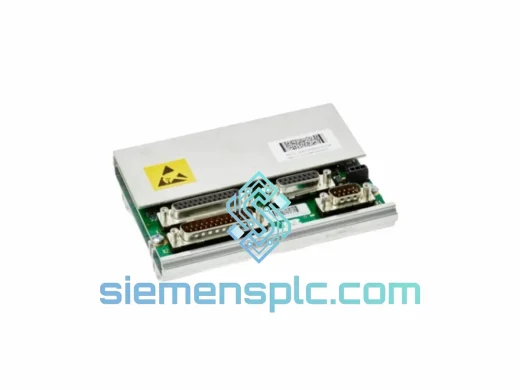
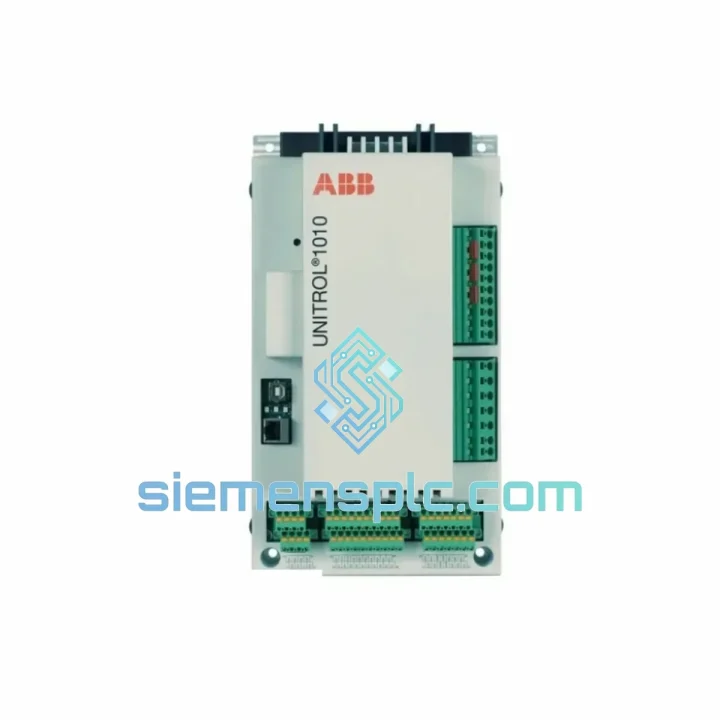
ABB P-HB-RFO-80010000 Fieldbus Communication Module – RFO-800 Series
Request verified availability, condition, replacement risk review, packing options and courier lead time for P-HB-RFO-80010000.
BrandABB
Part NumberP-HB-RFO-80010000
ConditionAvailability Check
Lead TimeRFQ Confirmation
DocumentsDatasheet / photos by RFQ
ShippingExport packing available
Auto-filled RFQ
P-HB-RFO-80010000
Click Request Quote and the part number is inserted into the inquiry form automatically.
- Reply by email: [email protected]
- WhatsApp / Tel: +86 18359268345
- Mon-Sat 9:00-18:00 GMT+8
Procurement Data
Key Product Information
Core fields for model confirmation and RFQ routing. Detailed product narrative remains below.
- Brand
- ABB
- Primary Part Number
- P-HB-RFO-80010000
- Product Type
- Fieldbus Communication Module
- Product Family
- Other series
- Manufacturer
- ABB
- Country of Origin
- SE
- Model Function
- Hnet Fieldbus Segment Repeater
- Catalog Category
- Industrial Automation Spares
- Warranty
- 12 months from shipment date
Model confirmed for inquiry
P-HB-RFO-80010000
Send quantity, destination and urgency. The RFQ form keeps this part number attached.
Request Quote
Product Overview
ABB P-HB-RFO-80010000 — Hnet Segment Repeater for RFO-800 Series Drive Communication Networks
The ABB P-HB-RFO-80010000 is a hardware-level Hnet fieldbus segment repeater engineered for deployment within RFO-800 series drive communication architectures. Its operational mandate is precise: receive a degraded Hnet differential signal from an upstream cable segment, reconstruct it to full electrical specification, and retransmit it onto a downstream segment — all within a fixed, deterministic propagation window that does not disturb Hnet’s synchronous frame timing. This function is not passive amplification. The module performs bit-level signal reconstruction: the incoming differential pair is sampled at the bit center using a threshold comparator with hysteresis, the recovered logic state is latched, and a fresh differential output is generated from the module’s internal drive stage. The upstream cable’s accumulated jitter, attenuation, and common-mode offset are not forwarded — they are discarded at the sampling boundary.
In multi-cabinet ACS800, DCS800, or ACS600 drive installations, Hnet segment length constraints impose a hard limit on the physical span of a single-segment network. When drive arrays extend across multiple cabinet rows, mezzanine floors, or separate electrical rooms, the P-HB-RFO-80010000 provides the segment extension mechanism without requiring a topology change at the master controller level. The Hnet master continues to address all nodes using its standard frame schedule; the repeater is electrically transparent to the protocol layer. No node address assignment, no firmware parameterization, and no master configuration change is required when inserting the module into an existing Hnet segment boundary.
The module’s isolation architecture separates the upstream and downstream Hnet ports through a galvanic barrier implemented with high-speed digital isolators. This barrier serves two distinct engineering purposes. First, it eliminates ground loop currents between segments — a common failure mode in drive installations where multiple cabinets share a common protective earth conductor but exhibit measurable ground potential differences due to high-current PE return paths. Second, it provides a defined impedance discontinuity that prevents electrical faults on the downstream segment from propagating back to the upstream segment or to the Hnet master controller. A downstream cable short or node failure generates a localized fault condition that the master can detect and log without losing communication with upstream nodes.
Power is sourced directly from the RFO-800 backplane bus rail. The module does not require a dedicated external 24 VDC supply, which eliminates an additional single point of failure in the cabinet power distribution design and reduces field wiring complexity during commissioning. The backplane connector provides both power and mechanical retention, ensuring the module remains seated under vibration conditions consistent with IEC 60068-2-6 test profiles applicable to industrial drive cabinets.
Real-time Stock & RFQ: [email protected] | WhatsApp: +86 18359268345
Technical Parameters
| Parameter | Specification |
|---|---|
| Part Number | P-HB-RFO-80010000 |
| Product Series | RFO-800 |
| Manufacturer | ABB |
| Module Function | Hnet Fieldbus Segment Repeater |
| Fieldbus Protocol | Hnet (ABB proprietary synchronous serial, fixed baud rate) |
| Signal Reconstruction Method | Bit-center sampling, latch, and retransmit — not store-and-forward |
| Port-to-Port Isolation | Galvanic isolation, upstream ↔ downstream Hnet ports |
| Isolation Technology | High-speed digital isolators (ns-range propagation delay) |
| Common-Mode Rejection | Per isolator rated common-mode voltage; suppresses PWM-induced transients |
| Power Source | RFO-800 backplane bus rail (no external PSU) |
| Operating Temperature | 0 °C to +55 °C |
| Storage Temperature | −40 °C to +70 °C |
| Relative Humidity | 5% to 95%, non-condensing |
| EMC Standard | EN 61800-3 Category C2; IEC 61000-4 series immunity |
| Mechanical Form Factor | RFO-800 series plug-in module |
| Approximate Weight | 200 g |
| Country of Origin | Germany |
| Warranty | 12 months from shipment date |
Hardware Logical Analysis
The signal path through the P-HB-RFO-80010000 follows a three-stage pipeline: receive, isolate, and retransmit. On the receive stage, the upstream Hnet differential pair is terminated into a line receiver with defined input impedance matched to the Hnet cable characteristic impedance. The receiver incorporates hysteresis to reject noise below the switching threshold, preventing false bit transitions from high-frequency conducted interference generated by adjacent IGBT inverter stages. The recovered single-ended logic signal is then presented to the input of the isolation barrier.
The isolation stage uses a high-speed digital isolator with a propagation delay in the low nanosecond range. This delay is fixed and temperature-stable, which is a non-negotiable requirement for Hnet: because the protocol operates on a synchronous frame schedule, any variable latency introduced by the repeater would accumulate across multiple segments and eventually violate the master’s frame timing window. The isolator’s propagation delay is a constant additive term in the network timing budget, not a variable one, and can be accounted for in the system’s timing margin calculation during commissioning.
On the retransmit stage, the isolated logic signal drives a differential output stage with output impedance matched to the downstream Hnet cable. The drive strength is calibrated to the RFO-800 segment specification, ensuring that the signal amplitude at the far end of the downstream cable remains within the Hnet receiver’s input specification under worst-case cable length and temperature conditions. The PCB layout uses a continuous ground plane beneath the differential signal traces to minimize trace impedance discontinuities and suppress radiated emissions. Ferrite beads on the backplane power supply pins attenuate high-frequency conducted noise from the bus rail before it reaches the module’s internal logic supply. The combined effect of matched termination, galvanic isolation, and filtered power supply gives the module a defined EMC performance envelope consistent with EN 61800-3 Category C2 requirements for variable-speed drive environments.
System Integration Benefits
- Physical segment extension without topology redesign: Inserts at any Hnet segment boundary to extend the network’s physical reach across multi-cabinet or multi-room drive installations, with no changes required at the master controller or any slave node.
- Constant, predictable latency contribution: The module’s fixed propagation delay is a deterministic additive constant in the Hnet timing budget. It does not vary with temperature, traffic load, or segment length, preserving the synchronous frame schedule across extended networks.
- Downstream fault containment: Galvanic isolation between segments prevents electrical faults — cable shorts, node failures, or insulation breakdowns — on the downstream segment from propagating upstream, protecting the master controller and upstream nodes from cascading communication loss.
- Ground loop elimination: The isolation barrier breaks the DC path between segments, suppressing ground loop currents that arise from ground potential differences between drive cabinets sharing a common PE conductor under high-current load conditions.
- PWM-induced EMI rejection: The line receiver’s hysteresis and the isolator’s common-mode rejection attenuate conducted interference from IGBT switching transients, which can reach several kV/μs on cable shields routed through drive cabinets.
- Zero-configuration deployment: The module requires no address assignment, no firmware update, and no parameter entry. Commissioning is limited to physical mounting on the RFO-800 backplane and connection of the upstream and downstream Hnet cables.
- Simplified cabinet power architecture: Backplane-sourced power eliminates the need for a dedicated 24 VDC branch circuit to the repeater, reducing terminal block count, cable routing complexity, and the number of fused supply points in the cabinet.
- Per-segment diagnostic resolution: Because the module performs full signal regeneration rather than passive boosting, the Hnet master’s frame error counters reflect the health of each segment independently. A degraded downstream cable produces errors attributable to that segment without masking the upstream segment’s error-free status, enabling precise fault localization during maintenance.
- Thermal operating margin: The 0 °C to +55 °C operating range covers the full thermal envelope of enclosed industrial drive cabinets under continuous load. Signal timing parameters remain within specification across this range, ensuring consistent Hnet synchronization from cold-start conditions to steady-state thermal equilibrium.
Quality Assurance & Global Logistics
All ABB P-HB-RFO-80010000 units available through siemensplc.com are sourced as genuine ABB original production parts. Each unit undergoes incoming inspection covering physical condition assessment, label and part number verification, and connector pin integrity check. Functional verification on the Hnet signal path is performed where test infrastructure permits prior to stock entry. Units are stored in ESD-controlled conditions and packaged in anti-static bags within foam-cushioned, moisture-barrier cartons for international transit.
Export documentation — commercial invoice, packing list, and certificate of origin — is prepared in full compliance with Chinese customs export regulations and the import requirements of the destination country. Shipments depart from Xiamen, China, with access to DHL, FedEx, UPS, and regional freight forwarder networks. Standard international air freight transit to Europe is 3–5 business days; to North America, 4–7 business days. Expedited dispatch is available for urgent MRO and production-critical requirements. A 12-month warranty applies from the shipment date, covering manufacturing defects and functional failures under operating conditions within ABB’s published RFO-800 series specifications. Warranty claims are processed with full traceability to the shipment batch record maintained in our inventory system.
Contact Information
Email: [email protected]
WhatsApp: +86 18359268345
Web: siemensplc.com
Location: Xiamen, China
© 2026 siemensplc.com. All rights reserved.
Ready to quote
[email protected]
Send This Part Number to Sales
RFQ workflow
Quality workflow ->
Confirmation Process
01Model confirmation
We check the full part number, brand, series and visible nameplate information before quotation.
02Availability reply
Sales confirms stock path, condition option, quantity and realistic lead time for export dispatch.
03Packing & courier
DHL, FedEx, UPS or buyer courier arrangements can be reviewed with packing requirements.
Continue sourcing
Browse full catalog ->
Related Automation Parts
Similar brand or category products for fast comparison and multi-item RFQ lists.
ABB
RFQ Ready
ABB 3HAC9330-1 Robot Speed Reducer – IRB6640-205/2.7
lRB240046 RB460
Origin SE
Robot Speed Reducer
ABB
RFQ Ready
ABB YT204001-JJ Speed Measurement Board
Ready to Ship
Origin SE
Speed Measurement Board