ABB
In Stock OK
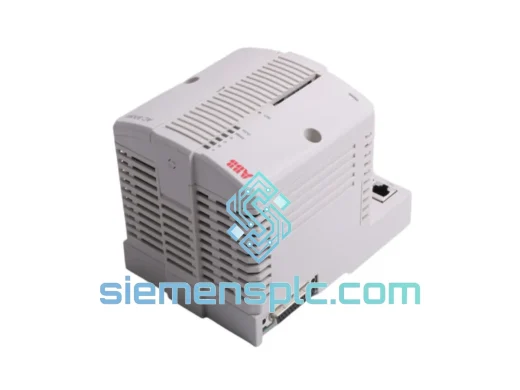
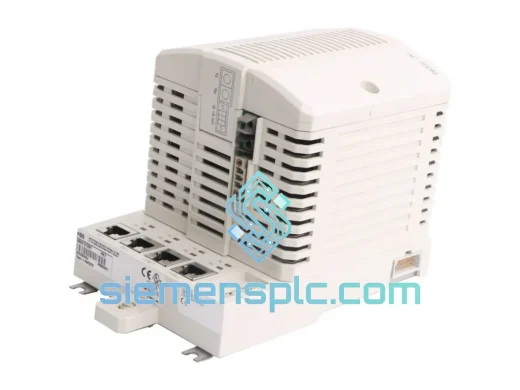
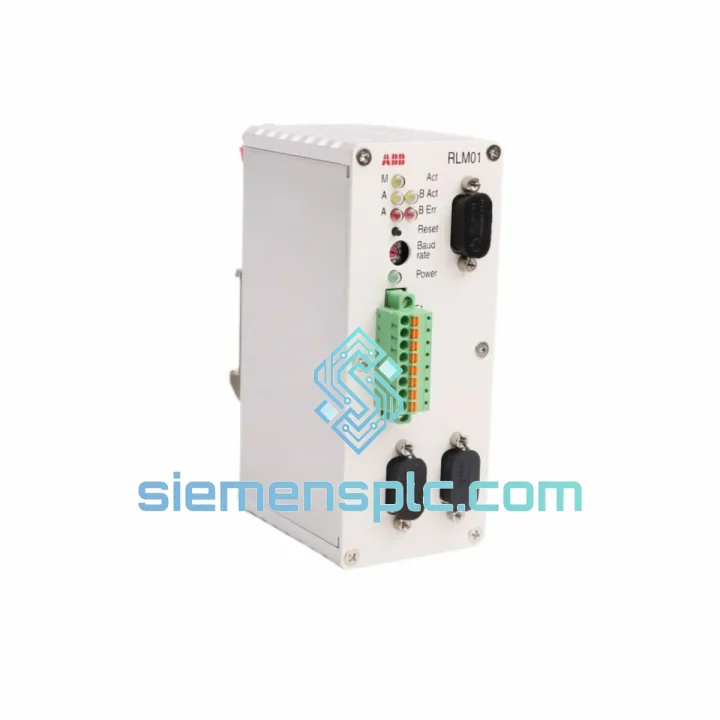
ABB RLM01 3BDZ000398R1 Redundancy Link Module – AC800M
Request verified availability, condition, replacement risk review, packing options and courier lead time for RLM01 3BDZ000398R1.
BrandABB
Part NumberRLM01 3BDZ000398R1
ConditionAvailability Check
Lead TimeRFQ Confirmation
DocumentsDatasheet / photos by RFQ
ShippingExport packing available
Auto-filled RFQ
RLM01 3BDZ000398R1
Click Request Quote and the part number is inserted into the inquiry form automatically.
- Reply by email: [email protected]
- WhatsApp / Tel: +86 18359268345
- Mon-Sat 9:00-18:00 GMT+8
Procurement Data
Key Product Information
Core fields for model confirmation and RFQ routing. Detailed product narrative remains below.
- Brand
- ABB
- Primary Part Number
- RLM01 3BDZ000398R1
- Product Type
- Redundancy Module
- Series / Family
- AC800M
- Manufacturer
- ABB Ltd.
- Country of Origin
- SE
- Catalog Category
- DCS & Safety Modules
- Operating Temp.
- 0 °C to +55 °C
- Warranty
- 12 months from date of shipment
Model confirmed for inquiry
RLM01 3BDZ000398R1
Send quantity, destination and urgency. The RFQ form keeps this part number attached.
Request Quote
Product Overview
ABB RLM01 3BDZ000398R1 — Hot-Standby Redundancy Link Module for AC800M DCS Architecture
The ABB RLM01 (catalog reference 3BDZ000398R1) is a dedicated hardware redundancy synchronisation module engineered for the AC800M Advant Controller 800M platform. Its singular function is to maintain a continuous, deterministic state-mirror channel between a primary PM8xx CPU and its hot-standby counterpart, enabling bumpless controller switchover in under one scan cycle. In process industries where an unplanned controller outage translates directly into production loss, safety risk, or regulatory non-compliance, the RLM01 is the architectural component that converts a simplex controller node into a fault-tolerant control loop.
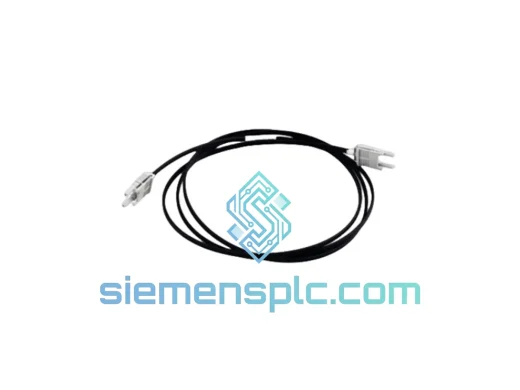
Unlike software-based redundancy schemes that rely on shared Ethernet backbones and introduce variable latency, the RLM01 operates over a dedicated Redundancy Link Bus (RLB) — a point-to-point hardware channel physically isolated from the process I/O network. This separation guarantees that synchronisation traffic never competes with real-time I/O scan data, preserving deterministic cycle times even under peak process load.
Real-time Stock & RFQ: [email protected] | WhatsApp: +86 18359268345
Technical Parameters
| Part Number | RLM01 |
| Catalog / Order Number | 3BDZ000398R1 |
| Manufacturer | ABB Ltd. |
| Product Series | AC800M (Advant Controller 800M) |
| Module Function | Hot-standby CPU redundancy synchronisation via dedicated Redundancy Link Bus (RLB) |
| Redundancy Architecture | 1:1 hot-standby (bumpless transfer, zero process bump on switchover) |
| Switchover Time | < 1 controller scan cycle (application task-cycle dependent) |
| Compatible CPUs | PM861A, PM864A, PM866, PM891 and their sub-variants |
| Communication Interface | Proprietary RLB — point-to-point, electrically isolated from S800 I/O bus |
| Backplane Interface | Direct plug-in to AC800M controller unit backplane; no external cabling required |
| Power Source | Backplane-supplied; no dedicated external PSU |
| Supply Voltage (via backplane) | 5 VDC ± 5 % (backplane-regulated) |
| Operating Temperature | 0 °C to +55 °C |
| Storage Temperature | −25 °C to +70 °C |
| Relative Humidity | 5 % to 95 % RH, non-condensing |
| EMC Compliance | CE — EMC Directive 2014/30/EU; IEC 61000-4 series immunity levels |
| Safety Standards | IEC 61508 / IEC 61511 compatible architecture (SIL-capable when paired with certified I/O) |
| RoHS Compliance | Yes — RoHS 2 (2011/65/EU) |
| Firmware Compatibility | AC800M firmware 5.x and above |
| Engineering Tool | ABB Control Builder M (no custom function blocks required) |
| Hot-Swap Capability | Yes — replacement without controller restart |
| Module Weight | 320 g |
| Warranty | 12 months from date of shipment |
| Country of Origin | Germany |
Hardware Logical Analysis
The RLM01’s internal architecture is built around three design imperatives: electrical isolation, deterministic latency, and passive fail-safety.
Dedicated RLB Channel & Electrical Isolation. The module implements a galvanically isolated, point-to-point serial link between the two paired PM8xx CPUs. Because the RLB is physically separate from the S800 I/O fieldbus and the CEX-Bus used for inter-module communication, a fault or traffic surge on either of those buses has zero impact on redundancy synchronisation. This isolation is not a software abstraction — it is enforced at the PCB trace level, with opto-coupled transceivers at each end of the link.
State-Mirror Synchronisation Logic. On every controller scan cycle, the primary CPU writes its complete application memory image — including all process variable values, timer states, counter registers, and PID setpoints — across the RLB to the standby CPU. The RLM01 hardware manages the framing, CRC verification, and acknowledgement handshake for this transfer. If a CRC mismatch is detected, the module flags a synchronisation error in the AC800M system log without interrupting the primary CPU’s scan execution. This non-blocking error handling prevents a transient link glitch from triggering a false switchover.
Switchover Arbitration. The RLM01 participates in a hardware arbitration protocol with the paired CPUs. When the primary CPU fails to assert its heartbeat signal within the configured watchdog window, the standby CPU — having received the last valid memory image — asserts control of the backplane within the same scan cycle. The arbitration logic is implemented in dedicated gate-array hardware on the RLM01, not in firmware, which eliminates the possibility of a software exception delaying the switchover decision.
EMC Design. The module’s PCB layout follows ABB’s AC800M EMC design rules: ground planes are segmented to prevent high-frequency noise coupling between the RLB transceiver section and the backplane interface section. Ferrite beads are placed on all inter-section signal lines. The module housing provides shielding continuity with the controller unit chassis, meeting IEC 61000-4-4 (EFT/Burst) and IEC 61000-4-5 (Surge) immunity requirements at the installation level.
Hot-Swap Mechanics. The RLM01 connector is rated for a minimum of 500 insertion cycles. During a live replacement, the backplane power sequencing logic ensures the module’s internal logic is fully initialised before the RLB link is re-established, preventing a partial-state synchronisation from being accepted by the standby CPU.
System Integration Benefits
- Zero-bump process continuity: Because the standby CPU holds a current memory image at the moment of switchover, process variable outputs do not spike or reset. PID controllers resume from their last computed output, preventing the process disturbances that simplex-to-redundant migration typically introduces.
- Deterministic scan-cycle preservation: The RLB operates asynchronously to the I/O scan, so adding redundancy does not extend the controller’s task cycle time. Engineers can maintain the same cycle-time budget as a simplex configuration.
- Transparent engineering workflow: Redundancy is configured entirely within ABB Control Builder M’s hardware configuration tree. No additional software licences, custom function blocks, or third-party middleware are required. The engineering effort to enable redundancy is limited to adding the second CPU and two RLM01 modules to the hardware configuration.
- Integrated diagnostics visibility: Module health, RLB link status, synchronisation error counts, and switchover event timestamps are all surfaced natively in the AC800M system log and exposed via the OPC-UA server. SCADA systems can subscribe to these diagnostic variables without any custom mapping.
- Retrofit compatibility: Existing simplex AC800M installations using PM861A, PM864A, PM866, or PM891 CPUs can be upgraded to hot-standby redundancy by adding a second CPU and one RLM01 per controller node. Field wiring and I/O modules require no modification.
- SIL-capable architecture foundation: When the RLM01 is deployed alongside ABB’s certified S800 safety I/O modules and a SIL-rated CPU variant, the resulting architecture supports IEC 61511 SIL 2 process safety applications, providing a single hardware platform for both standard control and safety instrumented functions.
- Long-horizon spare-part availability: The AC800M platform carries an ABB extended lifecycle commitment. Spare RLM01 modules are available through authorised distribution channels, and ABB publishes a formal end-of-life notification policy, enabling plant engineers to plan spares inventory on 10–20 year plant horizons without obsolescence risk.
- Reduced MTTR through hot-swap replacement: A failed RLM01 can be replaced while the primary CPU continues to run in simplex mode. Once the replacement module is seated and the RLB link re-establishes, the standby CPU re-synchronises automatically. Total maintenance window for an RLM01 swap is typically under five minutes, with no process interruption.
Quality Assurance & Global Logistics
Every ABB RLM01 3BDZ000398R1 unit dispatched from our Xiamen, China facility passes a structured pre-shipment verification protocol:
- Visual & mechanical inspection: PCB surface, connector pin geometry, housing integrity, and OEM label authenticity are verified against ABB reference standards.
- Firmware version check: Confirmed compatible with AC800M firmware 5.x and above prior to dispatch.
- Functional power-on test: Module initialisation sequence and RLB link-up are verified on an AC800M test bench before packaging.
- Traceability documentation: Serial number and batch code are recorded. Full chain-of-custody documentation is available on request for pharmaceutical and regulated-industry customers.
- ESD-safe packaging: Shipped in anti-static ESD bag with foam insert; original ABB carton used where available.
- Export documentation: Commercial invoice, packing list, and certificate of origin provided for all international shipments. HS code classification support available.
Logistics partners include DHL Express, FedEx International Priority, and UPS Worldwide Expedited. Standard in-stock orders ship within 1–3 business days from Xiamen. Expedited same-day dispatch is available for orders confirmed before 14:00 CST.
Contact Information
Email: [email protected]
WhatsApp: +86 18359268345
Web: siemensplc.com
Location: Xiamen, China
© 2026 siemensplc.com. All rights reserved.
Ready to quote
[email protected]
Send This Part Number to Sales
RFQ workflow
Quality workflow ->
Confirmation Process
01Model confirmation
We check the full part number, brand, series and visible nameplate information before quotation.
02Availability reply
Sales confirms stock path, condition option, quantity and realistic lead time for export dispatch.
03Packing & courier
DHL, FedEx, UPS or buyer courier arrangements can be reviewed with packing requirements.
Continue sourcing
Browse full catalog ->
Related Automation Parts
Similar brand or category products for fast comparison and multi-item RFQ lists.
ABB
RFQ Ready
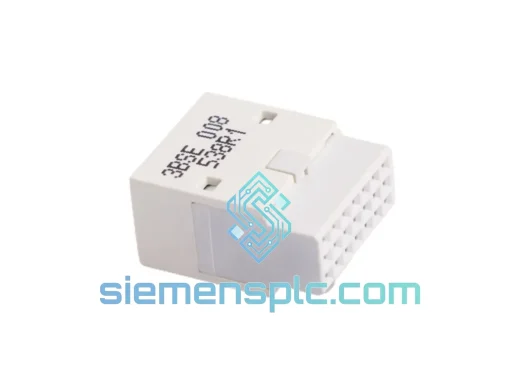
ABB TB807 3BSE008538R1 DCS Modulebus Terminator
AC800M
Origin SE
DCS Backplane Terminator