
ABB
In Stock OK
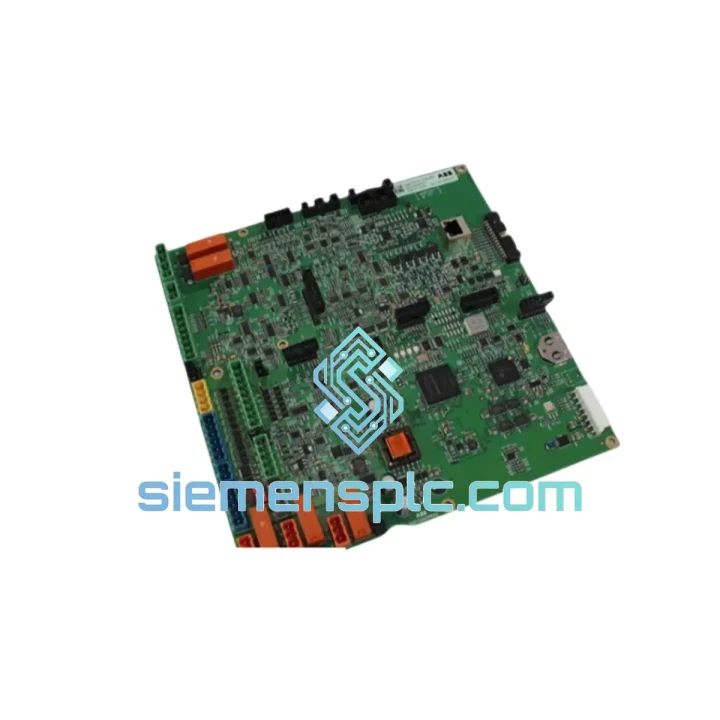
ABB SDCS-CON-3A DC Drive Control Board – DCS800 Series
Request verified availability, condition, replacement risk review, packing options and courier lead time for SDCS-CON-3A.
BrandABB
Part NumberSDCS-CON-3A
ConditionAvailability Check
Lead TimeRFQ Confirmation
DocumentsDatasheet / photos by RFQ
ShippingExport packing available
Auto-filled RFQ
SDCS-CON-3A
Click Request Quote and the part number is inserted into the inquiry form automatically.
- Reply by email: [email protected]
- WhatsApp / Tel: +86 18359268345
- Mon-Sat 9:00-18:00 GMT+8
Procurement Data
Key Product Information
Core fields for model confirmation and RFQ routing. Detailed product narrative remains below.
- Brand
- ABB
- Primary Part Number
- SDCS-CON-3A
- Product Type
- DC Drive Control Board
- Series / Family
- S800
- Manufacturer
- ABB
- Country of Origin
- SE
- Catalog Category
- Motor Drives
- Operating Temp.
- 0 °C to +55 °C
- Humidity
- 5–95% RH, non-condensing
- Warranty
- 12 months from date of shipment
Model confirmed for inquiry
SDCS-CON-3A
Send quantity, destination and urgency. The RFQ form keeps this part number attached.
Request Quote
Product Overview
ABB SDCS-CON-3A: Closed-Loop DC Drive Control Architecture for DCS800 Systems
The ABB SDCS-CON-3A (order reference 3ADT220120R0003) is the dedicated control processor board for the ABB DCS800 series of fully digital DC drives. Within the drive’s hardware stack, this board occupies the supervisory layer between the operator interface and the power conversion stage. It executes the speed and torque regulation algorithms, manages field excitation sequencing, arbitrates all I/O transactions, and maintains the serial communication link to the host control system. Without a functioning SDCS-CON-3A, the DCS800 drive cannot perform closed-loop motor control regardless of the condition of the power board or gate driver circuitry.
The board is built around a 32-bit floating-point DSP core that runs ABB’s proprietary Direct Torque Control (DTC) variant adapted for DC machines. The control cycle executes at 3.3 ms, which is fast enough to track torque transients in demanding applications such as steel rolling mill main drives and paper machine winder sections. The DSP communicates with the power board (SDCS-POW-4 or SDCS-POW-4A) over a dedicated high-speed parallel bus, transferring firing angle commands and receiving DC bus voltage and current feedback on every control cycle. This tight hardware coupling eliminates the latency that would be introduced by a serial inter-board link and is a key reason the DCS800 achieves its published dynamic torque response specification.
Field excitation control is handled by a dedicated field regulator sub-loop running on the same DSP. The SDCS-CON-3A monitors field current via the SDCS-FEX-2 or SDCS-FEX-3 field exciter board and adjusts the field firing angle independently of the armature loop. This architecture allows field weakening above base speed to be executed smoothly without operator intervention, and it supports automatic field economy mode during standby to reduce motor heating in intermittent-duty applications.
The encoder interface accepts TTL-level incremental quadrature signals at input frequencies up to 200 kHz, corresponding to a 1024 PPR encoder on a motor running at approximately 11,700 RPM. The hardware decoder on the SDCS-CON-3A performs quadrature decoding in silicon rather than in firmware, which eliminates count errors at high shaft speeds and ensures that the speed feedback signal presented to the DSP is free of jitter artifacts that would otherwise degrade speed loop stability.
Analog I/O consists of four differential analog inputs (±10 V, 12-bit resolution) and two analog outputs (±10 V, 12-bit). The inputs are individually configurable as speed reference, torque reference, or process feedback channels via parameter assignment in DriveWindow 2 or Drive Composer. The analog output channels are typically assigned to actual speed and actual torque for external monitoring, but can be remapped to any internal signal in the drive’s parameter database. All analog channels are galvanically isolated from the DSP ground plane through on-board DC/DC converters and optocouplers, providing a minimum isolation voltage of 500 V rms to protect the control electronics from common-mode noise originating in the power stage.
Digital I/O comprises eight digital inputs and six digital outputs, all rated for 24 VDC logic levels. The inputs are filtered with a 5 ms hardware debounce circuit to reject contact bounce from relay-driven signals. The outputs are transistor-driven open-collector type with a 100 mA sink capacity per channel, suitable for direct connection to PLC input modules without interposing relays in most installations. A dedicated hardware fault relay output (terminals X4:1–X4:3) provides a normally closed dry contact rated at 250 V AC / 2 A for integration into safety relay circuits.
The SDCS bus connector on the board’s rear edge provides the physical and logical interface to optional fieldbus adapter modules. Supported adapters include the RDCO-01/02/03 for DDCS fiber-optic networks, RPBA-01 for PROFIBUS-DP, RCAN-01 for CANopen, and RETA-01 for EtherNet/IP. The fieldbus adapter plugs directly into the SDCS-CON-3A without requiring a separate power supply, and the drive’s parameter set is fully accessible over the fieldbus using the ABB drive profile or a manufacturer-specific profile depending on the adapter type.
siemensplc.com maintains verified stock of genuine ABB SDCS-CON-3A boards sourced through authorized distribution channels. Each unit is inspected, function-tested under load, and shipped from our Xiamen, China facility with full documentation. Our technical team can assist with firmware version verification, parameter backup and restore procedures, and drive commissioning support.
Real-time Stock & RFQ: [email protected] | WhatsApp: +86 18359268345
Technical Parameters
| Parameter | Value |
|---|---|
| Manufacturer | ABB |
| Part Number | SDCS-CON-3A |
| Order Code | 3ADT220120R0003 |
| Drive Series | DCS800 |
| Board Function | Closed-loop speed & torque control processor |
| DSP Architecture | 32-bit floating-point, 3.3 ms control cycle |
| Supply Voltage | 24 VDC ±15% (supplied from SDCS-POW-4) |
| Power Consumption | ≤ 8 W |
| Analog Inputs | 4 × differential, ±10 V, 12-bit, 500 V rms isolation |
| Analog Outputs | 2 × ±10 V, 12-bit |
| Digital Inputs | 8 × 24 VDC, 5 ms debounce |
| Digital Outputs | 6 × open-collector, 24 VDC / 100 mA |
| Fault Relay | 1 × NC dry contact, 250 V AC / 2 A |
| Encoder Interface | TTL incremental quadrature, ≤ 200 kHz |
| Fieldbus Interface | SDCS bus (RDCO, RPBA-01, RCAN-01, RETA-01) |
| Operating Temperature | 0 °C to +55 °C |
| Storage Temperature | −40 °C to +70 °C |
| Humidity | 5–95% RH, non-condensing |
| EMC Standard | EN 61800-3, Category C2 |
| Certifications | CE, UL, RoHS |
| Country of Origin | Finland |
| Warranty | 12 months from date of shipment |
Hardware Logical Analysis
The SDCS-CON-3A’s EMC immunity performance derives from a multi-layer PCB design in which the DSP ground plane is physically separated from the I/O signal ground and the 24 VDC power rail. Galvanic isolation barriers at every external interface — analog I/O, digital I/O, encoder input, and SDCS bus — prevent conducted noise from the power stage from coupling into the control logic. The board meets EN 61800-3 Category C2 without external filtering, which simplifies cabinet wiring and reduces the component count in the drive enclosure.
The armature current feedback path uses a dedicated 16-bit sigma-delta ADC running at 64× oversampling. The oversampling ratio suppresses switching-frequency noise from the thyristor firing events before the current signal reaches the DSP, allowing the current regulator to operate with a proportional-integral bandwidth of approximately 300 Hz without instability. This bandwidth is sufficient to reject torque disturbances caused by load impacts in rolling mill and hoist applications within one control cycle.
The board implements a hardware watchdog timer with a 20 ms timeout. If the DSP fails to service the watchdog within the timeout period — due to a firmware exception, memory fault, or power supply undervoltage — the watchdog asserts a hardware reset signal that simultaneously disables the gate driver enable line on the SDCS-POW-4 and opens the fault relay. This two-channel shutdown architecture ensures that a control board failure cannot leave the thyristor bridge in a conducting state, which would otherwise result in uncontrolled motor acceleration.
The SDCS bus interface uses differential RS-485 signaling at 1 Mbit/s with a 120 Ω termination resistor selectable by on-board jumper. The differential topology provides 7 V of common-mode rejection, which is adequate for the noise environment inside a drive cabinet where the bus cable runs parallel to power wiring. The bus protocol is a master-slave polling scheme in which the SDCS-CON-3A acts as master, polling the fieldbus adapter and any optional I/O expansion boards on a deterministic 3.3 ms schedule synchronized to the main control cycle.
System Integration Benefits
- Deterministic 3.3 ms control cycle: The fixed-period DSP execution schedule ensures that speed and torque loop updates occur at a predictable interval, which is a prerequisite for stable cascade control in multi-drive systems such as tandem rolling mills.
- Hardware-decoded encoder feedback: Silicon quadrature decoding eliminates firmware processing overhead and prevents count errors at high shaft speeds, maintaining speed feedback accuracy to ±1 encoder count per control cycle.
- Galvanically isolated analog I/O: 500 V rms isolation on all four analog input channels prevents ground loop currents from introducing offset errors into the speed or torque reference signals, which is particularly important in installations where the drive and the PLC are powered from separate distribution panels.
- Independent field excitation loop: Separate field regulator sub-loop allows field weakening and field economy mode to operate without interaction with the armature speed loop, simplifying commissioning and improving stability in variable-speed applications above base speed.
- Fieldbus transparency: Full parameter database access over PROFIBUS-DP, CANopen, or EtherNet/IP via plug-in adapters allows the host PLC to read any internal drive signal — including actual current, actual speed, and active fault codes — without requiring additional hardware or custom firmware.
- Two-channel hardware shutdown: Watchdog-triggered simultaneous gate driver disable and fault relay opening provides a fail-safe response to control board faults that satisfies the requirements of EN ISO 13849-1 Category 3 safety architectures when combined with appropriate external safety relay circuitry.
- Standardized commissioning toolchain: Compatibility with ABB DriveWindow 2 and Drive Composer allows parameter upload, download, and comparison using the same software used across the entire ABB drive product range, reducing the training burden for maintenance engineers who work with mixed drive fleets.
- Backward-compatible hardware revision: The SDCS-CON-3A is a hardware revision of the SDCS-CON-3 with identical firmware compatibility, allowing direct board swap in existing DCS800 installations without drive re-commissioning in the majority of applications.
Quality Assurance & Global Logistics
Every SDCS-CON-3A unit supplied by siemensplc.com is sourced from ABB’s authorized distribution network. Boards are not sourced from grey-market channels, and each unit carries a traceable lot code that can be verified against ABB’s manufacturing records on request. Before shipment, each board undergoes a functional power-on test in a DCS800 drive frame: the board is energized, the DSP firmware version is confirmed, all I/O channels are exercised, and the encoder interface is verified with a test signal generator. Units that do not pass all test points are quarantined and not shipped.
Packaging follows IEC 61340-5-1 ESD protection requirements. Each board is placed in a conductive anti-static bag, heat-sealed, and packed in a foam-lined corrugated carton with a minimum 50 mm foam wall thickness on all six faces. The outer carton is labeled with the part number, serial number, test date, and firmware version for traceability.
Shipments originate from our Xiamen, China facility. Standard export documentation — commercial invoice, packing list, and certificate of origin — is prepared for every shipment. HS code 8537.10 applies to this product for customs classification purposes. DHL Express and FedEx International Priority are the primary carriers for time-sensitive orders; sea freight consolidation is available for bulk orders of five or more units. Typical transit times are 3–5 business days to Europe and North America via air express. A 12-month replacement warranty covers all units against manufacturing defects and premature failure under normal operating conditions.
Contact Information
Email: [email protected]
WhatsApp: +86 18359268345
Web: siemensplc.com
Location: Xiamen, China
© 2026 siemensplc.com. All rights reserved.
Ready to quote
[email protected]
Send This Part Number to Sales
RFQ workflow
Quality workflow ->
Confirmation Process
01Model confirmation
We check the full part number, brand, series and visible nameplate information before quotation.
02Availability reply
Sales confirms stock path, condition option, quantity and realistic lead time for export dispatch.
03Packing & courier
DHL, FedEx, UPS or buyer courier arrangements can be reviewed with packing requirements.
Continue sourcing
Browse full catalog ->
Related Automation Parts
Similar brand or category products for fast comparison and multi-item RFQ lists.
ABB
RFQ Ready
ABB SDCS-UCM-1 3ADT220090R0008 Excitation Control Board
S800
Origin SE
DC Drive Control Module
ABB
RFQ Ready
ABB SDCS-PIN-51-COAT 3ADT220090R0006 DC Drive Control Card
S800
Origin SE
DC Drive Control Card