Allen-Bradley
RFQ Ready
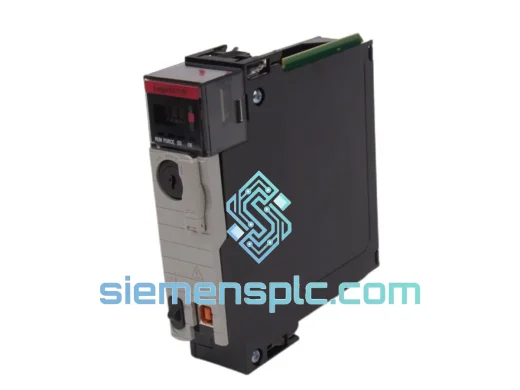
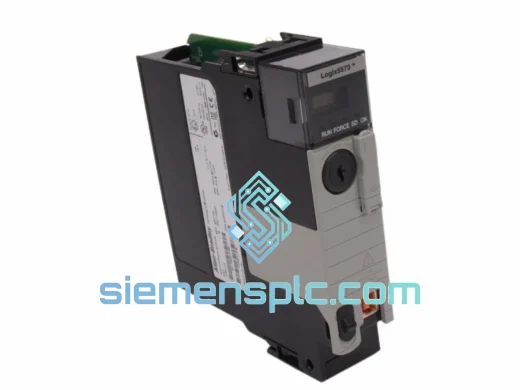
Allen-Bradley 1756-L73 PLC Processor Module – ControlLogix Logix5573
ControlLogix
Origin US
PLC Processor Module
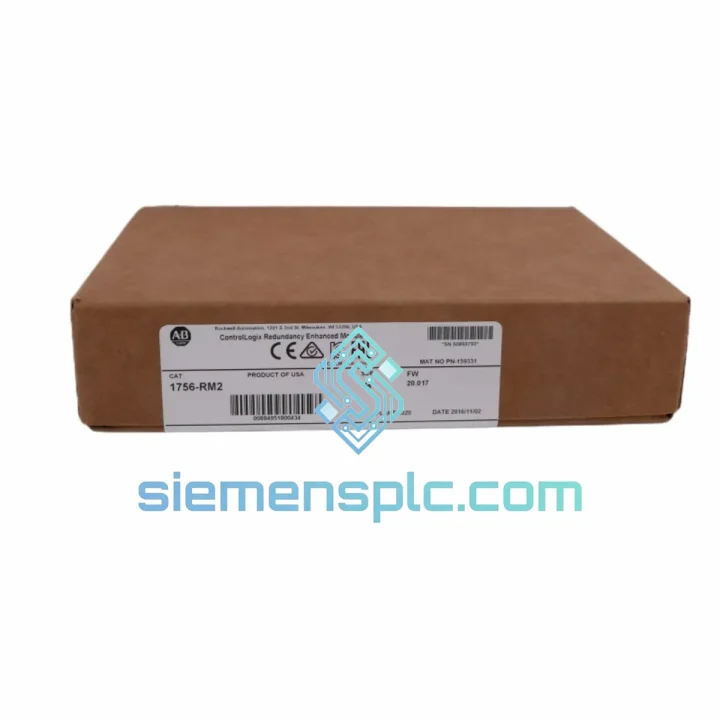
Request verified availability, condition, replacement risk review, packing options and courier lead time for 1756-RM2/A.
Click Request Quote and the part number is inserted into the inquiry form automatically.
Core fields for model confirmation and RFQ routing. Detailed product narrative remains below.
In continuous-process environments — petrochemical reactors, power generation units, water treatment facilities — a single controller fault without a validated failover path translates directly into unplanned downtime, safety interlock compromise, and production loss measured in thousands of dollars per hour. The Allen-Bradley 1756-RM2/A is the Enhanced Redundancy Module engineered to eliminate that exposure. It synchronizes two ControlLogix chassis across a dedicated fiber-optic link, executing bumpless switchover within one controller scan cycle upon detection of a primary-chassis fault — with zero impact to field devices, no I/O re-initialization, and no loss of process data.
The 1756-RM2/A represents the second-generation Enhanced Redundancy architecture within Rockwell Automation’s 1756 ControlLogix platform. Compared to the original 1756-RM, the RM2/A delivers measurably higher synchronization throughput, broader I/O count support, and compatibility with the current Enhanced Redundancy firmware bundle ecosystem. It occupies one slot in each of the primary and secondary ControlLogix chassis and communicates exclusively over the 1756-RMxx fiber-optic redundancy cable — a dedicated physical path that keeps synchronization traffic fully isolated from the EtherNet/IP process network.
Real-time Stock & RFQ: [email protected] | WhatsApp: +86 18359268345
| Parameter | Value |
|---|---|
| Part Number | 1756-RM2/A |
| Series | ControlLogix Enhanced Redundancy |
| Manufacturer | Allen-Bradley / Rockwell Automation |
| Module Function | Hot-standby redundancy synchronization |
| Redundancy Type | Hot-standby, bumpless switchover (<1 scan cycle) |
| Synchronization Medium | Dedicated fiber-optic link (1756-RMxx cable) |
| Chassis Compatibility | 1756 ControlLogix chassis (all slot counts) |
| Controller Compatibility | 1756-L7x, 1756-L8x series (Enhanced Redundancy firmware bundle required) |
| Backplane Interface | 1756 ControlBus backplane |
| Operating Temperature | 0 °C to 60 °C (32 °F to 140 °F) |
| Storage Temperature | −40 °C to 85 °C (−40 °F to 185 °F) |
| Relative Humidity | 5 % to 95 %, non-condensing |
| Enclosure Rating | Open-type; requires installation in rated enclosure |
| Certifications | UL Listed, CE Marked, cUL (verify current listings) |
| Weight | Approx. 400 g |
| Warranty | 12 months from date of shipment |
The 1756-RM2/A operates as a dedicated arbitration and synchronization engine between two physically separate ControlLogix chassis. Its internal logic continuously mirrors the primary controller’s output image table, I/O data, and program state to the secondary chassis at the backplane scan rate. The synchronization link uses a point-to-point fiber-optic connection, which provides two measurable advantages: optical isolation eliminates ground-loop interference between chassis, and the dedicated bandwidth prevents synchronization latency from being affected by EtherNet/IP network load.
The module’s arbitration logic monitors primary-chassis health through multiple concurrent watchdog channels: controller heartbeat, backplane communication integrity, and power supply status. When any monitored parameter crosses its fault threshold, the RM2/A asserts a switchover command to the secondary chassis within the current scan cycle. The secondary controller, which has been maintaining a synchronized output image, assumes primary role without re-executing the program from the beginning — the process state is preserved in full.
From an EMC standpoint, the fiber-optic synchronization path provides inherent immunity to conducted and radiated electromagnetic interference — a critical design consideration in high-voltage switchgear rooms, variable-frequency drive environments, and arc-flash-prone industrial facilities. The module’s backplane connector and internal circuitry comply with IEC 61000-4 series immunity requirements, supporting deployment in environments with significant electrostatic discharge, electrical fast transient, and surge exposure.
The RM2/A also implements a qualified switchover logic that prevents false failover events caused by transient communication glitches. A configurable qualification window requires the fault condition to persist for a defined number of consecutive scans before switchover is initiated — balancing response speed against nuisance tripping in electrically noisy environments.
Every 1756-RM2/A unit supplied by siemensplc.com is sourced as genuine Allen-Bradley product manufactured by Rockwell Automation. Units undergo incoming inspection against Rockwell Automation’s published part identification standards, including label verification, date code review, and physical condition assessment. Where applicable, modules are powered and verified for backplane communication and self-diagnostic pass prior to dispatch.
Packaging follows anti-static and moisture-barrier protocols: each module is sealed in an ESD-protective bag, cushioned with closed-cell foam, and enclosed in a rigid outer carton rated for international air freight handling. This packaging specification is maintained regardless of order quantity.
Shipments originate from Xiamen, China, with access to DHL Express, FedEx International Priority, and UPS Worldwide Express services. Transit times to major industrial hubs in Southeast Asia, the Middle East, Europe, and the Americas typically range from 3 to 7 business days under express service. Full export documentation — commercial invoice, packing list, and certificate of origin — is prepared for each shipment to support customs clearance. A 12-month warranty covers manufacturing defects from the date of shipment.
Email: [email protected]
WhatsApp: +86 18359268345
Web: siemensplc.com
Location: Xiamen, China
© 2026 siemensplc.com. All rights reserved.
We check the full part number, brand, series and visible nameplate information before quotation.
Sales confirms stock path, condition option, quantity and realistic lead time for export dispatch.
DHL, FedEx, UPS or buyer courier arrangements can be reviewed with packing requirements.
Similar brand or category products for fast comparison and multi-item RFQ lists.