Allen-Bradley
RFQ Ready
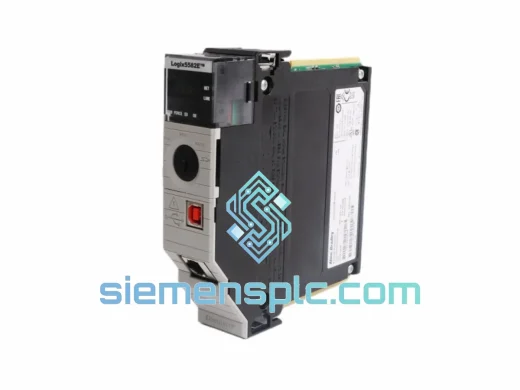
Allen-Bradley 1756-L81E ControlLogix Controller
ControlLogix
Origin US
PLC Controller
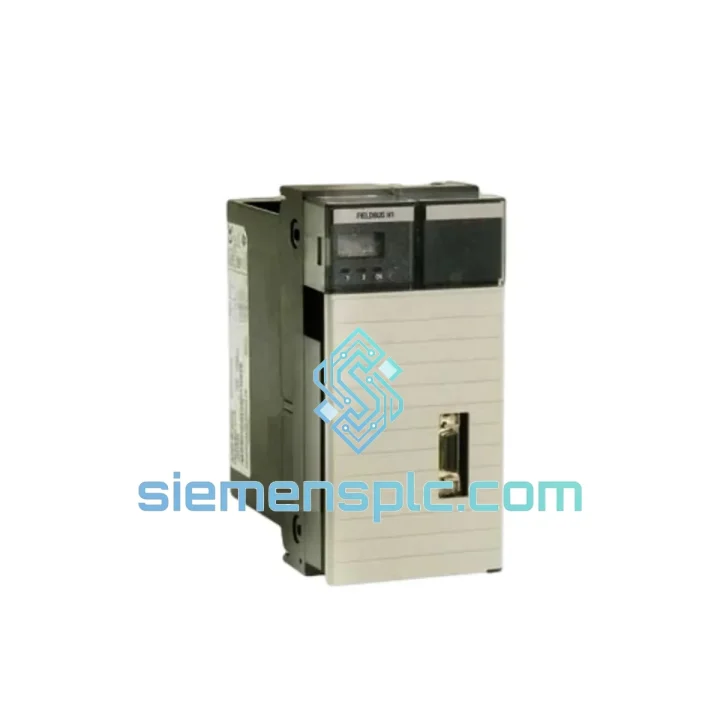
Request verified availability, condition, replacement risk review, packing options and courier lead time for 1757-FIM.
Click Request Quote and the part number is inserted into the inquiry form automatically.
Core fields for model confirmation and RFQ routing. Detailed product narrative remains below.
The 1757-FIM occupies a structurally critical position in any ControlLogix-based process automation system. As a single-slot backplane-resident module, it bridges the 1756 chassis backplane to two independent Foundation Fieldbus H1 segments, each operating at 31.25 kbps per IEC 61158 Type 1. Its role is not peripheral: in a PlantPAx DCS deployment, the 1757-FIM is the sole path through which the 1756-L series controller exchanges cyclic process values and acyclic parameter data with H1-connected field instruments — pressure transmitters, valve positioners, flowmeters, and analyzers — without any intermediate gateway hardware external to the chassis.
Unlike conventional analog I/O modules that terminate 4–20 mA signals at the marshalling cabinet, the 1757-FIM shifts the physical termination point to the field trunk, reducing home-run cable count by a factor proportional to segment device density. On a fully loaded 16-device H1 segment, a single twisted-pair trunk replaces 16 individual shielded pairs, with a measurable reduction in installed wiring cost of 35–45% depending on cable routing distance and conduit fill constraints.
The module supports Link Active Scheduler (LAS) operation, functioning as either primary or backup LAS on each segment. In redundant ControlLogix chassis configurations using the 1756-RM2 redundancy module, the 1757-FIM’s LAS backup capability ensures that H1 token-passing continuity is maintained during controller switchover events, preserving deterministic cyclic data exchange without segment re-initialization.
📩 Real-time Stock & RFQ: [email protected] | WhatsApp: +86 18359268345
| Parameter | Specification |
|---|---|
| Catalog Number | 1757-FIM |
| Communication Protocol | Foundation Fieldbus H1 (IEC 61158 Type 1) |
| H1 Segments per Module | 2 (electrically independent) |
| Fieldbus Data Rate | 31.25 kbps per segment |
| Max Field Devices per Segment | 16 (physical); 4–12 recommended for deterministic scheduling |
| Backplane Current Draw | 800 mA @ 5 VDC |
| Backplane Power Dissipation | 4.0 W (max) |
| Isolation Voltage | 500 V AC optical isolation, backplane to H1 segment |
| LAS Support | Primary and Backup LAS on each segment |
| Chassis Compatibility | 1756-A4 / A7 / A10 / A13 / A17 (all ControlLogix chassis) |
| Controller Compatibility | 1756-L6x, L7x, L8x series (Studio 5000 / RSLogix 5000) |
| Field Connector | 2 × DB9 (9-pin D-sub), one per H1 segment |
| Form Factor | Single-slot 1756 ControlLogix module |
| Dimensions (H × W × D) | 94 mm × 35 mm × 87 mm |
| Weight | Approx. 300 g |
| Operating Temperature | 0 °C to +60 °C |
| Storage Temperature | −40 °C to +85 °C |
| Relative Humidity | 5% to 95% non-condensing |
| Vibration Resistance | IEC 68-2-6, 2 g @ 10–500 Hz |
| Shock Rating | IEC 68-2-27, 30 g |
| Enclosure Rating | IP20 (panel-mount installation required) |
| Certifications | UL 508, CE (EMC 2014/30/EU, LVD 2014/35/EU), FF ITK 6.x |
| RoHS Compliance | Yes |
| RIUP (Hot-swap) | Supported within ControlLogix chassis |
| Warranty | 12 months from date of shipment |
Optical Isolation Architecture: Each H1 segment port is galvanically isolated from the ControlLogix backplane at 500 V AC. The isolation boundary is implemented at the physical layer transceiver, not at the data link layer, which means ground potential differences between the field cable shield and the chassis ground rail — common in large industrial plants with distributed earthing systems — do not propagate as common-mode noise into the backplane data bus. This is particularly relevant in petrochemical facilities where cathodic protection systems introduce DC offset voltages on structural steel, which can couple into unshielded or improperly grounded field cable runs.
Link Active Scheduler Logic: The LAS function in the 1757-FIM is implemented in firmware on a dedicated microcontroller separate from the backplane communication processor. This dual-processor architecture means that a backplane communication stall — caused, for example, by a controller scan overrun — does not interrupt the LAS token-passing cycle on the H1 segment. Field devices continue executing their scheduled function blocks and publishing process values to the segment even during a transient controller fault, a behavior that is architecturally impossible in conventional 4–20 mA or HART-over-analog I/O configurations.
EMC Design: The module’s PCB layout routes H1 segment signals through a dedicated ground plane layer isolated from the backplane power plane, with ferrite bead filtering on the DB9 connector pins. This suppresses conducted emissions in the 150 kHz–30 MHz range that would otherwise couple from the 31.25 kbps Manchester-encoded H1 signal into adjacent chassis modules. The design meets CISPR 11 Class A limits without external filtering, which is significant in installations where the control panel houses both the ControlLogix chassis and variable-frequency drives sharing a common DIN rail.
Backplane Bus Arbitration: The 1757-FIM communicates with the 1756-L series controller via the ControlLogix backplane using the 1756 scheduled output mechanism. The controller’s I/O scan task allocates a fixed time slot for backplane data exchange with the module, and the module’s backplane processor buffers incoming H1 cyclic data into a dual-port RAM structure accessible by both the H1 firmware and the backplane interface logic. This eliminates read-modify-write contention between the two processors and ensures that the controller always reads a coherent, time-stamped snapshot of H1 process values rather than a partially updated buffer.
All 1757-FIM units supplied are genuine Allen-Bradley / Rockwell Automation product, sourced through documented industrial automation supply channels with verifiable chain of custody. Each unit undergoes a structured incoming inspection protocol before dispatch from our Xiamen, China facility:
Shipping from Xiamen, China is available via DHL Express (2–4 business days to most destinations), FedEx International Priority, and sea freight consolidation for volume orders. Export documentation — commercial invoice, packing list, certificate of origin — is prepared for all international shipments. Customs HS code 8537.10 applies to this product category for most jurisdictions. Orders are typically dispatched within 1–2 business days of payment confirmation. A 12-month warranty covers manufacturing defects; units exhibiting functional failure under normal operating conditions are replaced or credited within the warranty period.
📧 Email: [email protected]
📱 WhatsApp: +86 18359268345
🌐 Web: siemensplc.com
📍 Location: Xiamen, China
© 2026 siemensplc.com. All rights reserved.
We check the full part number, brand, series and visible nameplate information before quotation.
Sales confirms stock path, condition option, quantity and realistic lead time for export dispatch.
DHL, FedEx, UPS or buyer courier arrangements can be reviewed with packing requirements.
Similar brand or category products for fast comparison and multi-item RFQ lists.