
Allen-Bradley
In Stock OK
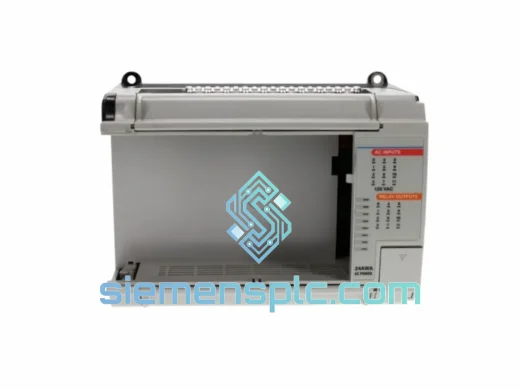
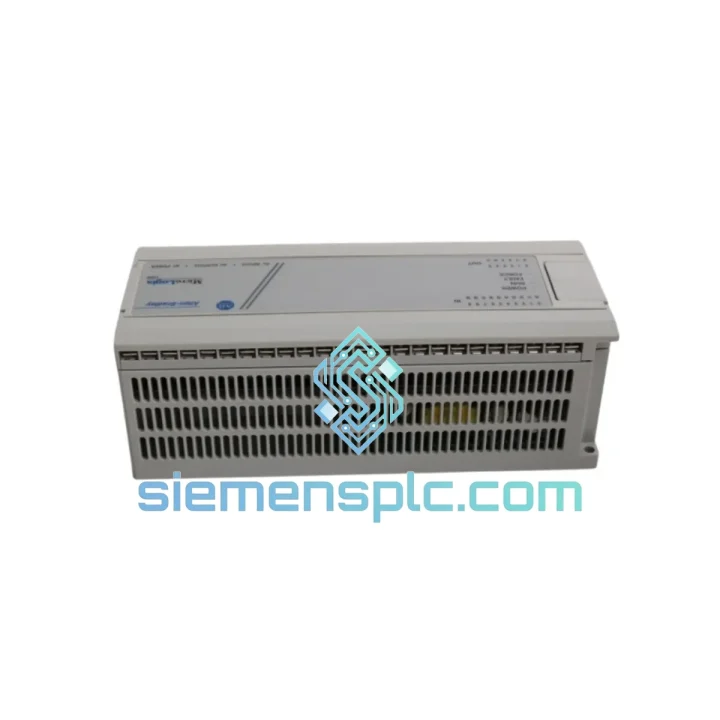
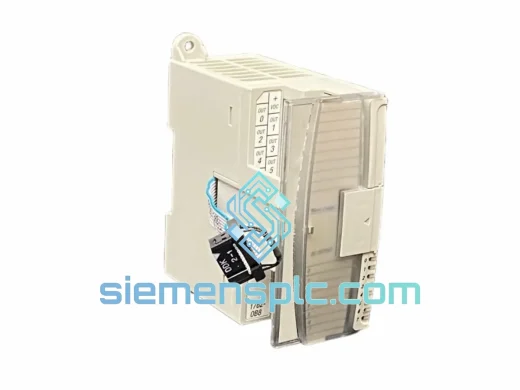
Allen-Bradley 1761-L32AWA PLC Controller
Request verified availability, condition, replacement risk review, packing options and courier lead time for 1761-L32AWA.
BrandAllen-Bradley
Part Number1761-L32AWA
ConditionAvailability Check
Lead TimeRFQ Confirmation
DocumentsDatasheet / photos by RFQ
ShippingExport packing available
Auto-filled RFQ
1761-L32AWA
Click Request Quote and the part number is inserted into the inquiry form automatically.
- Reply by email: [email protected]
- WhatsApp / Tel: +86 18359268345
- Mon-Sat 9:00-18:00 GMT+8
Procurement Data
Key Product Information
Core fields for model confirmation and RFQ routing. Detailed product narrative remains below.
- Brand
- Allen-Bradley
- Primary Part Number
- 1761-L32AWA
- Product Type
- PLC Controller
- Series / Family
- MicroLogix
- Manufacturer
- Allen-Bradley / Rockwell Automation
- Country of Origin
- US
- Catalog Category
- I/O Modules
Model confirmed for inquiry
1761-L32AWA
Send quantity, destination and urgency. The RFQ form keeps this part number attached.
Request Quote
Product Overview
1761-L32AWA Line Down? Every Hour Offline Is Revenue Walking Out the Door — We Dispatch Today
You’ve already done the diagnostics. The fault LED is solid, the HMI is frozen, and the MicroLogix 1000 isn’t coming back. The 1761-L32AWA is confirmed dead. What you need right now isn’t a datasheet — it’s a verified, original unit on its way to your facility before the shift ends. We stock the Allen-Bradley 1761-L32AWA in our Xiamen warehouse and ship same-day via DHL Express. Most destinations in Asia receive within 24–48 hours. Europe and North America in 3–5 business days. No lead time games, no “check back next week.”
This is the unit that runs your conveyor interlocks, your pump sequencing, your packaging line logic. When it fails, everything downstream fails with it. We’ve been supplying emergency replacements to maintenance teams across Southeast Asia, the Middle East, and Europe for years. We know what a critical shutdown looks like, and we built our operation around solving it fast.
⚡ URGENT REQUIREMENT? Contact us now:
📧 [email protected] | 📱 WhatsApp: +86 18359268345
Quick Technical Datasheet
| Parameter | Specification |
|---|---|
| Part Number | 1761-L32AWA |
| Platform | MicroLogix 1000 |
| Manufacturer | Allen-Bradley / Rockwell Automation |
| Total I/O | 32 Points — 20 Inputs / 12 Outputs |
| Input Voltage | 120V AC |
| Output Type | Relay — 120/240V AC |
| Power Supply | 120/240V AC |
| Program Memory | 1K Words (EEPROM, non-volatile) |
| Communication | RS-232 / DH-485 (Channel 0) |
| Scan Time | ~1 ms per 1K instructions |
| Operating Temp | 0°C to 60°C |
| Storage Temp | -40°C to 85°C |
| Dimensions (H×W×D) | 90 × 196 × 87 mm |
| Certifications | UL, CE, CSA, RoHS |
| Origin | United States |
| Stock Status | ✅ Ready to Ship — Xiamen Warehouse |
Troubleshooting & Replacement Tips
After a decade of field calls on MicroLogix 1000 installations — from water treatment SCADA panels to automotive press lines — the same failure patterns repeat. Here’s what you actually need to know when you’re standing in front of a dead 1761-L32AWA with a production manager breathing down your neck.
Fault Code Breakdown
- Fault 0001h — Non-Recoverable Hardware Fault: Internal processor failure. Power cycling does nothing. The CPU is gone. Stop troubleshooting and order the replacement now — you’re not getting this one back.
- Fault 0020h — Watchdog Timeout: Scan time blew past the watchdog limit. First, audit the ladder for nested MSG instructions or uncontrolled loop structures. If the logic is clean and the fault persists, the processor is failing to execute at rated speed — hardware failure confirmed.
- Fault 0080h — Memory Fault: EEPROM corruption. Attempt S:1/15 memory clear and reload from your .RSS backup. If the fault returns after a clean reload, the EEPROM cells are physically degraded. Replace the unit.
- Input LEDs Solid Red, No Fault Code: Before pulling the PLC, verify the 120V AC supply to the input common terminals. A blown fuse on the input common rail produces symptoms identical to a CPU failure. Check the fuse first — it’s a 5-minute fix versus a 3-day replacement cycle.
- RS-232 Port Dead: Static discharge kills the Channel 0 RS-232 transceiver on aged units. Test with a known-good 1761-CBL-PM02 cable and a second laptop before condemning the CPU. If two cables and two laptops can’t establish comms, the port is gone.
Replacement Procedure — What Field Experience Actually Teaches You
- 1. Upload Before You Pull: If the unit still powers on at all, connect RSLogix 500 and upload immediately. Save the .RSS file with a timestamp. Field modifications that never made it into the documentation are common — this upload is your insurance policy.
- 2. Photograph the Terminal Block: 32 terminals, and every one of them matters. Take a clear photo before disconnecting a single wire. Wiring errors on recommission are the number-one cause of extended downtime after a successful hardware swap.
- 3. Match the DIP Switch Configuration: The 1761-L32AWA has a DIP switch bank on the left side panel. These switches set the DH-485 node address and communication baud rate (factory default: 19200 baud, node 1). On the replacement unit, replicate the switch positions exactly before mounting. A node address mismatch causes the HMI to lose comms the instant you power up — and it looks like a hardware fault when it isn’t.
- 4. Verify Firmware Compatibility: RSLogix 500 embeds the firmware revision requirement in the .RSS file. The replacement unit’s firmware must be equal to or newer than the program’s minimum revision. Check the processor status file (S:6) after first power-up. If the firmware is older, the program download will fail or execute with undefined behavior. Contact us if you need a specific firmware revision — we can advise on compatible units.
- 5. Download in Program Mode, Verify Before Run: Never switch to Run Mode immediately after download. Verify all I/O status LEDs against known field conditions first. A successful download does not guarantee correct I/O wiring — it only guarantees the logic loaded correctly.
- 6. Force-Test Safety Outputs: Before releasing the machine to production, force-test every E-stop interlock and safety-critical output relay. Relay contacts on a new unit are fine, but a wiring error on a safety output is a liability issue, not just a commissioning issue.
Reliability in Harsh Conditions
The 1761-L32AWA wasn’t designed for a climate-controlled server room. It was designed for the kind of environments where other electronics fail within a season. Here’s how it holds up where it actually gets installed.
Vibration Resistance: Rated to IEC 68-2-6 sinusoidal vibration — 5 to 2000 Hz at 2.5G continuous. In practice, this means direct panel mounting on compressor skids, pump station enclosures, and conveyor drive panels without PCB trace fatigue or connector fretting over multi-year service life. The relay output contacts use a wiping-action design that maintains low contact resistance even under sustained vibration exposure — a detail that matters when your output is driving a 24V DC coil that needs to pull in reliably every cycle.
Thermal Performance: The 0°C to 60°C operating range covers the vast majority of industrial panel environments without forced cooling. The EEPROM retains program data through power loss and thermal shock cycles that corrupt flash-based storage in competing platforms. In outdoor pump station enclosures where panel temperatures swing 35–40°C between day and night cycles, this non-volatile retention is not a marketing claim — it’s the reason the program is still intact when you power up after a cold night.
Humidity and Contamination: Conformal coating on the main PCB provides resistance to condensation and airborne particulates common in food processing, water treatment, and chemical handling environments. The unit meets IEC 68-2-30 damp heat cycling requirements. In wash-down adjacent panels — not direct wash-down — properly enclosed 1761-L32AWA units have demonstrated multi-year service life without corrosion-related failures on the PCB or relay contacts.
Our Storage Standards: Every unit we ship has been stored in climate-controlled conditions from receipt to dispatch. We do not sell units that have spent years in uncontrolled warehouse environments. Thermal cycling and humidity exposure during improper storage degrade electrolytic capacitors and relay contact surfaces before the unit ever reaches your panel — and that failure shows up three months after installation, not on day one.
Global Express Logistics
Our warehouse and dispatch operation is based in Xiamen, China — a tier-one export hub with direct DHL Express and FedEx International Priority service to over 220 countries. When you confirm an order, here’s exactly what happens.
- Cut-off Time: Orders confirmed and payment cleared before 14:00 CST ship same business day. Orders after cut-off ship the following business day. No exceptions, no “we’ll try.”
- Packaging Protocol: The 1761-L32AWA ships in an anti-static shielding bag, inside a foam-lined inner carton, inside a double-wall corrugated outer box. Terminal covers are installed. The unit arrives ready to mount, not ready to inspect for transit damage.
- Carrier Selection: DHL Express (2–4 days to EU/US), FedEx International Priority (2–5 days), EMS (5–10 days for cost-sensitive shipments). Tracking number issued within 2 hours of dispatch confirmation.
- Customs Documentation: Commercial invoice, packing list, and HS Code 8537.10 export declaration provided as standard with every shipment. Country-of-origin certificates and FORM E documentation available on request — advise at time of order.
- Estimated Transit Times: Southeast Asia 1–2 days | East Asia 1–3 days | Europe 3–5 days | North America 3–5 days | Middle East 3–6 days | South America 5–8 days. All times are DHL Express estimates and exclude customs clearance delays at destination.
- Critical Shutdown Freight: For shutdowns where standard express is not fast enough, contact us directly on WhatsApp. We coordinate next-flight-out courier and hand-carry options through our freight forwarder network when hours matter more than cost.
Contact Information
📧 Email: [email protected]
📱 WhatsApp: +86 18359268345
🌐 Web: siemensplc.com
© 2026 siemensplc.com. All rights reserved.
Ready to quote
[email protected]
Send This Part Number to Sales
RFQ workflow
Quality workflow ->
Confirmation Process
01Model confirmation
We check the full part number, brand, series and visible nameplate information before quotation.
02Availability reply
Sales confirms stock path, condition option, quantity and realistic lead time for export dispatch.
03Packing & courier
DHL, FedEx, UPS or buyer courier arrangements can be reviewed with packing requirements.
Continue sourcing
Browse full catalog ->
Related Automation Parts
Similar brand or category products for fast comparison and multi-item RFQ lists.
Allen-Bradley
RFQ Ready
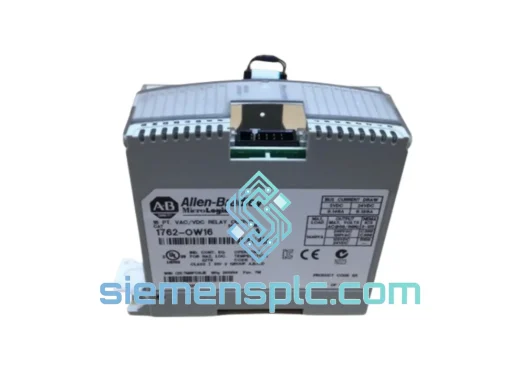
Allen-Bradley 1762-OW16 Relay Output Module
MicroLogix
Origin US
PLC Relay Output Module
Allen-Bradley
RFQ Ready
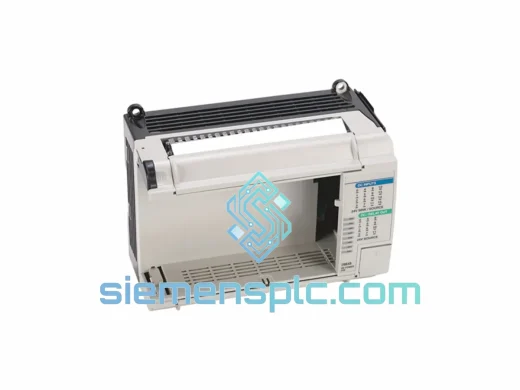
Allen-Bradley 1762-OA8 PLC Output Module – MicroLogix 1762 Series
MicroLogix
Origin US
PLC Output Module