
Basler
In Stock OK
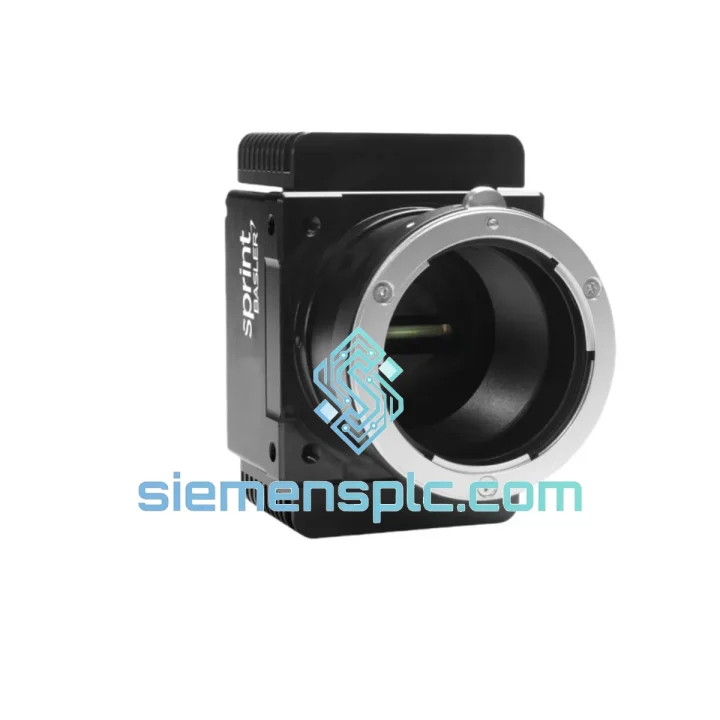
Basler SPL4096-140KM Line Scan Camera – sprint Series
Request verified availability, condition, replacement risk review, packing options and courier lead time for SPL4096-140KM.
BrandBasler
Part NumberSPL4096-140KM
ConditionAvailability Check
Lead TimeRFQ Confirmation
DocumentsDatasheet / photos by RFQ
ShippingExport packing available
Auto-filled RFQ
SPL4096-140KM
Click Request Quote and the part number is inserted into the inquiry form automatically.
- Reply by email: [email protected]
- WhatsApp / Tel: +86 18359268345
- Mon-Sat 9:00-18:00 GMT+8
Procurement Data
Key Product Information
Core fields for model confirmation and RFQ routing. Detailed product narrative remains below.
- Brand
- Basler
- Primary Part Number
- SPL4096-140KM
- Product Type
- Line Scan Camera
- Series / Family
- Scan Camera - sprint Series
- Manufacturer
- Basler AG
- Country of Origin
- Not specified
- Catalog Category
- Industrial Automation Spares
- Operating Temp.
- 0 °C to +50 °C
- Warranty
- 12 months from date of shipment
- Compliance
- CE (EMC 2014/30/EU, LVD 2014/35/EU), FCC Part 15 Class A, RoHS 2
Model confirmed for inquiry
SPL4096-140KM
Send quantity, destination and urgency. The RFQ form keeps this part number attached.
Request Quote
Product Overview
Basler SPL4096-140KM — High-Throughput Line Scan Imaging in Continuous-Web and Surface Inspection Systems
The Basler SPL4096-140KM is a monochrome CMOS line scan camera from the Basler sprint series, designed for industrial machine vision applications where sustained throughput, geometric accuracy, and signal fidelity are non-negotiable. With a 4096-pixel sensor array and a maximum line rate of 140,000 lines per second, this camera occupies a well-defined position in high-speed web inspection, flat-panel substrate scanning, and precision print verification systems.
Unlike area scan cameras that capture discrete frames, a line scan camera builds a two-dimensional image by accumulating successive single-line acquisitions synchronized to material transport. The SPL4096-140KM’s 140 kHz ceiling means that at a cross-web pixel pitch of 0.1 mm, the system can track material moving at 14 m/s — a throughput envelope that covers the majority of industrial web and sheet processes without requiring camera multiplication or image stitching.
The sprint platform uses a CMOS photodiode array rather than a charge-coupled architecture. This distinction has direct consequences for system design: CMOS sensors exhibit lower read noise at high line rates, support per-pixel programmable gain in some configurations, and eliminate the charge-transfer efficiency degradation that CCD sensors experience under sustained high-frequency clocking. The result is a more stable noise floor across the full operating line rate range — a property that matters when detecting low-contrast surface anomalies such as coating voids, micro-scratches, or density variations in printed media.
The Camera Link Full interface delivers up to 680 MB/s of sustained image data bandwidth, sufficient to transfer 4096 pixels at 8-bit depth at the full 140 kHz line rate without frame grabber-side buffering constraints. The interface also carries the serial communication channel used for remote parameter configuration — line rate, exposure time, gain, and trigger mode — without requiring a separate control cable.
Encoder-synchronized acquisition is a standard operating mode. An external quadrature encoder signal drives the line trigger, decoupling image acquisition from fixed-frequency clocking and ensuring constant spatial sampling regardless of transport speed variation. This is the correct architecture for web inspection systems where drive speed is not perfectly constant — a condition that applies to virtually all real production lines.
The F-mount (Nikon) lens interface accommodates the broad range of telecentric and entocentric line scan lenses available in that standard, giving system integrators flexibility in field-of-view and working distance selection without adapter hardware.
Real-time Stock & RFQ: [email protected] | WhatsApp: +86 18359268345
Technical Parameters
| Manufacturer | Basler AG |
| Part Number / SKU | SPL4096-140KM |
| Series | Basler sprint |
| Camera Type | Line Scan, Monochrome |
| Sensor Technology | CMOS photodiode array |
| Pixel Count | 4096 pixels |
| Pixel Size | 10 µm × 10 µm |
| Active Sensor Length | 40.96 mm |
| Maximum Line Rate | 140,000 lines/s (140 kHz) |
| Output Bit Depth | Mono 8 / Mono 16 |
| Data Interface | Camera Link Base / Medium / Full |
| Peak Data Bandwidth | 680 MB/s (Full configuration) |
| Trigger Input | External hardware trigger; quadrature encoder |
| Exposure Control | Programmable via Camera Link serial port |
| Power Supply | 12–24 V DC via Camera Link connector |
| Power Consumption | ≤ 8 W (typical) |
| Operating Temperature | 0 °C to +50 °C |
| Storage Temperature | −20 °C to +70 °C |
| Lens Mount | F-mount (Nikon) |
| Housing Dimensions | 60 mm × 60 mm cross-section |
| Weight | approx. 530 g |
| Compliance | CE (EMC 2014/30/EU, LVD 2014/35/EU), FCC Part 15 Class A, RoHS 2 |
| Camera Link Standard | AIA Camera Link Specification v2.0 |
| Origin | Germany |
| Warranty | 12 months from date of shipment |
Hardware Logical Analysis
The SPL4096-140KM’s CMOS sensor architecture is built around a rolling-shutter photodiode array with dedicated per-column readout circuitry. At 140 kHz, each line integration window is nominally 7.14 µs — a constraint that drives the illumination design requirement. The camera’s programmable exposure time allows the integration window to be shortened below the line period, which is the standard operating mode when using strobed LED illumination to freeze motion and control effective exposure independently of line rate.
The Camera Link Full configuration uses three MDR-26 connector pairs carrying three parallel 8-bit data channels plus clock and control signals. The serialized LVDS signaling on each tap operates at up to 85 MHz pixel clock, yielding the 680 MB/s aggregate bandwidth. The physical layer is inherently differential, providing common-mode noise rejection that is relevant in electrically noisy production environments where motor drives, servo amplifiers, and switching power supplies generate broadband EMI.
The encoder input accepts quadrature (A/B phase) signals, allowing the camera controller to compute transport velocity and generate line triggers at a fixed spatial interval — typically expressed as pulses per millimeter of material travel. This closed-loop spatial sampling architecture eliminates the geometric distortion (image stretch or compression) that occurs when material speed varies under fixed-frequency clocking. The encoder interface is electrically isolated from the camera’s internal logic, preventing ground loop currents from corrupting the trigger signal in systems where the encoder and camera share different ground references.
The housing is machined aluminum with threaded mounting points on multiple faces, providing both mechanical rigidity and a thermal conduction path for heat dissipation. At ≤ 8 W power consumption, the camera does not require forced-air cooling in standard ambient conditions, simplifying enclosure design for sealed inspection systems.
The F-mount interface, while originally a photographic standard, provides a 46.5 mm flange focal distance and a 44 mm throat diameter — sufficient to cover the 40.96 mm sensor length with appropriate line scan lenses without vignetting. The mechanical robustness of the bayonet lock is adequate for vibration levels typical of web-handling machinery.
System Integration Benefits
- Deterministic spatial sampling via encoder synchronization: Line acquisition is triggered by material displacement, not elapsed time. This eliminates image geometry errors caused by transport speed variation, which is present in all real web systems to some degree.
- Full Camera Link bandwidth headroom: At 140 kHz and 8-bit depth, the required data rate is 574 MB/s — within the 680 MB/s Full configuration ceiling. This 15% headroom prevents frame grabber overflow under sustained operation and allows for occasional line rate spikes without data loss.
- Low-noise CMOS readout at high line rates: The CMOS architecture maintains a stable noise floor across the full 140 kHz operating range, unlike CCD sensors where charge-transfer efficiency degrades at high clocking frequencies, increasing fixed-pattern noise.
- Single-camera coverage of wide material formats: The 40.96 mm active sensor length covers material widths up to approximately 400 mm at 0.1 mm/pixel resolution without camera stitching, reducing system complexity and eliminating inter-camera calibration requirements.
- Programmable exposure independent of line rate: Exposure time can be set shorter than the line period, enabling strobed illumination control. This decouples illumination intensity from line rate, allowing the same camera configuration to operate across a range of material speeds without re-optimizing the lighting system.
- Serial configuration via Camera Link: All operating parameters — gain, exposure, trigger mode, line rate — are accessible through the Camera Link serial channel. No separate USB or Ethernet control interface is required, simplifying cable management in multi-camera installations.
- Basler pylon SDK compatibility: The camera is supported by Basler’s pylon Camera Software Suite, which provides a GenICam-compliant API. This allows integration with standard machine vision frameworks (Halcon, VisionPro, LabVIEW Vision) without custom driver development.
- Electrically isolated trigger input: The encoder/trigger input circuit is galvanically isolated from the camera’s internal logic ground, preventing ground loop interference in systems where the encoder is referenced to a different electrical ground — a common condition in large-format web machinery.
- RoHS 2 compliance: The camera meets EU RoHS 2 (Directive 2011/65/EU) requirements, supporting deployment in regulated manufacturing environments and simplifying customs documentation for import into the EU and other RoHS-aligned jurisdictions.
- Compact cross-section for tight installation envelopes: The 60 mm × 60 mm housing cross-section allows installation in space-constrained inspection stations where larger camera bodies would require mechanical redesign of the inspection head.
Quality Assurance & Global Logistics
Every Basler SPL4096-140KM unit supplied by siemensplc.com is sourced through verified industrial channels and subjected to incoming inspection before dispatch. Physical inspection covers connector integrity, housing condition, lens mount thread condition, and label authenticity. Functional verification confirms power-on behavior and Camera Link signal presence. Units are packaged in anti-static foam-lined enclosures with outer shock-resistant cartons rated for international air freight handling.
Shipments originate from Xiamen, China. Standard export documentation — commercial invoice, packing list, and HS code declaration — is prepared for every international order. Express air freight via DHL Express, FedEx International Priority, and UPS Worldwide Express is available, with transit times of 3–7 business days to most destinations in Europe, North America, Southeast Asia, and the Middle East. Sea freight consolidation is available for volume orders where lead time permits.
A 12-month warranty applies from the date of shipment. Warranty coverage addresses functional failure under normal operating conditions. The technical support team is available via email and WhatsApp to assist with integration questions, compatibility verification, and fault diagnosis during the warranty period and beyond.
Contact Information
Email: [email protected]
WhatsApp: +86 18359268345
Web: siemensplc.com
Location: Xiamen, China
© 2026 siemensplc.com. All rights reserved.
Ready to quote
[email protected]
Send This Part Number to Sales
RFQ workflow
Quality workflow ->
Confirmation Process
01Model confirmation
We check the full part number, brand, series and visible nameplate information before quotation.
02Availability reply
Sales confirms stock path, condition option, quantity and realistic lead time for export dispatch.
03Packing & courier
DHL, FedEx, UPS or buyer courier arrangements can be reviewed with packing requirements.
Continue sourcing
Browse full catalog ->
Related Automation Parts
Similar brand or category products for fast comparison and multi-item RFQ lists.
ABB
RFQ Ready
ABB 3HAC9330-1 Robot Speed Reducer – IRB6640-205/2.7
lRB240046 RB460
Origin SE
Robot Speed Reducer
ABB
RFQ Ready
ABB YPP109A YPN106A EG2401S-AR DCS Power Module
Symphony Plus
Origin SE
DCS Power Module