Bently Nevada
RFQ Ready
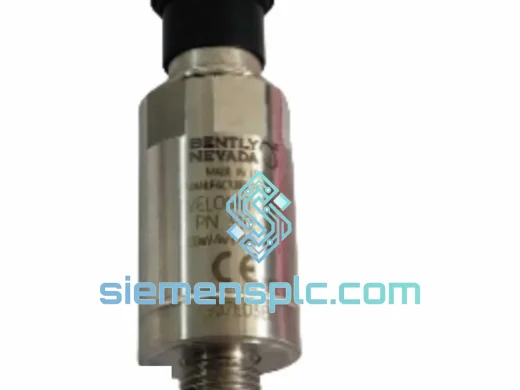
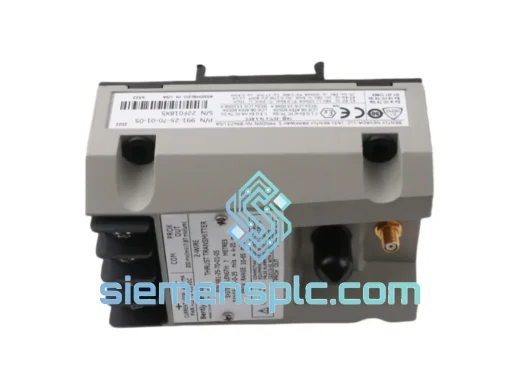
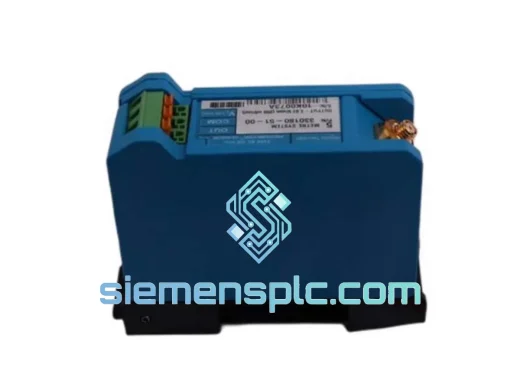
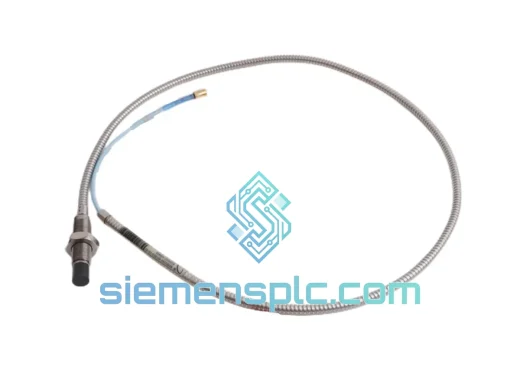
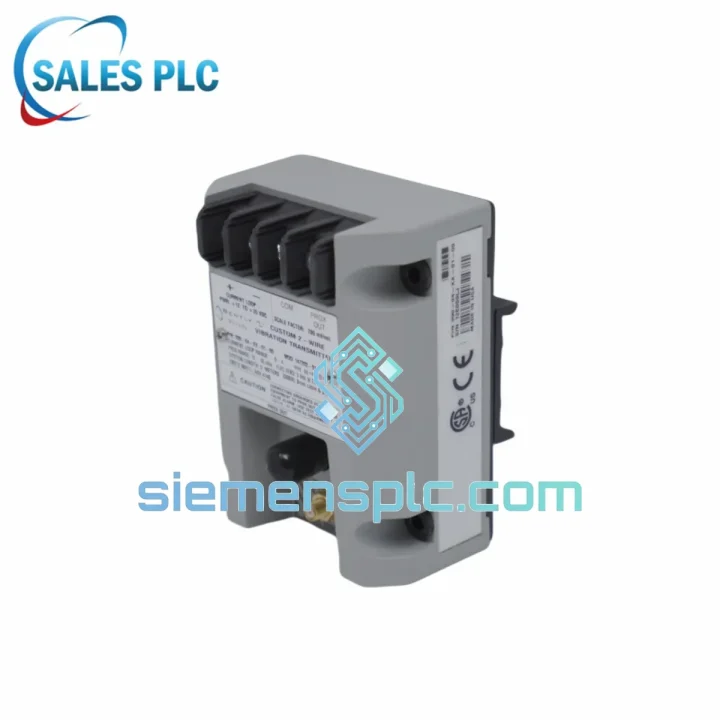
Bently Nevada RS901104-03-050-10-01 Proximitor Sensor – 3300 XL Series
3300 XL
Origin US
Proximitor Sensor
Request verified availability, condition, replacement risk review, packing options and courier lead time for 990-10-50-01-05.
Click Request Quote and the part number is inserted into the inquiry form automatically.
Core fields for model confirmation and RFQ routing. Detailed product narrative remains below.
The Bently Nevada 990-10-50-01-05 is a loop-powered, DIN-rail-mounted vibration transmitter engineered to convert raw proximity probe or seismic sensor signals into a standardized 4–20 mA analog output. Within a machinery protection architecture, this module occupies the critical signal-conditioning layer between the field sensor and the control system’s analog input card. Its function is not passive: it performs active signal linearization, span calibration, and galvanic isolation before presenting a clean, noise-immune current loop to the downstream DCS or safety instrumented system (SIS).
Deployed across turbine trains, centrifugal compressors, boiler feed pumps, and gearboxes in oil & gas, petrochemical, and power generation facilities, the 990-10-50-01-05 is the field-proven interface between Bently Nevada’s 3300 XL and 7200 series proximity probes and any 4–20 mA-compatible process controller. Its 18–30 VDC supply range accommodates both 24 VDC panel buses and battery-backed UPS rails without derating.
Real-time Stock & RFQ: [email protected] | WhatsApp: +86 18359268345
| Parameter | Specification |
|---|---|
| Part Number / SKU | 990-10-50-01-05 |
| Brand | Bently Nevada (Baker Hughes) |
| Series | 990 Proximitor/Seismic Monitor |
| Output Signal | 4–20 mA (2-wire loop-powered) |
| Input Compatibility | Bently Nevada 3300 XL & 7200 Series Proximity Probes; seismic velocity sensors |
| Supply Voltage | 18–30 VDC |
| Current Consumption | ≤ 25 mA (excluding loop current) |
| Output Load Resistance | 0–600 Ω at 24 VDC supply |
| Measurement Range | 0–50 mil pp (0–1270 µm pp) displacement; configurable per probe gap |
| Frequency Response | DC to 1000 Hz (–3 dB) |
| Operating Temperature | –40°C to +85°C |
| Storage Temperature | –55°C to +100°C |
| Relative Humidity | 5–95% RH, non-condensing |
| Enclosure / Mounting | DIN-rail (EN 60715 TS35), IP20 |
| Isolation | Galvanic isolation: input vs. output vs. power supply, 500 VAC test voltage |
| EMC Compliance | EN 61000-4-2/3/4/5/6 (ESD, RS, EFT, Surge, CS); EN 55011 Class A emissions |
| Weight | 440 g |
| Country of Origin | United States |
| Warranty | 12 months from date of shipment |
The 990-10-50-01-05 implements a three-stage signal chain that addresses the principal failure modes of field-level vibration measurement in electrically noisy industrial environments.
Stage 1 — Probe Driver Buffering: The input stage presents a high-impedance buffer to the eddy-current probe’s oscillator circuit. This prevents loading effects that would shift the probe’s resonant frequency and introduce non-linearity into the gap-to-voltage transfer function. The buffer’s input impedance is maintained above 1 MΩ across the full operating temperature range, ensuring the probe’s –24 VDC bias rail is not disturbed by the transmitter’s internal circuitry.
Stage 2 — Galvanic Isolation and Common-Mode Rejection: A DC/DC converter with transformer-coupled isolation separates the probe-side ground from the loop-side ground. This architecture eliminates ground loop currents that are endemic in large rotating machinery installations where the machine frame, the control room ground bus, and the field junction box may differ by several volts. The isolation barrier is rated at 500 VAC continuous, with a common-mode rejection ratio (CMRR) exceeding 80 dB at 50/60 Hz — sufficient to suppress the dominant interference frequency in most plant environments.
Stage 3 — V/I Conversion and Span Calibration: The isolated analog signal is fed into a precision voltage-to-current converter. The output current is linearly proportional to the measured vibration amplitude, with zero and span potentiometers accessible via the front panel for field calibration without loop interruption. The 4 mA live-zero convention provides continuous wire-break detection: a loop current below 3.6 mA triggers an under-range alarm in any NAMUR-compliant DCS input card, distinguishing a genuine low-vibration condition from a wiring fault.
EMC Design: The PCB layout employs a split ground plane with a single-point star connection at the isolation barrier. Ferrite beads on all I/O lines attenuate high-frequency conducted interference above 1 MHz. The housing is constructed from zinc-coated steel, providing shielding effectiveness of approximately 40 dB against radiated fields in the 30 MHz–1 GHz range — consistent with the EN 55011 Class A industrial emission standard.
Every 990-10-50-01-05 unit dispatched from our Xiamen facility is an original Bently Nevada (Baker Hughes) manufactured component procured through verified supply channels. Each unit undergoes a four-point pre-shipment inspection: label and serial number traceability verification against the OEM database, housing and connector integrity check, powered bench test confirming 4–20 mA output linearity across the calibrated span, and anti-static packaging with desiccant for humidity-sensitive electronics.
Shipments originate from Xiamen, China with the following logistics options:
Email: [email protected]
WhatsApp: +86 18359268345
Web: siemensplc.com
Location: Xiamen, China
© 2026 siemensplc.com. All rights reserved.
We check the full part number, brand, series and visible nameplate information before quotation.
Sales confirms stock path, condition option, quantity and realistic lead time for export dispatch.
DHL, FedEx, UPS or buyer courier arrangements can be reviewed with packing requirements.
Similar brand or category products for fast comparison and multi-item RFQ lists.