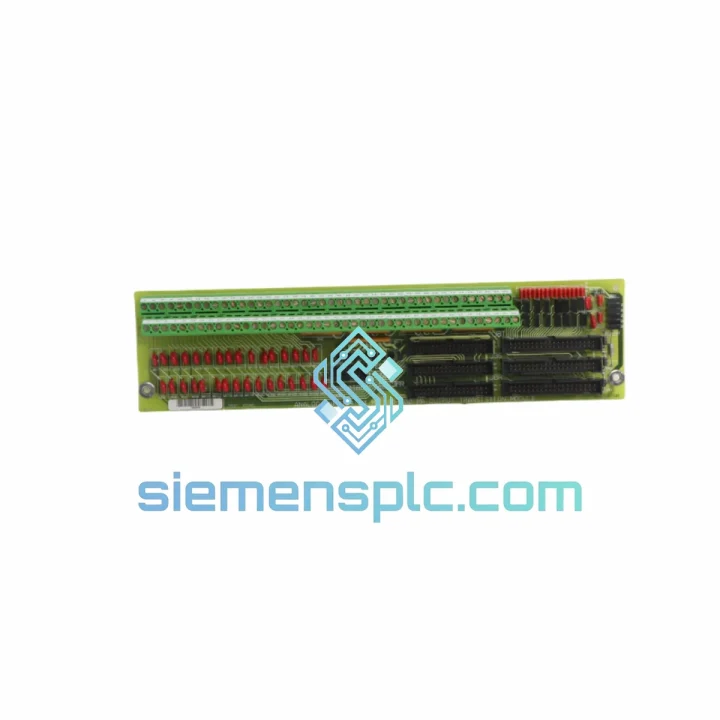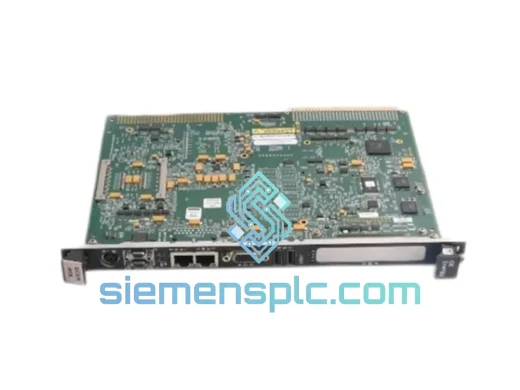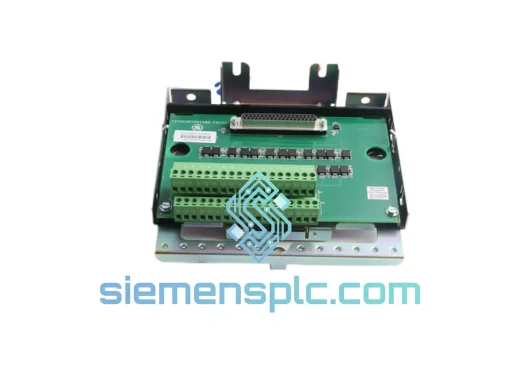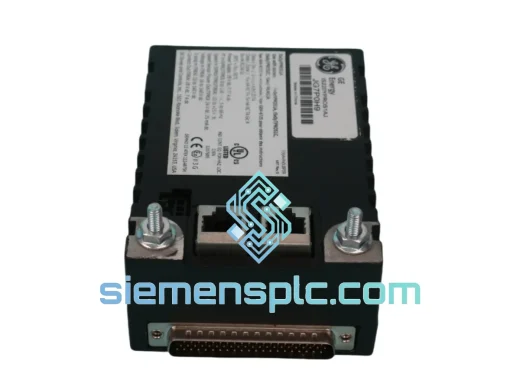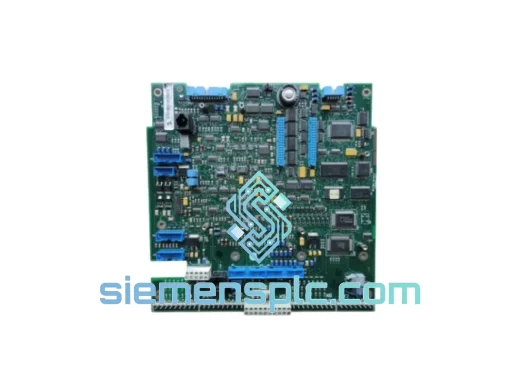
GE DS200TBQCG1AAA I/O Termination Board
Request verified availability, condition, replacement risk review, packing options and courier lead time for DS200TBQCG1AAA.
Click Request Quote and the part number is inserted into the inquiry form automatically.
- Reply by email: [email protected]
- WhatsApp / Tel: +86 18359268345
- Mon-Sat 9:00-18:00 GMT+8
Key Product Information
Core fields for model confirmation and RFQ routing. Detailed product narrative remains below.
- Brand
- GE
- Primary Part Number
- DS200TBQCG1AAA
- Product Type
- I/O Termination Board
- Series / Family
- Mark VI
- Manufacturer
- GE (General Electric)
- Country of Origin
- US
- Catalog Category
- I/O Modules
- Operating Temp.
- 0°C to +60°C (storage: -40°C to +85°C)
DS200TBQCG1AAA Down? Every Minute of Turbine Downtime Costs You — We Ship Today
A failed I/O termination board in a GE Mark VI system doesn’t just throw a fault code — it takes your entire turbine control loop offline. Field signals go dark. The DCS loses visibility. Operations halt. If you’re reading this at 2 AM with a unit tripped and a maintenance window closing fast, you already know what’s at stake: tens of thousands of dollars per hour in lost generation or process output.
The DS200TBQCG1AAA is the backbone of field wiring termination in the GE Mark VI Turbine Control System. It routes analog inputs, discrete I/O, and RTD/thermocouple signals from field instruments directly into the Mark VI I/O pack interface. When this board fails — whether from connector fatigue, trace corrosion, or a surge event — there is no workaround. You need a verified replacement, fast.
We stock the DS200TBQCG1AAA at our Xiamen warehouse. Units are pulled, inspected, and ready for same-day dispatch via DHL Express or FedEx International Priority. Transit to most major industrial hubs in Southeast Asia, the Middle East, and Europe runs 2–4 business days. No waiting on OEM lead times. No 8-week procurement cycles.
URGENT REQUIREMENT? Contact: [email protected] | WhatsApp: +86 18359268345
Quick Technical Datasheet
| Parameter | Detail |
|---|---|
| Part Number | DS200TBQCG1AAA |
| Manufacturer | GE (General Electric) |
| Series | DS200 / Mark VI Turbine Control System |
| Module Function | I/O Termination Board — field wiring interface for analog, discrete, RTD/TC signals |
| Compatible Controllers | GE Mark VI VCMI, VCRC, VCCC; EX2100 Excitation Control |
| Compatible I/O Packs | DS200 Series I/O boards (DIAG, SDCI, TBCI families) |
| Turbine Applications | GE Frame 5, Frame 6B, Frame 7EA/FA, Frame 9E/FA gas turbines; steam turbines |
| Signal Types Supported | 4–20 mA analog inputs, 24 VDC discrete I/O, RTD (PT100), thermocouple (J/K/T) |
| Connector Type | Screw-terminal field wiring blocks with shield drain provisions |
| Operating Temperature | 0°C to +60°C (storage: -40°C to +85°C) |
| Humidity Rating | 5–95% RH non-condensing |
| Weight | 340 g |
| Country of Origin | United States |
| Stock Status | ✔ Ready to Ship — Xiamen Warehouse |
| Dispatch Lead Time | Same day (orders confirmed before 14:00 CST) |
| Condition Available | New OEM / Tested Surplus / Refurbished (state specified at quotation) |
Troubleshooting & Replacement Tips
Common failure signatures that point to DS200TBQCG1AAA:
- Mark VI HMI showing persistent L3DIAG or IOPACK_FAULT alarms on the affected I/O pack — after ruling out the I/O pack itself, the termination board is the next suspect.
- Intermittent analog input readings (4–20 mA channels drifting or reading 0/21 mA) with no field instrument fault — check terminal block screw torque first; if re-torquing doesn’t resolve it, the PCB trace or connector pin is likely compromised.
- RTD channels reading open-circuit or fixed resistance — corrosion on the RTD terminal block is a classic failure mode in humid coastal or offshore environments.
- Discrete input channels stuck HIGH or LOW with confirmed healthy field device — check for solder joint cracking on the opto-isolator footprints near the terminal strip edge.
Step-by-step replacement procedure (Mark VI, hot-standby systems):
- Confirm redundancy status. In ToolboxST, verify the affected I/O pack is in simplex or that the redundant path is healthy before proceeding. Do not pull the board if both paths are degraded simultaneously.
- De-energize the I/O pack. Remove the I/O pack connector from the termination board first — do not disconnect field wiring under live conditions unless your site SOP explicitly permits it.
- Photograph terminal wiring. Before loosening a single screw, photograph every terminal row. The DS200TBQCG1AAA has dense wiring; a mis-landed wire on reinstallation will generate a new fault that wastes hours.
- Label and remove field wires. Use numbered cable markers. Remove wires in groups by function (AI group, DI group, RTD group) to maintain logical order.
- Swap the board. The DS200TBQCG1AAA mounts on DIN rail or panel studs depending on the cabinet generation. Verify the replacement board’s revision suffix (G1AAA) matches — revision mismatches can cause I/O pack firmware incompatibility in some Mark VI panel builds.
- Re-land field wiring. Torque screw terminals to 0.5–0.6 N·m. Over-torquing cracks the terminal block housing; under-torquing causes intermittent contact under vibration.
- Reconnect I/O pack and power up. In ToolboxST, force a diagnostic scan on the affected I/O pack. Confirm all channel health indicators return GREEN before releasing the unit to operations.
- No firmware action required. The DS200TBQCG1AAA is a passive termination board — it carries no firmware, EEPROM, or address switches. There is no self-addressing or DIP switch configuration needed. Plug-and-play once wiring is correct.
Pro tip from the field: If the replacement board clears the fault but one or two analog channels still read erratically, the issue is likely in the field cable shield grounding, not the board. Check that shield drain wires are landed on the designated shield bus bar, not floating or tied to signal common.
Reliability in Harsh Conditions
The DS200TBQCG1AAA was designed for the realities of turbine hall environments — not a climate-controlled server room. GE’s DS200 series termination boards are built to IEC 61131-2 environmental standards, validated against the conditions that actually kill industrial electronics:
- Vibration: Rated to IEC 60068-2-6 sinusoidal vibration profiles. The screw-terminal field wiring interface is specifically chosen over IDC connectors because it maintains contact integrity under continuous mechanical vibration from adjacent rotating equipment. Units sourced from us are inspected for solder joint fatigue — a primary vibration failure mode — before dispatch.
- Thermal cycling: Turbine control cabinets routinely see 15–25°C swings between cold startup and full-load operation. The DS200TBQCG1AAA’s PCB substrate and component selection account for differential thermal expansion across this range. We reject any unit showing delamination, lifted pads, or cracked conformal coating during inspection.
- Humidity and contamination: Offshore platforms and coastal power plants are the harshest environments for PCB-based electronics. Conformal coating on the DS200TBQCG1AAA provides a barrier against condensation and airborne contaminants. Units showing coating breakdown, corrosion on copper traces, or oxidized terminal blocks are quarantined — they do not ship.
- EMI/RFI: The termination board’s layout includes ground plane provisions and shield termination points that suppress common-mode noise on long field cable runs — critical in environments with large motor drives, switchgear, and high-current bus bars in close proximity.
Every unit leaving our Xiamen facility is packed in anti-static shielding bags, cushioned with closed-cell foam, and boxed in double-wall corrugated cartons rated for international air freight handling. We’ve shipped to refineries in Saudi Arabia, power plants in Indonesia, and compressor stations in Kazakhstan — the packaging holds.
Global Express Logistics
Downtime doesn’t wait for standard freight. Our logistics process is built around one objective: getting the DS200TBQCG1AAA into your hands before your next maintenance window closes.
- Dispatch point: Xiamen, Fujian, China — a major international cargo hub with direct DHL and FedEx gateway connections.
- Carriers: DHL Express Worldwide and FedEx International Priority are our primary carriers for urgent shipments. Both offer door-to-door tracking and customs clearance support.
-
Typical transit times:
- Southeast Asia (Singapore, Malaysia, Thailand, Indonesia): 1–2 business days
- Middle East (UAE, Saudi Arabia, Qatar, Kuwait): 2–3 business days
- Europe (Germany, Netherlands, UK, France): 3–4 business days
- South Asia (India, Pakistan, Bangladesh): 2–3 business days
- Americas (USA, Canada, Brazil): 3–5 business days
- Export documentation: Commercial invoice, packing list, and certificate of origin provided as standard. HS Code 8537.10 applies for customs classification. We can provide additional documentation (material safety data, test certificates) upon request.
- Order cutoff: Orders confirmed and payment cleared before 14:00 CST are dispatched same business day. Orders after cutoff ship next morning.
- Tracking: AWB number provided within 2 hours of dispatch. Real-time tracking link sent directly to your procurement or maintenance contact.
For plant shutdowns, turnarounds, or emergency outage situations where standard transit is not fast enough, contact us directly on WhatsApp for charter freight and hand-carry options to your site.
Contact Information
Email: [email protected]
WhatsApp: +86 18359268345
Web: siemensplc.com
© 2026 siemensplc.com. All rights reserved.
Send This Part Number to Sales
Confirmation Process
We check the full part number, brand, series and visible nameplate information before quotation.
Sales confirms stock path, condition option, quantity and realistic lead time for export dispatch.
DHL, FedEx, UPS or buyer courier arrangements can be reviewed with packing requirements.