GE Fanuc
RFQ Ready
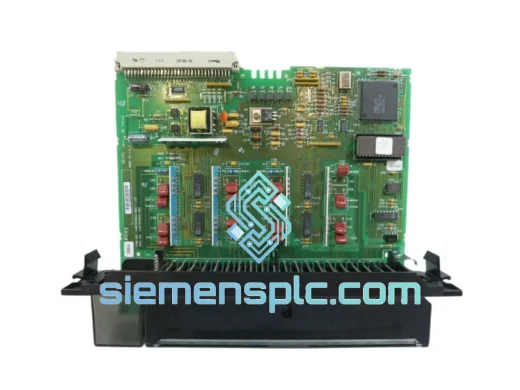
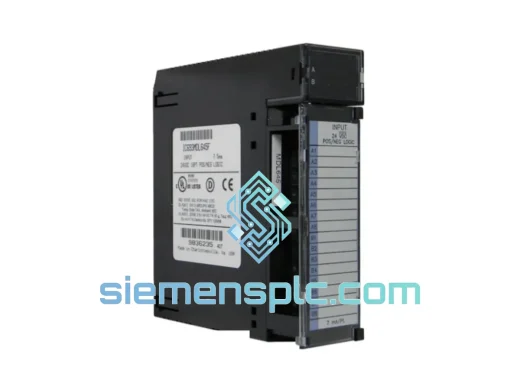
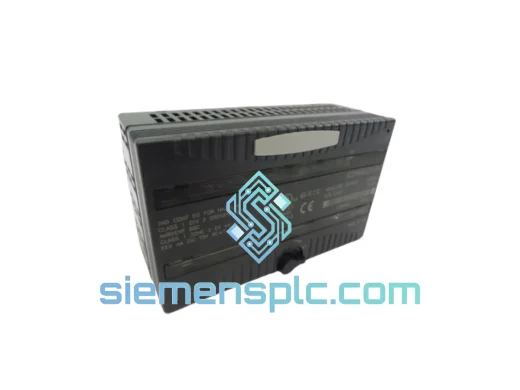
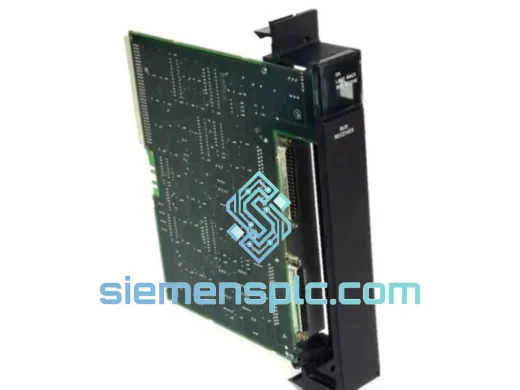
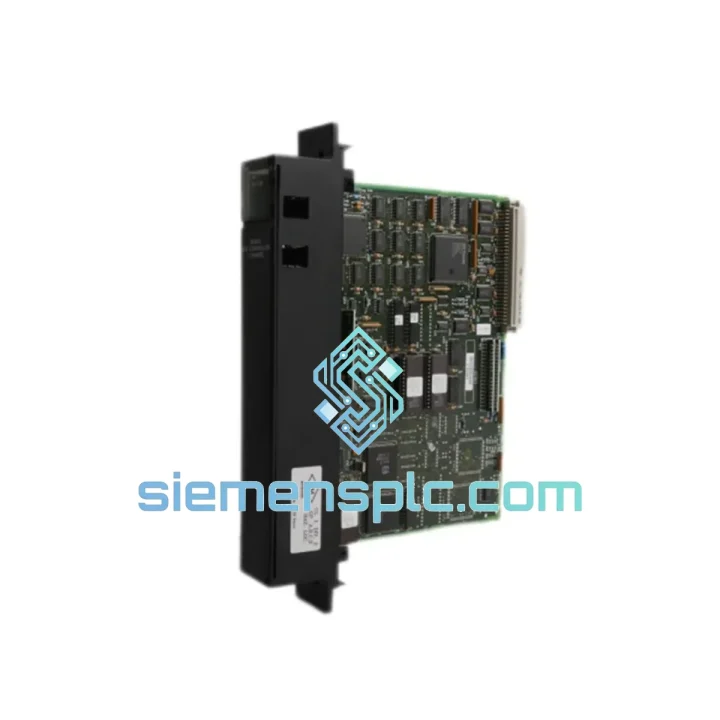
GE Fanuc IC697BEM711 Bus Receiver Module – Series 90-70
Fanuc
Origin US
Bus Receiver Module
Request verified availability, condition, replacement risk review, packing options and courier lead time for IC697BEM731F.
Click Request Quote and the part number is inserted into the inquiry form automatically.
Core fields for model confirmation and RFQ routing. Detailed product narrative remains below.
The IC697BEM731F is a Remote I/O Bus Controller Module (BCM) designed for the GE Fanuc Series 90-70 VME-based programmable controller platform. Within a distributed control architecture, this module occupies a standard 6U VME slot in the CPU rack and assumes the role of bus master on the Series 90-70 proprietary coaxial remote I/O bus. Its primary function is to extend the I/O address space of the host CPU beyond the physical boundaries of the local rack, enabling deterministic, scan-synchronized communication with up to 31 remote I/O drops distributed across a plant floor footprint of up to 750 meters per bus segment.
Unlike passive I/O expanders, the IC697BEM731F executes an autonomous polling cycle on the remote bus, independent of the CPU scan cycle overhead. The BCM maintains its own bus timing state machine, issuing token-passing frames to each configured Bus Receiver Module (BRM) in a fixed round-robin sequence. This architecture decouples remote I/O latency from CPU processing load, preserving deterministic scan times even as the remote I/O count scales toward the 31-drop maximum. The result is a control loop with predictable worst-case response times — a requirement in continuous-process and safety-adjacent applications where jitter in I/O update rates is operationally unacceptable.
The F-revision suffix designates the hardware and firmware revision level of this specific production run. Revision F incorporates updated ASIC logic for improved bus arbitration stability under high-noise electrical environments, and is backward-compatible with all earlier IC697BEM731 revision levels at the rack and software configuration level.
Real-time Stock & RFQ: [email protected] | WhatsApp: +86 18359268345
| Parameter | Specification |
|---|---|
| Part Number | IC697BEM731F |
| Manufacturer | GE Fanuc Automation (now ABB / Emerson) |
| Module Classification | Remote I/O Bus Controller Module (BCM) |
| Target Platform | Series 90-70 (VME 6U rack architecture) |
| Backplane Interface | VME 6U (P1 + P2 connectors) |
| Remote I/O Bus Type | GE Series 90 proprietary coaxial bus (RG-6, 75 Ω) |
| Bus Data Rate | 1 Mbps |
| Maximum Remote Drops | 31 drops per BCM |
| Maximum Bus Segment Length | 750 m (coaxial, with proper 75 Ω termination) |
| Bus Topology | Daisy-chain / multi-drop coaxial |
| Operating Voltage (Backplane) | +5 VDC, ±12 VDC (supplied via VME rack PSU) |
| Operating Temperature | 0 °C to +60 °C |
| Storage Temperature | −40 °C to +85 °C |
| Relative Humidity | 5% to 95%, non-condensing |
| Hardware Revision | F (latest production revision) |
| Regulatory Approvals | UL Listed, CE Marked |
| Module Form Factor | Single-slot VME 6U board |
| Configuration Tool | GE Proficy Machine Edition / Logicmaster 90-70 |
| Warranty | 12 months from date of shipment |
VME Backplane Bus Interface and Arbitration
The IC697BEM731F interfaces to the Series 90-70 CPU rack via the VME P1 and P2 connector rows. On the VME bus, the BCM operates as a non-master slave device — it does not arbitrate for VME bus mastership during normal operation. Instead, the CPU writes I/O image data to a dual-port RAM buffer resident on the BCM board. This buffer architecture eliminates VME bus contention between the CPU scan cycle and the remote I/O polling cycle, allowing both processes to execute concurrently without mutual blocking. The dual-port RAM is organized as two independent address spaces: one mapped to the CPU-side VME interface, the other to the BCM’s internal bus controller ASIC. Semaphore logic governs read/write access to prevent data corruption at buffer boundaries during simultaneous access events.
Remote I/O Bus State Machine and Token Passing
The BCM’s core logic is implemented in a dedicated bus controller ASIC that manages the remote I/O bus protocol independently of the VME interface. The ASIC executes a fixed-period polling loop: it issues a token frame to each configured remote drop address in sequence, waits for the BRM acknowledgment and I/O data payload, then advances to the next drop. If a drop fails to respond within the defined timeout window (typically 1–2 ms per drop), the BCM logs a bus fault, sets the corresponding fault bit in the I/O image, and continues polling the remaining drops. This fail-continue behavior prevents a single failed remote drop from halting the entire bus scan — a critical design requirement for process-continuous applications.
EMC Design and Signal Integrity
The coaxial bus interface on the IC697BEM731F uses a transformer-coupled line driver/receiver circuit. Transformer coupling provides galvanic isolation between the BCM’s internal logic ground and the coaxial bus shield, suppressing common-mode noise induced by ground potential differences across long cable runs in industrial environments. The 75 Ω characteristic impedance of the RG-6 coaxial bus, combined with mandatory termination resistors at each bus end, minimizes signal reflections that would otherwise corrupt the Manchester-encoded bus frames at 1 Mbps. The board-level PCB layout routes the coaxial interface traces with controlled impedance and includes ferrite bead filtering on the +5 V supply rail to attenuate high-frequency switching noise from adjacent VME modules.
Revision F ASIC Updates
The F-revision hardware incorporates an updated bus controller ASIC with refined arbitration timing margins. Earlier revisions exhibited marginal bus recovery behavior when multiple drops simultaneously lost and re-established communication — a scenario that could occur during plant-wide power transients. The F-revision ASIC implements a staggered re-entry protocol: recovering drops are re-admitted to the polling sequence one at a time, preventing simultaneous bus traffic bursts that could saturate the 1 Mbps bandwidth and cause cascading timeout faults. This improvement is transparent to the CPU and requires no software or configuration changes.
Every IC697BEM731F unit shipped from siemensplc.com undergoes a structured pre-shipment verification process. Physical inspection covers connector pin integrity, PCB surface condition, component seating, and label authenticity cross-referenced against GE Fanuc production marking standards. Units with evidence of rework, re-marking, or non-original components are rejected at intake. Functional power-on testing is performed where compatible test fixtures are available, verifying backplane power rail response and bus interface initialization sequences.
Packaging follows ESD-safe protocols: each module is sealed in a conductive anti-static bag, placed in foam-lined corrugated carton with humidity indicator card, and labeled with part number, revision, and serial number for full traceability. A 12-month warranty from the date of shipment covers manufacturing defects and functional failures under normal operating conditions.
Logistics operations are based in Xiamen, China, with direct access to international express freight services including DHL Express, FedEx International Priority, and UPS Worldwide Expedited. Standard export documentation — commercial invoice, packing list, and certificate of origin — is prepared for all international shipments. Customers requiring additional documentation such as Certificate of Conformance, material test reports, or customs HS code declarations should specify requirements at the time of order. Typical dispatch lead time for in-stock units is 1–3 business days from payment confirmation. Express same-day dispatch is available for orders confirmed before 14:00 CST.
| [email protected] | |
| +86 18359268345 | |
| Website | siemensplc.com |
| Location | Xiamen, China |
| © 2026 | siemensplc.com. All rights reserved. |
We check the full part number, brand, series and visible nameplate information before quotation.
Sales confirms stock path, condition option, quantity and realistic lead time for export dispatch.
DHL, FedEx, UPS or buyer courier arrangements can be reviewed with packing requirements.
Similar brand or category products for fast comparison and multi-item RFQ lists.