GE
RFQ Ready
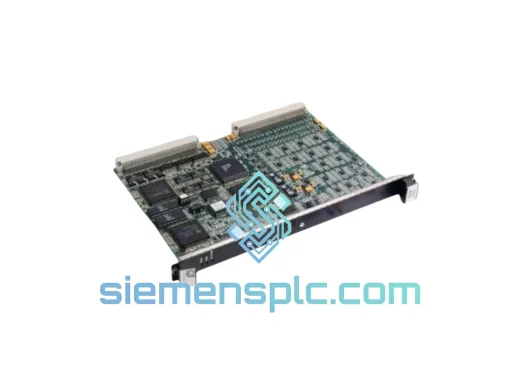
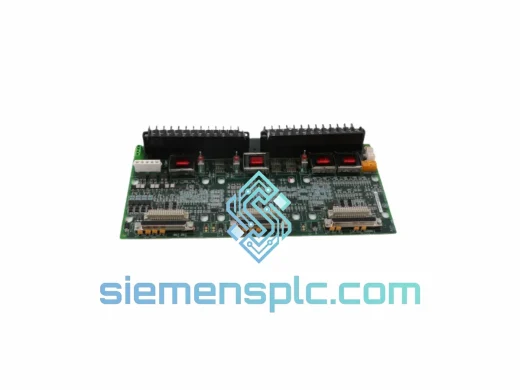
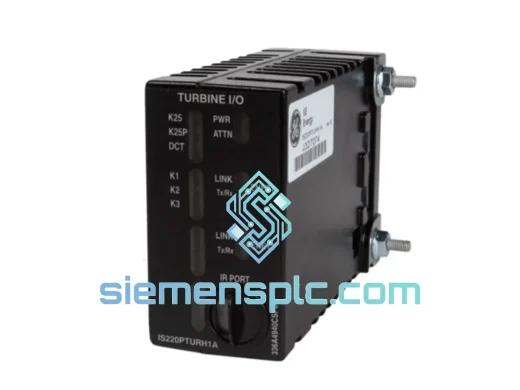
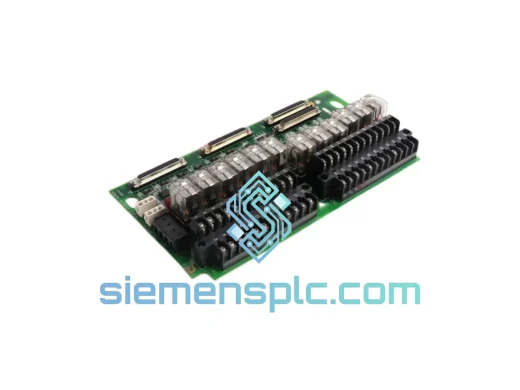
GE IS200TRLYH1BED Relay Terminal Board – Mark VI Series
Mark VI
Origin US
Relay Terminal Board
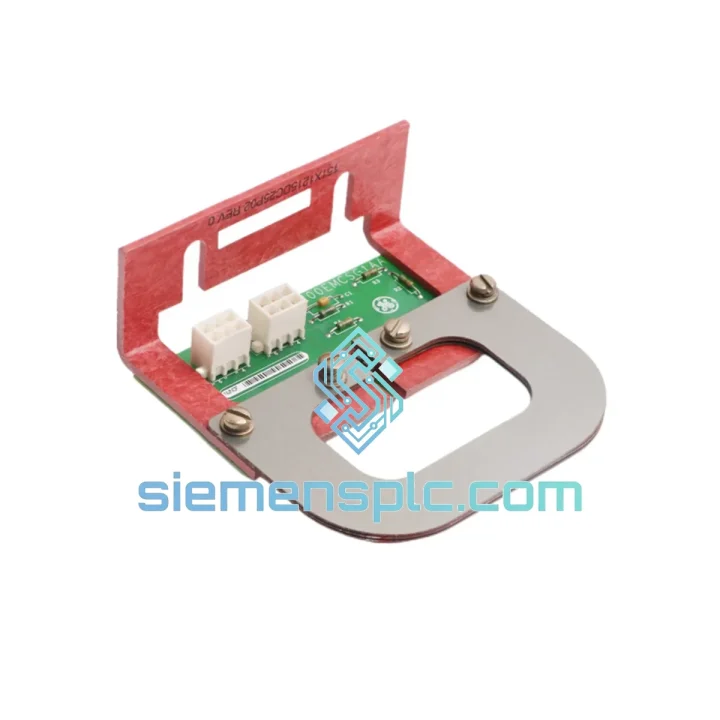
Request verified availability, condition, replacement risk review, packing options and courier lead time for IS200EMCSG1AA.
Click Request Quote and the part number is inserted into the inquiry form automatically.
Core fields for model confirmation and RFQ routing. Detailed product narrative remains below.
A failed conduction sensor card doesn’t announce itself politely. One moment your Mark VI turbine control system is running nominal; the next, you’re staring at a COND FAULT alarm, your DCS is throwing diagnostic errors, and your shift supervisor is already on the phone. The IS200EMCSG1AA is not a peripheral — it is the signal backbone between your conductivity sensors and the Mark VI controller. When it fails, the loop goes blind. And a blind loop in a gas turbine cooling circuit or steam purity monitoring system is not a condition you manage — it’s a condition you evacuate.
We stock the GE IS200EMCSG1AA and we ship from Xiamen the same day your order is confirmed. No lead-time negotiation. No “check back in two weeks.” If you’re reading this during a forced outage, stop scrolling and contact us now.
URGENT REQUIREMENT? Contact: [email protected] | WhatsApp: +86 18359268345
| Parameter | Value |
|---|---|
| Part Number | IS200EMCSG1AA |
| Manufacturer | General Electric (GE) |
| Series | Mark VI Turbine Control System |
| Module Function | Conduction Sensor Signal Conditioning Card |
| Form Factor | PCB module, VME rack-mount |
| Signal Type | Analog conductivity input, digital output to Mark VI controller |
| Compatible Platform | GE Mark VI / Mark VIe (verify cabinet revision) |
| Operating Temperature | 0°C to +60°C (ambient, rack-mounted) |
| Weight | 140 g |
| Country of Origin | United States |
| Condition | 100% Original OEM / Tested Surplus |
| Stock Status | ✔ Ready to Ship — Xiamen Warehouse |
| Shipping Options | DHL Express / FedEx International Priority |
| Lead Time (in-stock) | Same-day dispatch on confirmed orders before 15:00 CST |
Before you pull the card, confirm the fault is actually the IS200EMCSG1AA and not upstream. Here’s the field sequence that saves you from swapping a good card:
Step 1 — Isolate the fault source. Check the Mark VI Toolbox diagnostic screen. A COND FAULT or EMCS_FAIL diagnostic pointing specifically to the EMCS slot is your primary indicator. If the fault is generic I/O or power-related, check the rack power supply (IS200EPSMG) and backplane connector seating first.
Step 2 — Verify sensor wiring continuity. Conductivity sensor leads are susceptible to moisture ingress and corrosion at the terminal block. Measure resistance at the IS200TBCIH terminal board before condemning the card. An open or shorted sensor loop will produce identical symptoms to a failed EMCSG card.
Step 3 — Power down the rack properly. The Mark VI does not support hot-swap on EMCS-type cards. Follow GE procedure: initiate a controlled shutdown via the HMI, confirm the rack is de-energized, then extract the card using the ejector levers. Do not force the card — bent VME connector pins are a secondary failure you don’t need.
Step 4 — Address the address switch. The IS200EMCSG1AA uses hardware address configuration via onboard DIP switches (SW1). The switch position must match the slot assignment defined in the Mark VI configuration file (ToolboxST). Mismatch here causes the controller to fail to recognize the replacement card entirely — a common trap that wastes 2–3 hours on site. Photograph the original card’s switch position before removal.
Step 5 — Firmware compatibility check. If your Mark VI controller firmware has been updated since the original card was installed, verify that the replacement IS200EMCSG1AA firmware revision is compatible. GE publishes compatibility matrices in the Mark VI System Guide (GEH-6421). Mismatched firmware can cause intermittent faults or silent data corruption on the conductivity channel.
Step 6 — Post-installation verification. After seating the replacement card, power up the rack and observe the Mark VI Toolbox for EMCS channel status. Confirm the conductivity reading matches your reference sensor (use a calibrated handheld conductivity meter on the same process point). Log the replacement in your maintenance management system with the card serial number for traceability.
Common fault codes associated with IS200EMCSG1AA failure:
Turbine control rooms are not server rooms. The IS200EMCSG1AA is engineered to operate in the real environment of a power plant — not a climate-controlled lab. GE designed the Mark VI I/O cards to withstand continuous exposure to conditions that would destroy commercial-grade electronics within weeks.
Vibration is the first enemy. Gas turbine enclosures transmit broadband mechanical vibration through the structure into the control cabinet. The IS200EMCSG1AA PCB uses conformal coating on critical signal traces and through-hole component mounting on high-stress areas to resist solder joint fatigue under sustained vibration loads. The VME card guide and ejector mechanism provide positive mechanical retention that prevents micro-movement at the backplane connector — a primary failure mode in vibration-prone installations.
Thermal cycling is the second. Turbine control systems cycle between cold-start and full-load operating temperatures repeatedly over their service life. The IS200EMCSG1AA uses industrial-temperature-rated passive components (capacitors, resistors, voltage references) specified for operation across the full 0–60°C ambient range with derating applied for internal rack temperature rise. Electrolytic capacitors — the most common age-related failure point on any PCB — are selected for extended service life at elevated temperatures.
Humidity and contamination round out the threat profile. Coastal power plants, offshore platforms, and tropical installations expose control hardware to salt-laden air and condensation cycles. The conformal coating applied to the IS200EMCSG1AA provides a barrier against moisture penetration and conductive contamination that would otherwise cause leakage currents and measurement errors on the high-impedance conductivity input circuitry. This is not a cosmetic treatment — it is a functional reliability requirement for the card’s signal conditioning accuracy.
Our dispatch operation runs out of Xiamen, China — one of the most logistics-connected export hubs in Asia. When you confirm an order for the IS200EMCSG1AA, here is exactly what happens:
Same-day dispatch: Orders confirmed before 15:00 CST are packed, documented, and handed to DHL Express or FedEx International Priority the same afternoon. We do not batch shipments. Your order moves independently.
Export documentation: We prepare the commercial invoice, packing list, and certificate of origin in parallel with packing. For destinations requiring import permits or customs pre-clearance (EU, India, Brazil), we flag this at order confirmation and provide the necessary HS code documentation (HS 8537.10 for control modules) to prevent customs holds.
Transit times from Xiamen:
Tracking: A tracking number is sent to your email within 2 hours of dispatch. We monitor shipments actively and flag any customs delays to you proactively — we don’t wait for you to chase us.
Emergency freight: For critical outages where standard express is not fast enough, we can arrange charter courier or hand-carry service to select destinations. Contact us directly to discuss options.
Email: [email protected]
WhatsApp: +86 18359268345
Web: siemensplc.com
© 2026. All rights reserved.
We check the full part number, brand, series and visible nameplate information before quotation.
Sales confirms stock path, condition option, quantity and realistic lead time for export dispatch.
DHL, FedEx, UPS or buyer courier arrangements can be reviewed with packing requirements.
Similar brand or category products for fast comparison and multi-item RFQ lists.