GE
RFQ Ready
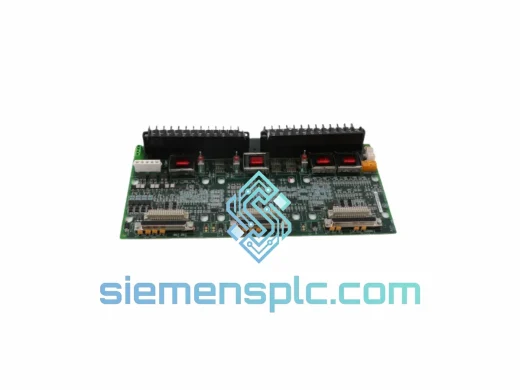
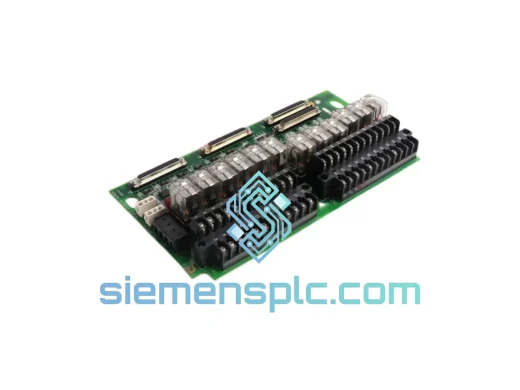
GE IS200TRLYH1BED Relay Terminal Board – Mark VI Series
Mark VI
Origin US
Relay Terminal Board
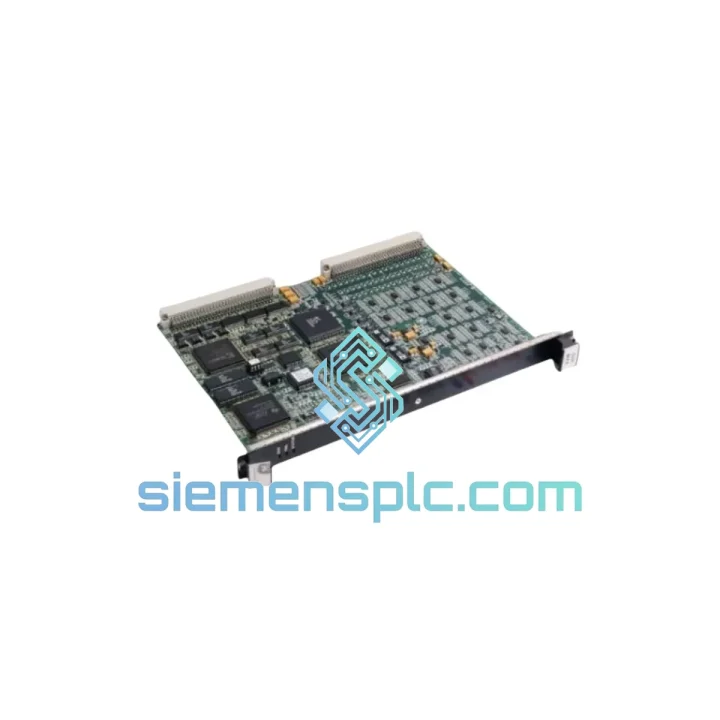
Request verified availability, condition, replacement risk review, packing options and courier lead time for IS200VVIBH1CAC.
Click Request Quote and the part number is inserted into the inquiry form automatically.
Core fields for model confirmation and RFQ routing. Detailed product narrative remains below.
The IS200VVIBH1CAC is a VME-format vibration monitoring input card manufactured by GE’s Energy Controls Division, purpose-built for deployment within the Mark VI distributed turbine control system. Its primary function is front-end signal acquisition: it receives raw analog outputs from eddy-current proximity probes mounted on rotating machinery bearing housings, conditions those signals, digitizes them, and transmits structured data across the VME backplane to the Mark VI controller boards (VCMI/VCRC). In a control loop where shaft displacement data must reach the protection logic within deterministic time windows, this card occupies a non-negotiable position in the signal chain.
Unlike generic I/O modules, the IS200VVIBH1CAC is engineered specifically around the electrical characteristics of Bently Nevada 3300/3500-series compatible eddy-current proximity probe drivers, which operate at a nominal –24 V DC driver supply and produce a voltage output proportional to gap distance. The card’s input conditioning circuitry is matched to this signal range, ensuring that the full dynamic range of the probe output is captured without clipping or quantization loss at the ADC stage. This design specificity is what separates a purpose-built vibration acquisition card from a repurposed analog input module.
Within the Mark VI rack, the IS200VVIBH1CAC interfaces with the VME backplane using the standard VME64 electrical and mechanical specification. The backplane carries both power rails (±5 V, ±12 V, +24 V) and the data bus, eliminating the need for external signal cabling between the acquisition card and the controller. This architecture reduces wiring complexity in the I/O cabinet and shortens the signal path, which directly benefits latency and noise immunity.
The card supports both simplex and TMR (Triple Modular Redundancy) rack configurations. In a TMR deployment, three independent IS200VVIBH1CAC cards acquire the same probe signals in parallel; the Mark VI controller’s voting logic compares the three digitized outputs and flags any single-card deviation without interrupting the protection function. This redundancy architecture is a fundamental requirement for API 670-compliant machinery protection systems on gas turbines and compressor trains where a spurious trip carries significant production cost.
The IS200VVIBH1CAC stores no site-specific configuration data on-board. All alarm setpoints, trip thresholds, channel assignments, and engineering unit scaling reside in the Mark VI controller’s non-volatile memory. This means a same-revision replacement card can be installed into an existing rack slot and will adopt the full configuration automatically upon rack initialization — a property that materially reduces mean time to repair (MTTR) during unplanned outages.
Real-time Stock & RFQ: [email protected] | WhatsApp: +86 18359268345
| Parameter | Value |
|---|---|
| Part Number | IS200VVIBH1CAC |
| Manufacturer | GE — Energy Controls Division |
| Compatible Platform | Mark VI Turbine Control System (VME rack) |
| Form Factor | VME (Versa Module Europa) single-slot card |
| Primary Function | Vibration and position signal acquisition from proximity probes |
| Input Signal Type | Eddy-current proximity probe output (Bently Nevada 3300/3500 compatible) |
| Probe Driver Supply | –24 V DC (supplied via probe driver; card accepts conditioned voltage output) |
| Backplane Interface | VME64 bus — data and power via backplane connector |
| Backplane Power Rails | ±5 V, ±12 V, +24 V (supplied by VME rack PSU) |
| Redundancy Support | Simplex and TMR (Triple Modular Redundancy) configurations |
| Configuration Storage | None on-board — all parameters reside in Mark VI controller |
| Operating Temperature | 0 °C to +60 °C |
| Hardware Revision | H1CAC |
| Weight | 220 g |
| Compliance | CE; UL industrial; API 670 machinery protection system compatible |
| Warranty | 12 months against manufacturing defects under normal operating conditions |
The IS200VVIBH1CAC’s hardware design reflects the signal integrity requirements of high-frequency vibration measurement in electrically noisy turbine environments. Several design characteristics are worth examining in detail.
Input Conditioning and Anti-Aliasing: Proximity probe outputs carry both a DC gap component and an AC vibration component superimposed on the same signal line. The IS200VVIBH1CAC’s input stage separates these components: the DC path captures static gap (used for thrust position monitoring), while the AC path is band-pass filtered to isolate the vibration frequency range relevant to the machine’s operating speed range. An anti-aliasing low-pass filter ahead of the ADC prevents frequency folding artifacts that would corrupt vibration amplitude readings at high shaft speeds.
EMC Design: The card operates inside a VME rack cabinet that is itself a Faraday enclosure, but the input signal lines from proximity probes run through the turbine compartment — a high-EMI environment due to generator excitation fields, ignition systems, and high-current bus bars. The IS200VVIBH1CAC’s input circuitry incorporates differential signal reception and common-mode rejection to attenuate induced noise on the probe cable shield. Transient suppression components at the input terminals protect the ADC front-end from voltage spikes caused by nearby switching events.
VME Backplane Arbitration: In a multi-card VME rack, bus access is arbitrated by the system controller (VCMI board). The IS200VVIBH1CAC operates as a VME slave device, responding to read cycles initiated by the controller. The card’s local FPGA or ASIC logic manages the timing of ADC conversion cycles relative to the VME bus grant signal, ensuring that digitized vibration data is available in the card’s local buffer registers before the controller initiates a read. This prevents stale data reads during high-speed polling cycles.
Redundancy Arbitration in TMR: In a TMR rack, three IS200VVIBH1CAC cards share the same physical probe input signals through a signal distribution network. Each card independently digitizes the probe output and places its result on its own VME segment. The VCMI controller reads all three values, applies a median-select or 2-of-3 voting algorithm, and uses the voted result for protection logic. A single card producing an out-of-range value triggers a diagnostic alarm without affecting the voted output — a key property for achieving IEC 61511 SIL 2 or SIL 3 safety integrity levels in turbine protection applications.
Every IS200VVIBH1CAC unit supplied by siemensplc.com is sourced as genuine GE original equipment. Prior to dispatch, each card undergoes a structured inspection protocol: visual examination of PCB surface, solder joints, and connector pin condition; verification of hardware revision marking against the order specification; and a functional bench test against a reference Mark VI I/O rack configuration to confirm correct VME bus response and channel output integrity.
Units are packaged in anti-static shielding bags, placed in foam-lined rigid cartons, and sealed with humidity indicator cards. This packaging standard protects sensitive CMOS and FPGA components from electrostatic discharge and moisture ingress during transit — failure modes that are not always immediately apparent but can cause latent field failures months after installation.
Shipments originate from our warehouse in Xiamen, China. Xiamen’s port infrastructure and direct air freight connections to major international hubs enable consistent transit times: 3–5 business days to Southeast Asia and East Asia, 5–7 business days to the Middle East and Europe, and 7–10 business days to the Americas. We ship via DHL Express, FedEx International Priority, and UPS Worldwide Express, with full shipment tracking provided at the time of dispatch.
Export documentation — commercial invoice, packing list, certificate of origin, and ECCN classification — is prepared for every international shipment to support customs clearance in the destination country. For customers requiring expedited clearance, we can coordinate with local customs brokers in major destination markets.
All units carry a 12-month warranty covering manufacturing defects and functional failure under normal operating conditions. Warranty claims are processed with a target response time of 48 hours from receipt of the defective unit.
Email: [email protected]
WhatsApp: +86 18359268345
Web: siemensplc.com
Location: Xiamen, China
© 2026 siemensplc.com. All rights reserved.
We check the full part number, brand, series and visible nameplate information before quotation.
Sales confirms stock path, condition option, quantity and realistic lead time for export dispatch.
DHL, FedEx, UPS or buyer courier arrangements can be reviewed with packing requirements.
Similar brand or category products for fast comparison and multi-item RFQ lists.