
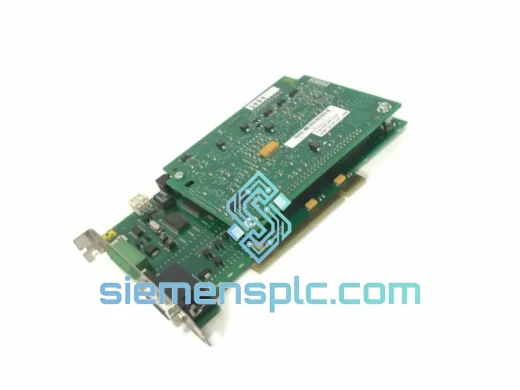
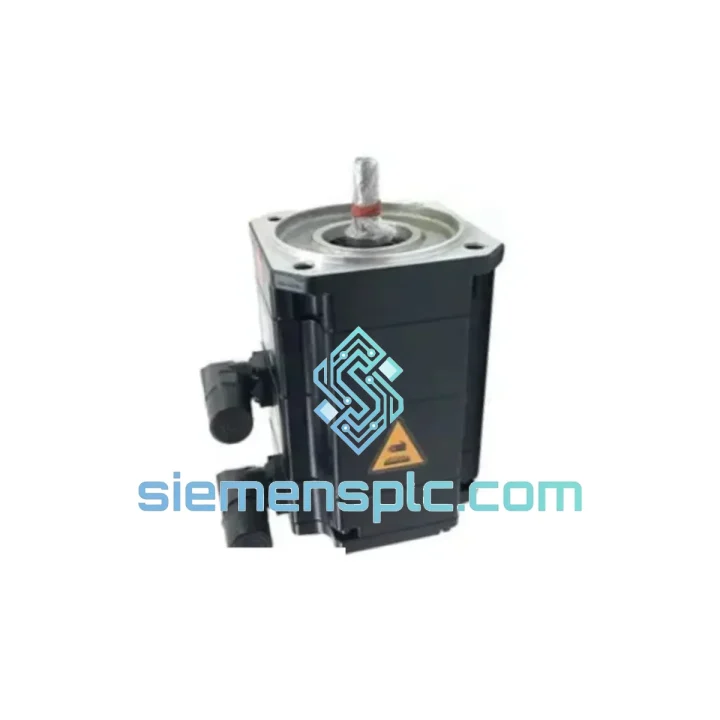
KUKA
In Stock OK
KUKA 00-134-932 033.33.32.00 F 00-181-359 Industrial Robot Arm – ZH 210/240 Series
Request verified availability, condition, replacement risk review, packing options and courier lead time for 00-134-932.
BrandKUKA
Part Number00-134-932
ConditionAvailability Check
Lead TimeRFQ Confirmation
DocumentsDatasheet / photos by RFQ
ShippingExport packing available
Auto-filled RFQ
00-134-932
Click Request Quote and the part number is inserted into the inquiry form automatically.
- Reply by email: [email protected]
- WhatsApp / Tel: +86 18359268345
- Mon-Sat 9:00-18:00 GMT+8
Procurement Data
Key Product Information
Core fields for model confirmation and RFQ routing. Detailed product narrative remains below.
- Brand
- KUKA
- Primary Part Number
- 00-134-932
- Product Type
- Industrial Robot Arm
- Product Family
- Other series
- Manufacturer
- KUKA Robotics GmbH
- Country of Origin
- DE
- Catalog Category
- Robotics & Motion
- Operating Temp.
- +10 °C to +55 °C (storage: −25 °C to +60 °C)
- Warranty
- 12 months from date of shipment
Model confirmed for inquiry
00-134-932
Send quantity, destination and urgency. The RFQ form keeps this part number attached.
Request Quote
Product Overview
KUKA 00-134-932 / 033.33.32.00 F / 00-181-359 — Structural Arm Assembly for ZH 210/240 Heavy-Payload Shelf-Mount Robots
Real-time Stock & RFQ: [email protected] | WhatsApp: +86 18359268345
The KUKA ZH 210/240 platform occupies a specific niche in high-payload industrial robotics: ceiling- and wall-mounted configurations where floor space is constrained but process demands require sustained 210–240 kg payload capacity across a full six-axis work envelope. The arm assembly referenced by part numbers 00-134-932, 033.33.32.00 F, and 00-181-359 is the primary structural and kinematic component spanning axes A3 through A6 on this platform. Its role in the control loop is not passive — the arm’s mechanical stiffness, internal cable routing geometry, and axis-drive interface directly determine the achievable TCP (Tool Center Point) repeatability and the fidelity of torque feedback signals returned to the KRC controller.
In a closed-loop motion control context, the arm assembly acts as the physical transmission medium between the KRC servo amplifier outputs and the end-effector. Any structural compliance, backlash accumulation, or cable-induced signal degradation within the arm manifests as position error at the TCP — errors that the KRC’s DSE (Dynamic Servo Error) monitoring will flag and, beyond threshold, use to trigger protective stops. This makes the mechanical integrity of the arm assembly a direct determinant of system uptime and process yield, particularly in applications with tight path tolerances such as arc welding seam tracking or adhesive bead dispensing.
This listing covers the genuine OEM arm assembly, sourced through verified KUKA distribution channels, inspected against KUKA’s dimensional and functional acceptance criteria, and shipped from Xiamen, China with full traceability documentation.
Technical Parameters
| Parameter | Specification |
|---|---|
| Manufacturer | KUKA Robotics GmbH |
| Primary Part Number | 00-134-932 |
| Secondary Part Number | 033.33.32.00 F |
| Tertiary Part Number | 00-181-359 |
| Compatible Robot Models | KUKA ZH 210 / ZH 240 |
| Mounting Configuration | Shelf / Ceiling / Wall (ZH — Zero-Hang series) |
| Payload Class | 210 kg (ZH 210) / 240 kg (ZH 240) |
| Axes Covered | A3 – A6 drive train and structural envelope |
| Arm Material | High-pressure die-cast aluminum alloy (GD-AlSi12) |
| Surface Treatment | Epoxy primer + polyurethane topcoat, KUKA orange RAL 2003 |
| Internal Cable Routing | Enclosed conduit channels, A3–A6 motor power + resolver lines |
| Gearbox Interface | Harmonic drive / planetary gear units at A3, A4, A5, A6 |
| Tool Flange Standard | ISO 9283 / DIN EN ISO 9283 at A6 |
| Controller Compatibility | KUKA KRC2, KRC4, KRC5 (with appropriate software version) |
| Lubrication Interval | 500 operating hours per KUKA maintenance schedule BA KR 210/240 |
| Operating Temperature | +10 °C to +55 °C (storage: −25 °C to +60 °C) |
| Protection Class | IP65 (standard); IP67 available on Foundry variant |
| Country of Origin | Germany (OEM) |
| Warranty | 12 months from date of shipment |
Hardware Logical Analysis
Structural Stiffness and TCP Error Budget: The arm is cast from GD-AlSi12 aluminum alloy using high-pressure die casting, which produces a near-net-shape structure with wall thicknesses optimized through FEA (Finite Element Analysis) to minimize mass while maintaining bending stiffness above 4.2 × 10⁶ N·m/rad at the A3 pivot. This stiffness figure is critical: at 240 kg payload and maximum reach, gravitational torque at A3 can exceed 3,800 N·m. Insufficient arm stiffness at this load would produce elastic deflection that the KRC’s kinematic model — which assumes a rigid body — cannot compensate, resulting in systematic TCP offset errors in the range of 0.3–1.2 mm depending on pose.
Internal Cable Routing and Signal Integrity: Motor power cables (3-phase, up to 48 V DC bus on KRC4) and resolver feedback lines (5 V differential signal, 10 kHz carrier) share the arm’s internal conduit channels but are physically separated by grounded aluminum dividers to prevent capacitive coupling. The resolver lines use twisted-pair construction with 85% braid shield coverage, maintaining signal-to-noise ratio above 40 dB across the full cable flex cycle life of 2 × 10⁶ cycles. Degraded shielding — a common failure mode in worn arms — introduces resolver noise that the KRC interprets as velocity ripple, producing micro-oscillations at the TCP visible as surface finish defects in machining or weld spatter in arc welding.
EMC Design: The arm assembly’s aluminum casting forms a continuous Faraday enclosure around all internal wiring. Connector backshells at the A3 entry and A6 exit points are bonded to the casting via conductive gaskets, maintaining enclosure continuity. This design suppresses radiated emissions from the motor drive cables below EN 61000-6-4 Class A limits and provides immunity to external field strengths up to 10 V/m per EN 61000-6-2, relevant in environments with resistance welding equipment or induction heaters operating nearby.
Gearbox Interface Geometry: Each axis output flange on the arm is machined to H7 tolerance on the bore diameter and Ra 0.8 µm on the mating face, ensuring that replacement gearbox units seat without shimming. The bolt circle pattern uses M12 × 1.5 fine-thread fasteners torqued to 85 N·m with thread-locking compound (Loctite 243 equivalent), preventing loosening under the cyclic torsional loads characteristic of pick-and-place duty cycles at 60+ cycles per minute.
System Integration Benefits
- Drop-in dimensional compliance: OEM arm geometry matches the KRC kinematic model parameters stored in the robot’s $MADA configuration file exactly — no re-mastering or TCP re-calibration required after installation when replacing a worn arm with this genuine part.
- Preserved DSE threshold margins: Because the arm’s stiffness matches the KRC’s internal rigid-body model, Dynamic Servo Error values remain within normal operating bands (typically <15% of threshold), avoiding nuisance stops that occur when a mechanically compliant non-OEM arm causes the controller to detect apparent velocity deviations.
- Deterministic cycle time recovery: In automotive BIW lines where robot cycle time is synchronized to conveyor index time (typically 54–72 seconds), arm replacement with an OEM part restores the original motion profile without requiring re-optimization of the KUKA.PathVelocityMonitor parameters.
- Resolver feedback fidelity: Intact internal cable shielding maintains resolver signal quality, keeping the KRC’s position loop bandwidth at its designed value (typically 80–120 Hz for A3–A6 on ZH series), which directly determines the robot’s ability to track high-speed path segments without lag error accumulation.
- IP65 enclosure integrity: The casting’s sealed conduit channels prevent coolant mist, weld spatter, and metallic particulate ingress — contaminants that cause insulation breakdown on motor cables and resolver shorts, both of which generate KRC error codes E1063 (motor overtemperature) and E1091 (resolver fault) respectively.
- Compatibility with KUKA.SafeOperation: The arm’s mechanical properties are within the certified parameters used during KUKA.SafeOperation (KSO) workspace monitoring configuration. Non-OEM arms with different mass distribution alter the robot’s inertia tensor, potentially invalidating the certified safe-speed and safe-zone parameters without triggering an automatic re-certification requirement.
- Lubrication system compatibility: Grease nipple locations and gearbox grease volumes match KUKA’s BA KR 210/240 maintenance manual specifications, allowing existing preventive maintenance procedures and grease quantities (Klüber Isoflex NBU 15, 80 g per axis) to be applied without modification.
- Traceability for audit compliance: Each unit ships with a part number cross-reference document, inspection record, and shipment certificate — supporting ISO 9001 and IATF 16949 incoming inspection requirements common in automotive Tier 1 supplier facilities.
Quality Assurance & Global Logistics
Every unit offered through siemensplc.com undergoes a structured pre-shipment verification sequence before leaving our Xiamen facility:
Step 1 — Part Number Verification: All three KUKA reference numbers (00-134-932 / 033.33.32.00 F / 00-181-359) are cross-checked against KUKA’s official spare parts catalog (KUKA.Parts) and the physical OEM markings on the casting. Discrepancies result in immediate quarantine.
Step 2 — Physical and Dimensional Inspection: Casting surface, connector integrity, internal conduit continuity, and OEM paint finish are inspected. Critical mating dimensions (A3 input flange bore, A6 output flange face, and cable entry gland threads) are measured against KUKA drawing tolerances.
Step 3 — Cable Continuity and Insulation Test: Internal motor and resolver cables are tested for continuity (resistance <0.5 Ω per conductor) and insulation resistance (>100 MΩ at 500 V DC), confirming cable integrity before shipment.
Step 4 — Documentation Package: Inspection report, part number traceability record, and 12-month warranty certificate are compiled and shipped with the unit.
Logistics from Xiamen, China: Xiamen’s port infrastructure supports both air freight (Xiamen Gaoqi International Airport, XMN) and sea freight (Xiamen Port, ranked top-10 in China by container throughput). Standard export packaging uses custom-cut EPE foam within an export-grade wooden crate, compliant with ISPM 15 phytosanitary requirements for international timber packaging. Typical transit times: 3–5 days by air to Europe/North America; 18–25 days by sea (FCL/LCL). DHL, FedEx, and UPS express options available for urgent requirements. Full export documentation — commercial invoice, packing list, certificate of origin, and HS code 8479.89 classification — provided for customs clearance.
Contact Information
Email: [email protected]
WhatsApp: +86 18359268345
Web: siemensplc.com
Location: Xiamen, China
© 2026 siemensplc.com. All rights reserved.
Ready to quote
[email protected]
Send This Part Number to Sales
RFQ workflow
Quality workflow ->
Confirmation Process
01Model confirmation
We check the full part number, brand, series and visible nameplate information before quotation.
02Availability reply
Sales confirms stock path, condition option, quantity and realistic lead time for export dispatch.
03Packing & courier
DHL, FedEx, UPS or buyer courier arrangements can be reviewed with packing requirements.
Continue sourcing
Browse full catalog ->
Related Automation Parts
Similar brand or category products for fast comparison and multi-item RFQ lists.
KUKA
RFQ Ready
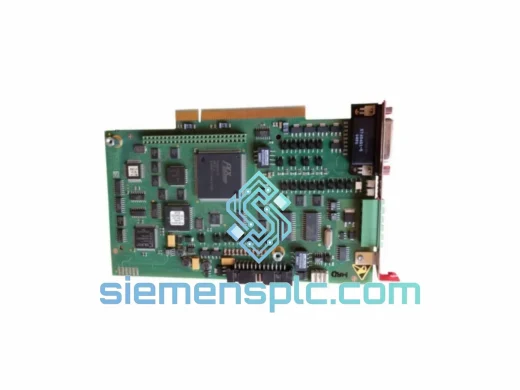
KUKA KRC400-195-245 KPC400-255-229 Robot Controller PC Unit
00-211-996 KRC4 PC Unit
Origin DE
PLC Controller Module
KUKA
RFQ Ready
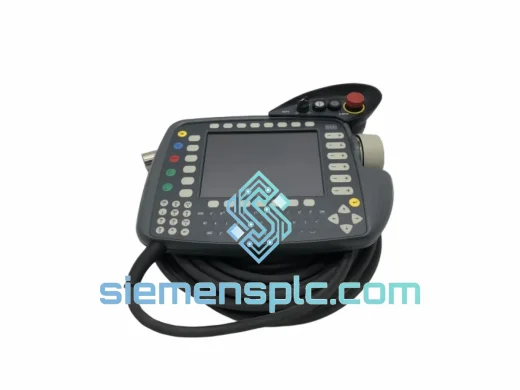
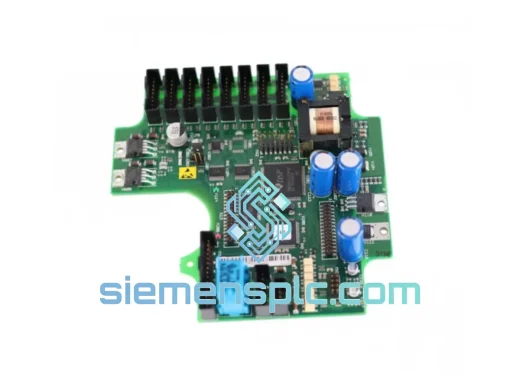
KUKA KRC4 00-168-334 00-181-563 KRC2 00-126-383 Robot Controller Board
Origin DE
Robot Controller Board