Schneider Electric
RFQ Ready
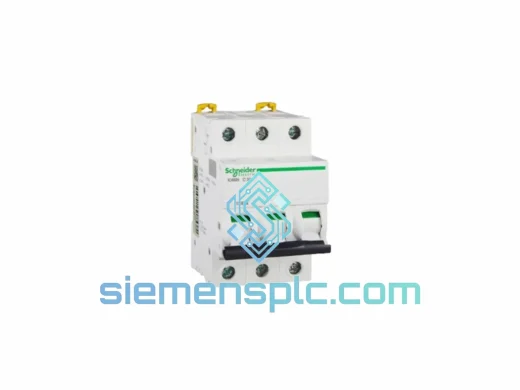
Schneider Electric iC65N-3P-C32A Miniature Circuit Breaker – Acti9
2A C-Curve MCB Acti9 Series
Origin FR
Miniature Circuit Breaker
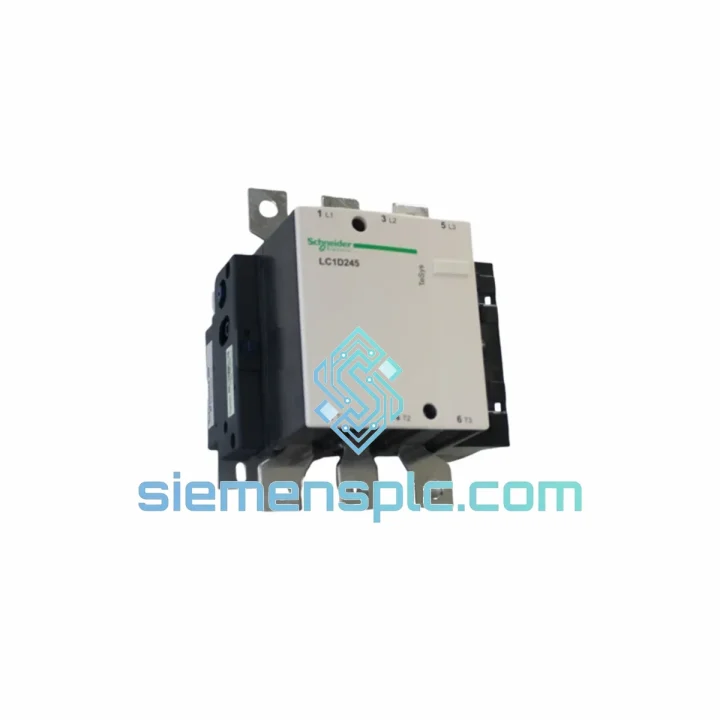
Request verified availability, condition, replacement risk review, packing options and courier lead time for LC1D475M7C.
Click Request Quote and the part number is inserted into the inquiry form automatically.
Core fields for model confirmation and RFQ routing. Detailed product narrative remains below.
The LC1D475M7C occupies the upper boundary of the TeSys D frame range, rated at 475 A under AC-3 utilization category. Its primary function is the switching and protection of three-phase squirrel-cage induction motors from 250 kW at 400 V up to 400 kW at 690 V. Within a motor control center (MCC) or standalone starter panel, this contactor acts as the electromechanical interface between the control logic layer — whether relay-based or PLC-driven — and the power circuit feeding the load. The M7 coil designation specifies a 220 VAC, 50/60 Hz operating coil, the most prevalent control voltage in Asian and European industrial installations, allowing direct interfacing with standard PLC digital output modules rated at 220 VAC without intermediate relay stages.
Unlike smaller frame contactors where thermal mass is less critical, the LC1D475M7C is engineered around sustained thermal performance. The silver-cadmium oxide (AgCdO) or silver-tin oxide (AgSnO₂) contact alloy — depending on production batch — maintains stable contact resistance across the full rated current range, resisting welding under locked-rotor inrush conditions that can reach 6–8× FLA. The arc chute geometry uses a multi-plate deion grid that elongates and cools the arc column rapidly, limiting arc energy per operation and preserving contact material over the rated 1 million electrical operations at AC-3 duty.
In reversing starter configurations, two LC1D475M7C units are mechanically interlocked via the LAD9R1 accessory, preventing simultaneous closure of both contactors — a hard interlock that operates independently of any software interlock in the PLC, satisfying IEC 60947-4-1 safety requirements for reversing starters. For star-delta starting of motors above 200 kW, three units are deployed: one main contactor, one star contactor, and one delta contactor, with transition timing managed by an external timer relay or PLC sequence.
Real-time Stock & RFQ: [email protected] | WhatsApp: +86 18359268345
| Parameter | Value |
|---|---|
| Part Number | LC1D475M7C |
| Series | TeSys D |
| Manufacturer | Schneider Electric |
| Pole Configuration | 3P (3 × NO main contacts) |
| Rated Operational Current — AC-3 | 475 A |
| Rated Operational Current — AC-4 | 400 A |
| Motor Power @ 400 V AC | 250 kW |
| Motor Power @ 690 V AC | 400 kW |
| Coil Voltage (M7) | 220 VAC / 50–60 Hz |
| Coil Power — Inrush | ≈ 200 VA |
| Coil Power — Sealed | ≈ 10 VA |
| Integrated Auxiliary Contacts | 1 NO + 1 NC |
| Rated Insulation Voltage (Ui) | 1000 V |
| Rated Impulse Withstand Voltage (Uimp) | 8 kV |
| Utilization Category | AC-3, AC-4 |
| Mechanical Endurance | 10,000,000 operations |
| Electrical Endurance — AC-3 | 1,000,000 operations |
| Degree of Protection | IP20 (open type) |
| Operating Temperature | −25 °C to +60 °C |
| Storage Temperature | −40 °C to +70 °C |
| Mounting | 35 mm DIN rail / screw panel mount |
| Weight | 1.32 kg |
| Standards | IEC 60947-4-1, EN 60947-4-1, UL 508, CSA C22.2 No.14, GB 14048.4 |
| Certifications | CE, UL, CSA, CCC, RoHS |
| Warranty | 12 months from date of shipment |
At 475 A AC-3, the LC1D475M7C operates in a thermal regime where contact geometry, coil drive architecture, and arc extinction efficiency are interdependent design constraints. Several hardware decisions distinguish this model from generic high-current contactors:
Coil Drive Circuit: The M7 coil uses a two-stage electromagnetic circuit — high-inrush pull-in followed by a reduced sealed holding flux. This is achieved through a shading ring on the magnetic core that maintains flux continuity at AC zero-crossings, preventing contact chatter. The result is a sealed power consumption of approximately 10 VA versus the 200 VA inrush, reducing thermal load on PLC output modules and extending coil insulation life in high-ambient-temperature enclosures.
EMC Behavior: The coil generates a back-EMF transient at de-energization. Without suppression, this spike can reach 10–20× the coil supply voltage, sufficient to damage solid-state PLC outputs. The LAD4RCU RC suppressor (110–250 VAC) is the factory-recommended accessory, clamping the transient to within the output module’s rated withstand voltage. In installations where the PLC output is already protected by a varistor, the RC suppressor still provides additional damping of the oscillatory component.
Contact Pressure and Wipe: At 475 A, contact resistance must remain below a few micro-ohms to prevent resistive heating that would accelerate contact erosion. The TeSys D mechanism uses a double-break contact geometry on each pole, effectively halving the arc energy per contact surface. The contact spring preload is calibrated to maintain minimum contact force throughout the wear life, compensating for the reduction in contact material thickness as operations accumulate.
Thermal Derating: The 475 A rating applies at 40 °C ambient. Above 40 °C, the rated current must be derated per the IEC 60947-4-1 derating curve — approximately 1% per degree Celsius above 40 °C. In enclosures with poor ventilation or in tropical climates, this derating must be factored into the motor starter design to avoid premature contact failure.
Vibration and Shock Resistance: The TeSys D frame is tested to IEC 60068-2-6 (sinusoidal vibration) and IEC 60068-2-27 (shock). The magnetic latch mechanism maintains contact closure under vibration amplitudes typical of pump skids and compressor bases, preventing nuisance tripping that would occur with lighter-duty contactors in the same environment.
Every LC1D475M7C unit supplied by siemensplc.com is sourced through verified industrial distribution channels with full traceability to Schneider Electric’s manufacturing records. Pre-shipment inspection covers coil resistance measurement against factory specification, auxiliary contact continuity verification, visual examination of contact surfaces and arc chute integrity, and label authenticity cross-check including date code and factory mark.
Shipments originate from Xiamen, China — a major port city with direct freight connections to Southeast Asia, the Middle East, Europe, and the Americas. Standard export packaging uses anti-static foam inserts and moisture-barrier bags to protect contact surfaces during ocean freight. Air freight options are available for urgent project requirements, with typical transit times of 3–7 business days to most destinations. All export documentation — commercial invoice, packing list, certificate of origin, and test report — is prepared to customs clearance standards for the destination country.
The 12-month warranty covers manufacturing defects in materials and workmanship. Units that fail within the warranty period are replaced or credited, with failure analysis documentation provided on request for quality records in ISO 9001-certified facilities.
Email: [email protected]
WhatsApp: +86 18359268345
Web: siemensplc.com
Location: Xiamen, China
© 2026 siemensplc.com. All rights reserved.
We check the full part number, brand, series and visible nameplate information before quotation.
Sales confirms stock path, condition option, quantity and realistic lead time for export dispatch.
DHL, FedEx, UPS or buyer courier arrangements can be reviewed with packing requirements.
Similar brand or category products for fast comparison and multi-item RFQ lists.