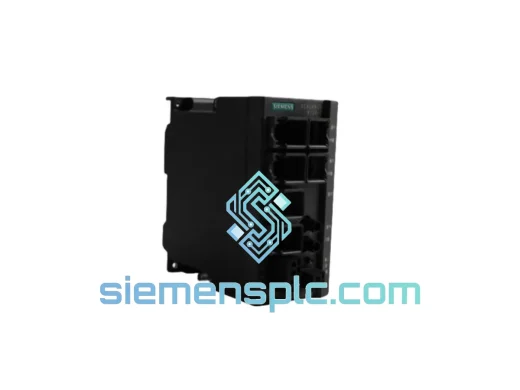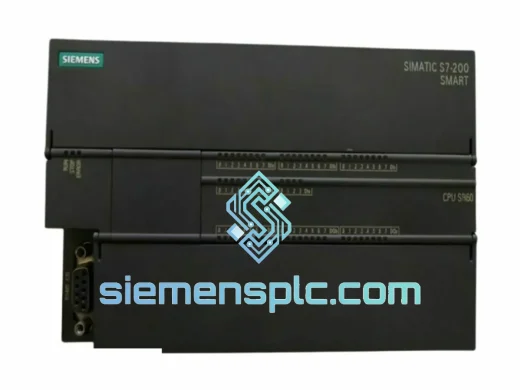
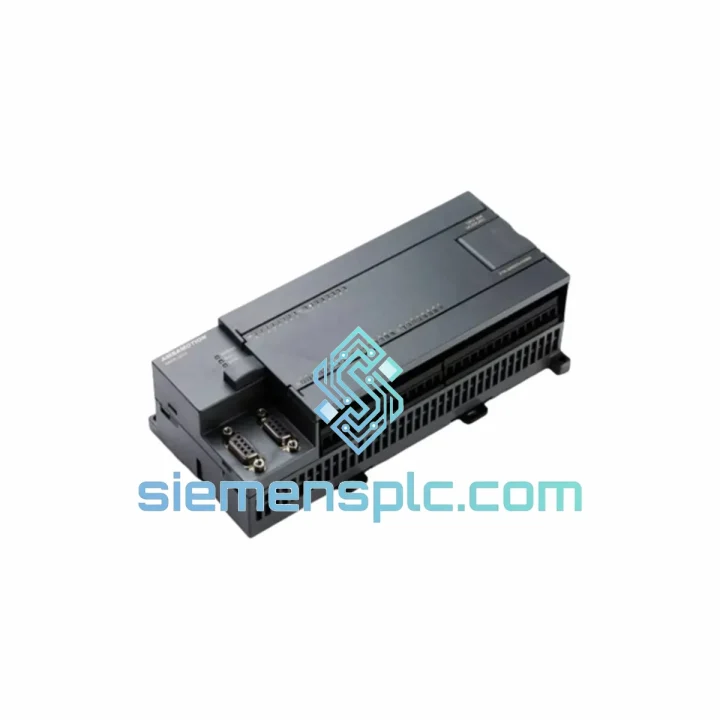
Siemens
In Stock OK
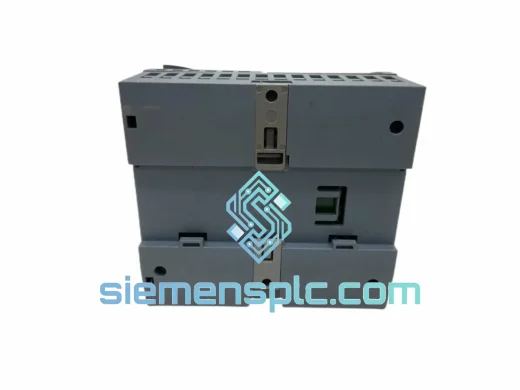
Siemens 6ES7216-2AD23-0XB8 PLC CPU Module – SIMATIC S7-200
Request verified availability, condition, replacement risk review, packing options and courier lead time for 6ES7216-2AD23-0XB8.
BrandSiemens
Part Number6ES7216-2AD23-0XB8
ConditionAvailability Check
Lead TimeRFQ Confirmation
DocumentsDatasheet / photos by RFQ
ShippingExport packing available
Auto-filled RFQ
6ES7216-2AD23-0XB8
Click Request Quote and the part number is inserted into the inquiry form automatically.
- Reply by email: [email protected]
- WhatsApp / Tel: +86 18359268345
- Mon-Sat 9:00-18:00 GMT+8
Procurement Data
Key Product Information
Core fields for model confirmation and RFQ routing. Detailed product narrative remains below.
- Brand
- Siemens
- Primary Part Number
- 6ES7216-2AD23-0XB8
- Product Type
- PLC CPU Module
- Series / Family
- SIMATIC S7-200
- Country of Origin
- DE
- Catalog Category
- Relays & Protection
- Operating Temp.
- 0–55 °C (horizontal), 0–45 °C (vertical)
- Warranty
- 12 months against manufacturing defects
Model confirmed for inquiry
6ES7216-2AD23-0XB8
Send quantity, destination and urgency. The RFQ form keeps this part number attached.
Request Quote
Product Overview
Siemens 6ES7216-2AD23-0XB8 CPU 216-2 AC/DC/Relay — Central Processing Unit for Deterministic Discrete Control
The Siemens 6ES7216-2AD23-0XB8 is the highest-capacity compact CPU within the SIMATIC S7-200 product line. It occupies the apex of the S7-200 CPU hierarchy, delivering 24 DC digital inputs, 16 relay digital outputs, 2 onboard analog inputs, dual RS-485 communication ports, and expansion capability for up to 7 additional I/O modules — yielding a maximum addressable I/O count of 248 discrete points. The AC power supply input (85–264 V AC, 47–63 Hz) and galvanically isolated relay output stage make this unit the preferred selection for control panels operating on mixed-voltage infrastructure, where output-side isolation from the controller logic bus is a hard electrical requirement rather than a design preference.
Within the S7-200 execution model, the CPU 216-2 processes its user program using a fixed-cycle scan architecture. The scan cycle consists of four deterministic phases: input image refresh, program execution, output image write-back, and communication servicing. Program memory capacity is 16 KB; data memory is 10 KB. Instruction execution time for Boolean operations is 0.37 µs per instruction — a figure that directly governs the minimum achievable scan cycle time under full program load. For a 4 KB program with typical Boolean-heavy logic, scan times in the 1–3 ms range are achievable, which is adequate for the majority of discrete manufacturing and process sequencing applications this CPU targets.
Real-time Stock & RFQ: [email protected] | WhatsApp: +86 18359268345
Technical Parameters
| Parameter | Specification |
|---|---|
| Part Number | 6ES7216-2AD23-0XB8 |
| Product Family | SIMATIC S7-200 |
| CPU Designation | CPU 216-2 AC/DC/Relay |
| Power Supply Input | AC 85–264 V, 47–63 Hz |
| Power Consumption (max) | 25 W |
| Digital Inputs (onboard) | 24 × DC 24 V, sink/source |
| Digital Outputs (onboard) | 16 × Relay, 2 A per point, 10 A per common |
| Analog Inputs (onboard) | 2 × 0–10 V DC, 12-bit resolution |
| Expansion Modules Supported | Up to 7 |
| Max. Digital I/O (expanded) | 248 points |
| Program Memory | 16 KB (EEPROM-backed) |
| Data Memory | 10 KB |
| Boolean Execution Speed | 0.37 µs / instruction |
| Communication Ports | 2 × RS-485 (Port 0: PPI/MPI/Freeport; Port 1: PPI/Freeport) |
| Real-Time Clock | Built-in, battery-backed |
| High-Speed Counters | 6 × HSC, up to 30 kHz |
| Pulse Outputs | 2 × PTO/PWM, up to 20 kHz |
| Interrupt Inputs | 4 × rising/falling edge |
| Operating Temperature | 0–55 °C (horizontal), 0–45 °C (vertical) |
| Storage Temperature | −40 to +70 °C |
| Relative Humidity | 5–95%, non-condensing |
| Degree of Protection | IP20 |
| Dimensions (W × H × D) | 196 × 80 × 62 mm |
| Weight | 1,360 g |
| Mounting | DIN rail (EN 60715) or panel screw mount |
| Certifications | CE, UL, cUL, FM Class I Div 2 |
| Warranty | 12 months against manufacturing defects |
Hardware Logical Analysis
Relay Output Stage and Galvanic Isolation Architecture
The 16 relay output points of the 6ES7216-2AD23-0XB8 are organized into isolated common groups, each rated at 10 A continuous. Each individual contact is rated at 2 A resistive load. The mechanical relay contacts provide true galvanic isolation between the CPU’s 24 V DC logic bus and the field-side load circuit — a property that transistor output variants cannot replicate without external optocoupler or relay interposing stages. This isolation eliminates ground loop currents that would otherwise couple noise from inductive loads (motor contactors, solenoid valves) back into the controller’s analog reference plane. The relay contact material is silver-nickel alloy, with a rated mechanical endurance of 10 million operations and an electrical endurance of 100,000 operations at rated resistive load — parameters that define the maintenance interval for output-intensive applications such as conveyor sequencing or valve cycling.
Dual RS-485 Port Architecture and PPI Protocol Stack
Port 0 supports PPI master/slave, MPI slave, and Freeport (user-defined ASCII/RTU) modes. Port 1 supports PPI slave and Freeport modes. The physical layer is RS-485 half-duplex, with a maximum cable length of 1,200 m at 9.6 kbps or 50 m at 187.5 kbps. The PPI protocol operates at the data link layer using a token-passing master-slave scheme: the CPU holds the token and polls slave devices (HMIs, expansion CPUs, intelligent modules) in a deterministic sequence. Network cycle time is a function of baud rate, number of nodes, and message length — at 9.6 kbps with 4 nodes, network cycle times of 10–20 ms are typical. The dual-port configuration allows Port 0 to serve the programming station (STEP 7 Micro/WIN) while Port 1 simultaneously drives an HMI or a Modbus RTU slave network via Freeport, without any port-sharing contention or communication latency penalty.
High-Speed Counter and Interrupt Subsystem
The CPU 216-2 integrates 6 high-speed counters (HSC0–HSC5) capable of processing input pulse trains at up to 30 kHz — independent of the main scan cycle. HSC inputs are processed by dedicated hardware logic, not by the main CPU scan, which means encoder feedback from a 1,000 PPR quadrature encoder running at 1,800 RPM (30 Hz shaft speed × 1,000 PPR × 4 edges = 120 kHz edge rate) would require external frequency division before connection. For standard incremental encoders at moderate speeds (≤ 30 kHz), the HSC subsystem provides position feedback without scan-cycle jitter. Four hardware interrupt inputs (I0.0–I0.3) support rising-edge, falling-edge, or both-edge triggering with interrupt response times below 1 ms, enabling event-driven logic execution for registration mark detection, emergency stop processing, and cam-switch emulation.
EMC Design and Noise Immunity
The 6ES7216-2AD23-0XB8 is designed to IEC 61000-4 series immunity standards. Digital input circuits incorporate RC filter networks with a configurable input filter time (0.2–12.8 ms in software) to suppress contact bounce and high-frequency conducted noise. The relay output commons are physically separated from the CPU logic ground, and the AC power supply section uses an internal EMI filter to attenuate differential-mode and common-mode noise on the supply line. The unit is rated for operation in environments with electrostatic discharge (ESD) up to 8 kV contact / 15 kV air discharge per IEC 61000-4-2, and radiated immunity up to 10 V/m per IEC 61000-4-3 — parameters consistent with industrial panel environments adjacent to variable-frequency drives and high-current switching equipment.
System Integration Benefits
- Deterministic Scan Execution: Fixed-cycle scan architecture with EEPROM-backed program memory ensures that power interruptions do not corrupt the user program. The CPU automatically reloads from EEPROM on power restoration, eliminating manual program re-download procedures after unplanned outages.
- Transparent Diagnostic Reporting: The CPU maintains a system fault buffer accessible via STEP 7 Micro/WIN, logging I/O module errors, communication faults, and CPU mode transitions with timestamp resolution from the built-in real-time clock. This provides a traceable fault history without requiring an external data logger.
- Expansion Bus Integrity: The S7-200 expansion bus uses a synchronous serial protocol with parity checking between the CPU and expansion modules. Module communication errors are flagged in the SM (Special Memory) bit area, allowing the user program to implement graceful degradation logic rather than hard fault stops.
- Freeport Protocol Flexibility: Port 1 in Freeport mode allows the CPU to act as a Modbus RTU master or slave, communicate with barcode readers, weigh scales, or variable-frequency drives using ASCII or binary protocols — without any additional communication module hardware cost.
- Onboard Analog Input Integration: The two 12-bit analog inputs (0–10 V) are mapped directly into the AI (Analog Input) image register, accessible within the standard scan cycle. This eliminates the EM 231 expansion module in applications requiring only two analog process variables, reducing panel width by one module slot (approximately 45 mm).
- PTO/PWM Output for Motion Control: Two pulse train output (PTO) channels at up to 20 kHz enable open-loop stepper motor control using the built-in position control wizard in STEP 7 Micro/WIN, without an external motion controller. PWM mode provides variable duty-cycle output for proportional valve control or LED dimming applications.
- PROFIBUS-DP Slave Capability via EM 277: When the EM 277 PROFIBUS-DP module is added, the CPU 216-2 becomes a PROFIBUS slave addressable from an S7-300, S7-400, or third-party PROFIBUS master. This enables the S7-200 to function as a distributed I/O node within a larger plant-wide control architecture, with data exchange rates up to 12 Mbps.
- Ethernet Connectivity via CP 243-1: The CP 243-1 Industrial Ethernet module connects the CPU 216-2 to a TCP/IP network, enabling S7 communication with SCADA systems, OPC servers, and remote programming stations over standard Ethernet infrastructure — extending the S7-200’s connectivity to enterprise-level data integration without replacing the controller platform.
Quality Assurance & Global Logistics
Every Siemens 6ES7216-2AD23-0XB8 unit dispatched from our Xiamen, China facility passes through a structured pre-shipment verification protocol. Authenticity is confirmed by cross-referencing the factory label data matrix code, production date code, and holographic security marking against Siemens OEM reference specifications. Housing integrity, terminal block condition, RS-485 port connector pin alignment, and expansion bus connector contact condition are inspected under magnification. A power-on functional test is performed using STEP 7 Micro/WIN to verify CPU firmware version, I/O image register response, and communication port handshake — confirming the unit is operationally sound before packaging.
Units are packed in anti-static polyethylene foam with silica gel desiccant, sealed in moisture-barrier bags, and placed in double-wall corrugated cartons rated for international air freight handling. Export documentation — commercial invoice, packing list, and certificate of conformity — is prepared to comply with customs requirements in the destination country. Shipment is via DHL Express, FedEx International Priority, or UPS Worldwide Express, with typical transit times of 3–5 business days to Europe and North America, and 2–4 business days to Southeast Asia. A tracking number is issued within 24 hours of dispatch. For orders requiring expedited clearance, a pre-shipment HS code declaration (8537.10) and ECCN classification document are available upon request.
All units are covered by a 12-month warranty against manufacturing defects from the date of shipment. Warranty claims are processed with a replacement-first policy: a replacement unit is dispatched upon receipt of the defective unit and confirmation of the fault condition, minimizing production downtime for the end user.
Contact Information
Email: [email protected]
WhatsApp: +86 18359268345
Web: siemensplc.com
Location: Xiamen, China
© 2026 siemensplc.com. All rights reserved.
{
“@context”: “https://schema.org”,
“@type”: “Product”,
“name”: “Siemens 6ES7216-2AD23-0XB8 CPU 216-2 AC/DC/Relay PLC Compact Controller”,
“description”: “Siemens 6ES7216-2AD23-0XB8 is a SIMATIC S7-200 CPU 216-2 AC/DC/Relay compact PLC with 24 DC inputs, 16 relay outputs, 2 analog inputs, dual RS-485 ports, 16 KB program memory, and support for up to 7 expansion modules.”,
“sku”: “6ES7216-2AD23-0XB8”,
“mpn”: “6ES7216-2AD23-0XB8”,
“brand”: {“@type”: “Brand”, “name”: “Siemens”},
“manufacturer”: {“@type”: “Organization”, “name”: “Siemens AG”},
“category”: “PLC CPU Module”,
“url”: “https://siemensplc.com/products/siemens-6es7216-2ad23-0xb8”,
“offers”: {
“@type”: “Offer”,
“priceCurrency”: “USD”,
“availability”: “https://schema.org/InStock”,
“seller”: {“@type”: “Organization”, “name”: “siemensplc.com”}
}
}
Ready to quote
[email protected]
Send This Part Number to Sales
RFQ workflow
Quality workflow ->
Confirmation Process
01Model confirmation
We check the full part number, brand, series and visible nameplate information before quotation.
02Availability reply
Sales confirms stock path, condition option, quantity and realistic lead time for export dispatch.
03Packing & courier
DHL, FedEx, UPS or buyer courier arrangements can be reviewed with packing requirements.
Continue sourcing
Browse full catalog ->
Related Automation Parts
Similar brand or category products for fast comparison and multi-item RFQ lists.
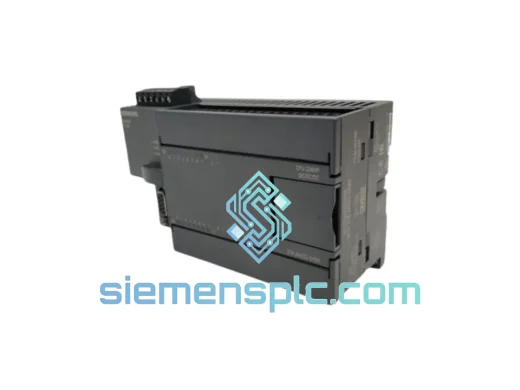
Siemens
RFQ Ready
Siemens 6ES7214-2AD23-0XB0 PLC CPU Module – S7-200 SMART
SIMATIC
Origin DE
PLC CPU Module
Siemens
RFQ Ready
SIEMENS 6ES7214-1HG40-0XB0 PLC CPU Module
SIMATIC S7-1200
Origin DE
PLC CPU Module