Siemens
RFQ Ready
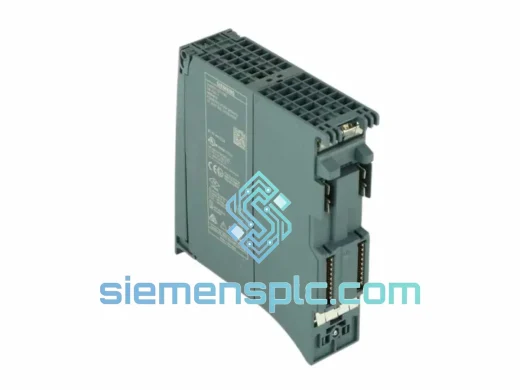
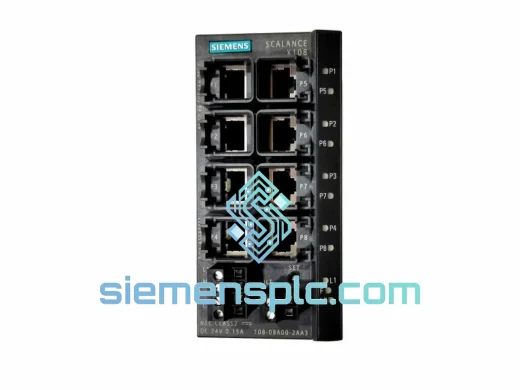
SIEMENS 6GK5108-0BA00-2AA3 Industrial Ethernet Switch
SIMATIC
Origin DE
Industrial Ethernet Switch
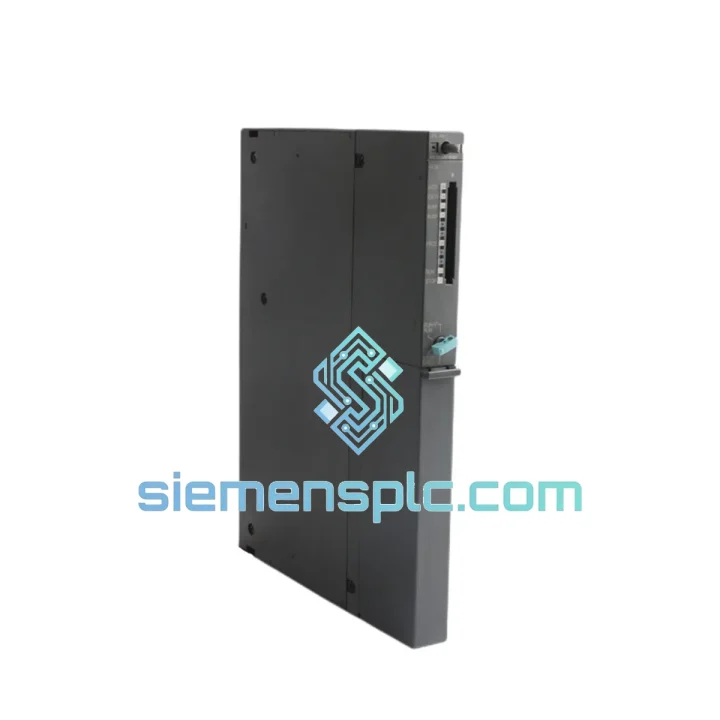
Request verified availability, condition, replacement risk review, packing options and courier lead time for 6ES7412-2XG00-0AB0.
Click Request Quote and the part number is inserted into the inquiry form automatically.
Core fields for model confirmation and RFQ routing. Detailed product narrative remains below.
The Siemens 6ES7412-2XG00-0AB0 is the entry-level central processing unit of the SIMATIC S7-400 series, engineered for process-intensive industrial automation tasks that demand deterministic cycle execution, structured fault handling, and multi-master fieldbus coordination. Positioned at the base of the S7-400 CPU hierarchy, the CPU412-2 delivers a binary instruction processing time of 0.3 µs and a floating-point instruction time of 3 µs — performance figures that sustain closed-loop PID regulation, sequential interlocking, and coordinated motion sequencing without cycle-time jitter under normal load conditions.
The module integrates two independent MPI/PROFIBUS-DP interfaces, each capable of operating simultaneously as DP master or DP slave. This dual-port architecture eliminates the need for a dedicated CP 342-5 communications processor in single-master distributed I/O topologies, reducing rack slot consumption and simplifying the hardware configuration tree in STEP 7 or TIA Portal. The backplane bus interface operates at the S7-400 internal bus rate, sustaining high-throughput data exchange with analog and digital I/O modules without introducing latency penalties into the scan cycle.
Working memory is fixed at 256 KB, partitioned between code and data segments under firmware control. Load memory is provided by an integrated 256 KB RAM block, with expansion supported via SIMATIC Flash/RAM memory cards inserted into the front-panel card slot — enabling program storage up to several megabytes for applications with large data block requirements or recipe management functions. The retentive data area is battery-backed, preserving counter values, timer presets, and data block contents across power interruptions without requiring an external UPS.
The CPU412-2 supports up to 8,192 bytes of process image input and 8,192 bytes of process image output, accommodating dense I/O configurations across multiple UR1/UR2 central racks and ER1/ER2 expansion racks. Interrupt response time — from hardware signal assertion to OB interrupt routine entry — is within the deterministic bounds defined by the S7-400 interrupt priority class system, with OB40 hardware interrupts processed ahead of cyclic OB1 execution. This priority arbitration is handled entirely in hardware logic on the CPU backplane interface, not in firmware polling loops, which is a structural advantage over software-polled interrupt schemes used in lower-tier PLC families.
Real-time Stock & RFQ: [email protected] | WhatsApp: +86 18359268345
| Parameter | Value |
|---|---|
| Order Number | 6ES7412-2XG00-0AB0 |
| Module Designation | CPU412-2 |
| Product Family | SIMATIC S7-400 |
| Working Memory | 256 KB (code + data) |
| Load Memory (integrated) | 256 KB RAM |
| Load Memory (expandable) | Via SIMATIC memory card (Flash/RAM) |
| Binary Instruction Time | 0.3 µs |
| Floating-Point Instruction Time | 3 µs |
| Process Image Input | 8,192 bytes |
| Process Image Output | 8,192 bytes |
| Communication Interfaces | 2 × MPI/PROFIBUS-DP (integrated) |
| Max. DP Slaves per Interface | 125 |
| MPI Data Rate | 187.5 kbps |
| PROFIBUS-DP Data Rate | Up to 12 Mbps |
| Supply Voltage | DC 24 V (via S7-400 backplane bus) |
| Current Consumption (5 V bus) | 1.2 A |
| Current Consumption (24 V) | 100 mA |
| Operating Temperature | 0 °C to +60 °C |
| Storage Temperature | −40 °C to +70 °C |
| Relative Humidity | 10 % to 95 % (non-condensing) |
| Protection Class | IP20 |
| Dimensions (W × H × D) | 50 × 290 × 219 mm |
| Weight | Approx. 760 g |
| Certifications | CE, UL, cULus, ATEX Zone 2 (IIC T4), RoHS |
| Engineering Software | SIMATIC STEP 7 V5.x, TIA Portal V13+ |
| Warranty | 12 months from dispatch date |
The CPU412-2 backplane interface is implemented as a dedicated ASIC rather than a general-purpose bus bridge, which has two measurable consequences: first, the arbitration latency between the CPU and I/O modules on the same rack is fixed and not subject to firmware scheduling variability; second, the bus ASIC handles DMA-style data transfers for process image updates, freeing the main processor core to execute user program instructions without stalling on I/O read cycles. This separation of concerns between the communication ASIC and the instruction processor is the architectural basis for the S7-400’s deterministic scan time behavior under varying I/O load.
The dual MPI/PROFIBUS-DP interfaces share a common physical layer driver but maintain independent protocol stacks in the CPU firmware. Each interface can be configured independently as DP master class 1 (cyclic I/O exchange with slaves), DP master class 2 (acyclic parameter access), or DP slave — a flexibility that supports both standard distributed I/O topologies and peer-to-peer CPU-to-CPU data exchange without additional hardware. The DP master scheduler operates on a fixed bus cycle time, with GSD-defined slave timing parameters loaded during hardware configuration compilation in STEP 7 or TIA Portal.
EMC immunity is addressed at the hardware level through multi-layer PCB ground plane design, ferrite bead filtering on all external interface lines, and optocoupler isolation on the backplane bus signal lines. The module meets EN 61000-4-4 (electrical fast transient/burst) at 2 kV and EN 61000-4-5 (surge) at 1 kV line-to-earth, which are the relevant immunity levels for industrial panel environments with variable-frequency drives and contactor switching in close proximity. The ATEX Zone 2 certification (gas group IIC, temperature class T4) permits installation in control cabinets located within potentially explosive atmospheres without requiring purged enclosures, provided the cabinet itself meets the applicable Ex e or Ex p requirements.
Battery backup for retentive memory uses a standard lithium cell accessible from the front panel without rack removal. The CPU provides a battery low warning via the BF LED and a corresponding diagnostic buffer entry, giving maintenance personnel advance notice before data loss occurs. The diagnostic buffer itself stores the last 100 events with timestamps, fault codes, and module addresses — a structured fault log that supports root-cause analysis without requiring an online connection to the engineering station at the time of the fault.
Every unit of the Siemens 6ES7412-2XG00-0AB0 supplied by siemensplc.com is sourced as genuine Siemens OEM hardware. Physical authenticity indicators — including the laser-etched order number, holographic label, and factory serial number — are verified against Siemens Industry Online Support (SIOS) records prior to dispatch. Modules are stored in ESD-safe anti-static packaging in a temperature-controlled warehouse in Xiamen, China, and are re-inspected for physical condition before each shipment.
Export documentation — commercial invoice, packing list, and certificate of origin — is prepared for each order. The applicable HS Code for this module is 8537.10 (boards, panels, consoles for electric control). Shipments are dispatched via DHL Express, FedEx International Priority, or UPS Worldwide Expedited depending on destination and customer preference, with typical transit times of 3–5 business days to Europe, North America, and Southeast Asia. Bulk orders may be consolidated for sea freight on request. All shipments include full tracking and are covered by carrier insurance. A 12-month warranty against manufacturing defects applies from the confirmed dispatch date, with DOA replacement processed within 7 business days of delivery confirmation.
Email: [email protected]
WhatsApp: +86 18359268345
Web: siemensplc.com
Location: Xiamen, China
© 2026 siemensplc.com. All rights reserved.
We check the full part number, brand, series and visible nameplate information before quotation.
Sales confirms stock path, condition option, quantity and realistic lead time for export dispatch.
DHL, FedEx, UPS or buyer courier arrangements can be reviewed with packing requirements.
Similar brand or category products for fast comparison and multi-item RFQ lists.