Siemens
In Stock OK
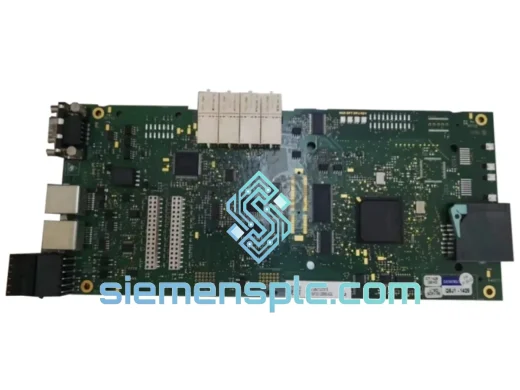
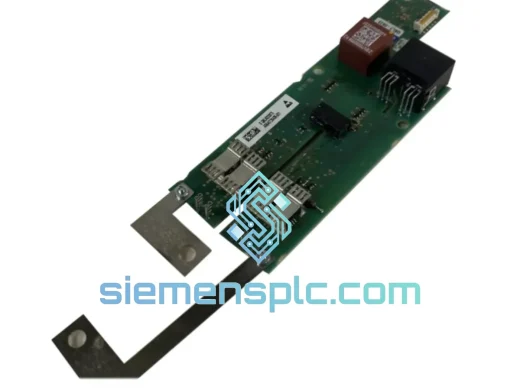
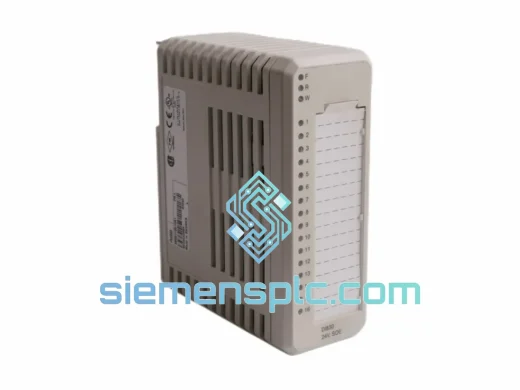
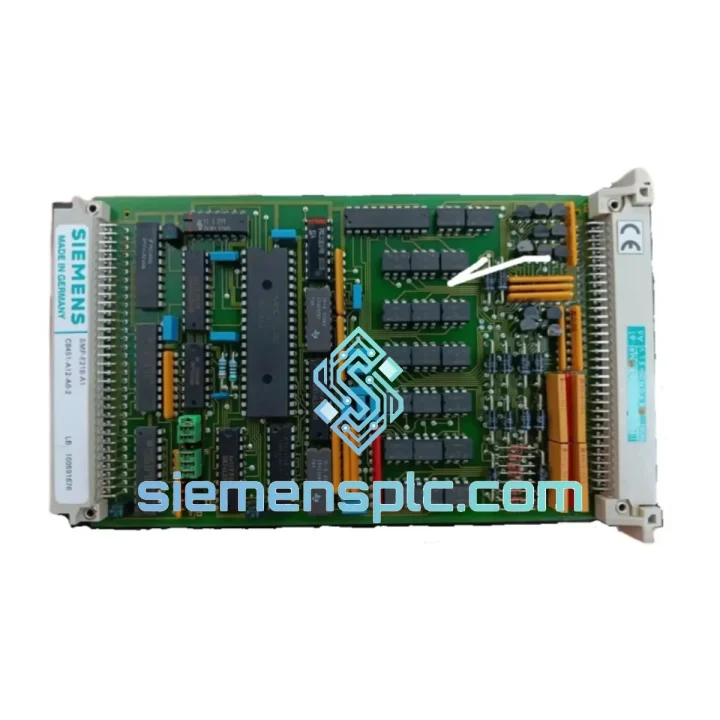
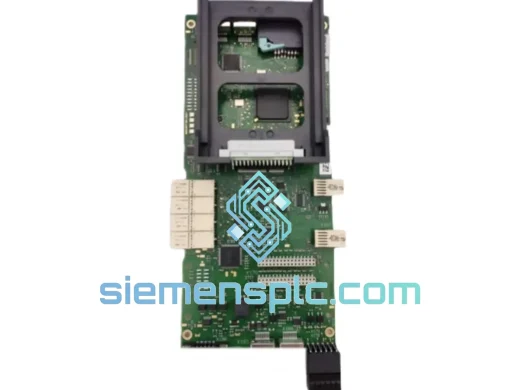
Siemens A5E35980813 Digital I/O Module – Simatic ET 200SP
Request verified availability, condition, replacement risk review, packing options and courier lead time for A5E35980813.
BrandSiemens
Part NumberA5E35980813
ConditionAvailability Check
Lead TimeRFQ Confirmation
DocumentsDatasheet / photos by RFQ
ShippingExport packing available
Auto-filled RFQ
A5E35980813
Click Request Quote and the part number is inserted into the inquiry form automatically.
- Reply by email: [email protected]
- WhatsApp / Tel: +86 18359268345
- Mon-Sat 9:00-18:00 GMT+8
Procurement Data
Key Product Information
Core fields for model confirmation and RFQ routing. Detailed product narrative remains below.
- Brand
- Siemens
- Primary Part Number
- A5E35980813
- Product Type
- PLC I/O Module
- Product Family
- Other series
- Manufacturer
- Siemens AG
- Country of Origin
- DE
- Catalog Category
- I/O Modules
- Operating Temp.
- 0 °C to +60 °C (horizontal mounting); derate per Siemens manual for vertical
- Warranty
- 12 months from dispatch date — covers manufacturing defects under normal operating conditions
Model confirmed for inquiry
A5E35980813
Send quantity, destination and urgency. The RFQ form keeps this part number attached.
Request Quote
Product Overview
Siemens A5E35980813 — Distributed Digital I/O Module in the Simatic ET 200SP Architecture
The A5E35980813 is a factory-sealed digital I/O module belonging to Siemens’ Simatic ET 200SP distributed I/O platform. Within a control loop, this module occupies the field-side boundary layer between the S7-1500 or S7-1200 CPU and the physical process signals. Its primary function is deterministic digital signal acquisition and actuation: it captures binary field states — proximity switches, solenoid feedback, valve position sensors — and delivers them to the controller’s process image within a defined, repeatable cycle window. On the output side, it drives actuators such as contactors, indicator lamps, and relay coils at 24 V DC logic levels.
Unlike conventional terminal-block I/O racks, the ET 200SP architecture integrates the wiring interface, signal conditioning, and bus communication into a single slim-profile assembly mounted on a BaseUnit. The A5E35980813 plugs directly onto the BaseUnit’s backplane connector, establishing both the power rail and the local bus connection in a single mechanical action. This design eliminates inter-module wiring harnesses and reduces panel assembly time measurably on high-channel-count installations.
The module participates in the ET 200SP station’s cyclic data exchange, managed by the Interface Module (IM). The IM aggregates I/O data from all modules in the station and transmits it to the CPU over PROFINET IRT or PROFIBUS DP within the configured update rate. For standard discrete control applications, this results in an end-to-end I/O response time — from field signal change to CPU process image update — of under 1 ms on local PROFINET IRT configurations. This latency characteristic is deterministic and bounded, which is a prerequisite for closed-loop discrete control sequences where timing jitter would cause sequencing faults.
Real-time Stock & RFQ: [email protected] | WhatsApp: +86 18359268345
Technical Parameters
| Parameter | Specification |
|---|---|
| Part Number / SKU | A5E35980813 |
| Module Classification | Digital I/O Module |
| Platform | Simatic ET 200SP |
| Manufacturer | Siemens AG |
| Country of Manufacture | Germany |
| Compatible CPUs | S7-1500 series, S7-1200 series (via ET 200SP IM) |
| Communication Protocol | PROFINET IRT / PROFIBUS DP (via Interface Module) |
| Supply Voltage | 24 V DC (supplied via BaseUnit power rail) |
| Signal Voltage Range | 24 V DC (IEC 61131-2 Type 1/3 input compatible) |
| Mounting System | 35 mm DIN rail via ET 200SP BaseUnit (BU type must match channel config) |
| Operating Temperature | 0 °C to +60 °C (horizontal mounting); derate per Siemens manual for vertical |
| Storage Temperature | −40 °C to +70 °C |
| Relative Humidity | 5 % to 95 %, non-condensing (IEC 60068-2-78) |
| Protection Class | IP20 (EN 60529) |
| EMC Immunity | EN 61000-6-2 (industrial environment) |
| EMC Emission | EN 61000-6-4 |
| Vibration Resistance | 5 Hz to 8.4 Hz: 3.5 mm amplitude; 8.4 Hz to 150 Hz: 1 g (IEC 60068-2-6) |
| Shock Resistance | 15 g / 11 ms (IEC 60068-2-27) |
| Certifications | CE, UL, cULus, ATEX Zone 2 (class-dependent — verify module label) |
| TIA Portal Compatibility | V14 SP1 and above (HSP update required for full catalog recognition) |
| Approximate Weight | ~700 g (module + packaging) |
| Warranty | 12 months from dispatch date — covers manufacturing defects under normal operating conditions |
Hardware Logical Analysis
Optical Isolation Architecture: Digital input channels on ET 200SP modules employ opto-coupler isolation between the field wiring terminals and the internal logic bus. Each input channel passes the 24 V DC field signal through an LED-photodiode pair, creating a galvanic barrier rated typically at 500 V AC (rms) between field potential and backplane logic. This isolation topology prevents ground loop currents — common in large panel installations where field cable shields are grounded at multiple points — from corrupting the logic-level signal or damaging the module’s ASIC. The opto-coupler’s switching threshold is calibrated to IEC 61131-2 Type 1/3 specifications: signal-0 is defined at ≤5 V DC, signal-1 at ≥15 V DC, with a hysteresis band between 5 V and 15 V that rejects noise transients without requiring external filtering in most industrial environments.
Local Bus Communication: The ET 200SP local bus is a proprietary high-speed serial backplane operating at a fixed clock rate managed by the Interface Module. Each I/O module on the station is assigned a slot address at configuration time in TIA Portal. The IM polls each module’s local bus node in a fixed sequence, collecting process data and writing output data within each local bus cycle. The local bus cycle time is typically in the range of 125 µs to 250 µs for fully populated stations, which is substantially faster than the PROFINET cycle time. This means the IM can aggregate multiple local bus cycles before each PROFINET frame, ensuring that no field event is missed between network updates.
EMC Design: The module’s PCB layout follows Siemens’ internal EMC design rules for industrial automation hardware: signal traces are routed with controlled impedance, power and signal planes are separated, and decoupling capacitors are placed at each power entry point. The metal housing of the BaseUnit provides a Faraday shield around the module’s electronics, attenuating radiated emissions and improving immunity to external RF fields. This design approach allows the ET 200SP to operate without additional shielding enclosures in environments classified as industrial per EN 61000-6-2, including proximity to variable-frequency drives, contactors, and welding equipment — all common sources of conducted and radiated interference in automation panels.
Diagnostics Logic: Each channel incorporates hardware-level fault detection. Short-circuit conditions on output channels are detected by comparing the commanded output state against the measured load current. Wire-break detection on input channels (where supported) monitors the input impedance against a threshold. Fault states are latched in the module’s local status register and reported to the IM on the next local bus cycle, which then propagates the diagnostic alarm to the CPU’s diagnostic buffer. In TIA Portal, these alarms appear as structured diagnostic events with channel-level granularity, enabling maintenance personnel to identify the exact field terminal at fault without manual probing.
System Integration Benefits
- Deterministic I/O Response: PROFINET IRT mode constrains jitter to ±1 µs at the network level, and the ET 200SP local bus adds a fixed, bounded latency. The combined end-to-end I/O response time is predictable and documentable — a requirement for safety-related control functions under IEC 62061 and machinery directive compliance.
- Hot-Swap Module Replacement: With a compatible BaseUnit (light-colored BU type for standard potential group), the A5E35980813 can be removed and replaced while the station remains powered and the IM maintains communication with the CPU. The CPU detects the module removal as a diagnostic event, executes the configured fault response (typically hold last value or substitute value), and automatically re-parameterizes the replacement module upon insertion — without a PLC restart.
- TIA Portal Native Configuration: The module is fully described by its GSDML file, which TIA Portal imports automatically. Hardware configuration is performed by drag-and-drop in the device view; channel parameters (input filter time, output substitute value behavior, diagnostic enable/disable per channel) are set in the module’s property dialog. No manual address calculation or DIP switch setting is required.
- Scalable Station Architecture: Up to 64 I/O modules can be combined in a single ET 200SP station (IM-dependent). Digital, analog, technology (counter, encoder), and communication modules share the same BaseUnit system and local bus, allowing a single station to serve multiple signal types without additional gateways or protocol converters.
- Integrated Diagnostic Transparency: Channel-level diagnostics are reported through the standard S7 diagnostic mechanism (OB82, OB86, SFB52/54). Maintenance engineers can read fault states from the CPU’s diagnostic buffer, from the HMI alarm system, or directly from the module’s LED indicators — three independent diagnostic paths that do not require additional diagnostic hardware.
- Reduced Panel Footprint: The ET 200SP module width is 15 mm per slot. A 16-channel digital I/O station occupies approximately 240 mm of DIN rail width including the IM and power module, compared to 400–500 mm for equivalent conventional I/O racks. This reduction directly lowers panel enclosure size and associated material costs.
- Consistent Firmware Ecosystem: All ET 200SP modules are managed through TIA Portal’s firmware update mechanism. Firmware versions are tracked per module in the project, and updates are pushed over PROFINET without physical access to the panel — relevant for geographically distributed installations where on-site firmware maintenance is costly.
- Backward-Compatible Expansion: Existing ET 200SP stations can be expanded by adding modules to available slots without modifying the existing wiring or reconfiguring existing modules. TIA Portal’s online change function allows new modules to be added to the running configuration with a brief CPU stop, minimizing production interruption during system expansion.
Quality Assurance & Global Logistics
Every A5E35980813 unit dispatched from our Xiamen, China facility is sourced from authorized Siemens distribution channels. Units are factory-sealed in original Siemens packaging with intact holographic labels, date codes, and batch traceability markings. Prior to dispatch, each module undergoes a physical inspection protocol: packaging integrity check, label authenticity verification against Siemens’ current label specifications, and firmware version confirmation where accessible.
Batch and date code records are retained for each shipment and are available upon request for customers operating under ISO 9001 or AS9120 procurement controls. A Siemens datasheet, EU Declaration of Conformity, and commercial packing list are included with every shipment as standard documentation.
Logistics from Xiamen are executed via DHL Express, FedEx International Priority, or UPS Worldwide Express, with typical transit times of 3–5 business days to Europe and North America, and 2–4 business days to Southeast Asia. All shipments include door-to-door tracking, and export documentation (commercial invoice, packing list, HS code 8537.10) is prepared to facilitate smooth customs clearance in major import markets. For time-critical MRO requirements, same-day dispatch is available for in-stock units when orders are confirmed before 14:00 CST.
Contact Information
Email: [email protected]
WhatsApp: +86 18359268345
Web: siemensplc.com
Location: Xiamen, China
© 2026 siemensplc.com. All rights reserved.
Ready to quote
[email protected]
Send This Part Number to Sales
RFQ workflow
Quality workflow ->
Confirmation Process
01Model confirmation
We check the full part number, brand, series and visible nameplate information before quotation.
02Availability reply
Sales confirms stock path, condition option, quantity and realistic lead time for export dispatch.
03Packing & courier
DHL, FedEx, UPS or buyer courier arrangements can be reviewed with packing requirements.
Continue sourcing
Browse full catalog ->
Related Automation Parts
Similar brand or category products for fast comparison and multi-item RFQ lists.
Siemens
RFQ Ready
Siemens 6RY1803-0AA05-0AA1 Digital Output Module
SIMOREG
Origin DE
Digital Output Module