
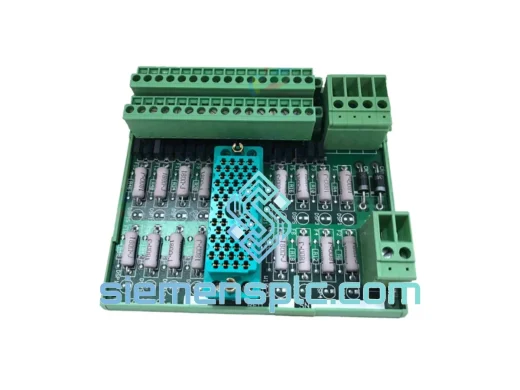
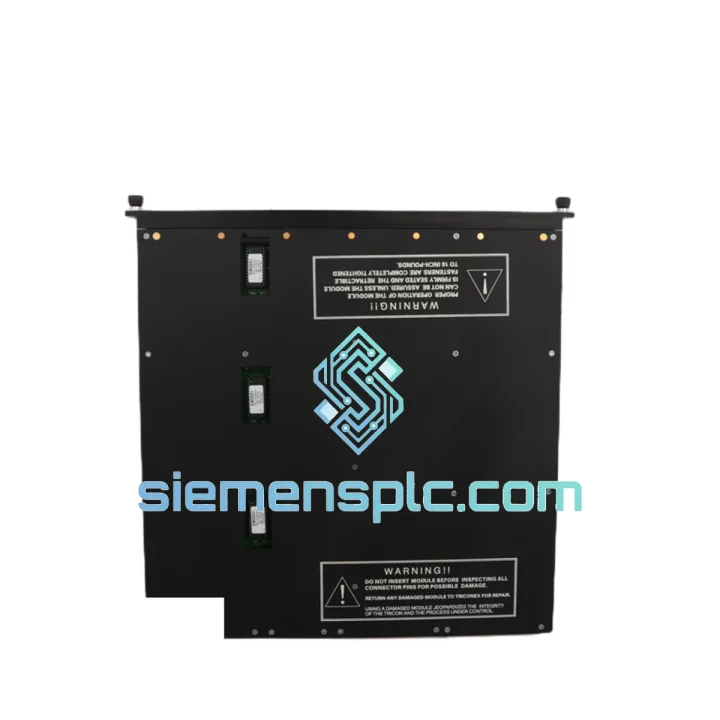
TRICONEX
In Stock OK
TRICONEX 3721 Analog Input Module
Request verified availability, condition, replacement risk review, packing options and courier lead time for 3721.
BrandTRICONEX
Part Number3721
ConditionAvailability Check
Lead TimeRFQ Confirmation
DocumentsDatasheet / photos by RFQ
ShippingExport packing available
Auto-filled RFQ
3721
Click Request Quote and the part number is inserted into the inquiry form automatically.
- Reply by email: [email protected]
- WhatsApp / Tel: +86 18359268345
- Mon-Sat 9:00-18:00 GMT+8
Procurement Data
Key Product Information
Core fields for model confirmation and RFQ routing. Detailed product narrative remains below.
- Brand
- TRICONEX
- Primary Part Number
- 3721
- Product Type
- Safety PLC Module
- Series / Family
- Tricon
- Country of Origin
- US
- Catalog Category
- I/O Modules
- Operating Temp.
- 0°C to 60°C
Model confirmed for inquiry
3721
Send quantity, destination and urgency. The RFQ form keeps this part number attached.
Request Quote
Product Overview
TRICONEX 3721 — Stop the Bleed on Your Downtime. Ship Today.
Your Tricon safety system just flagged a failed analog input module. The board is showing a 2oo3 voter mismatch. Your DCS is alarming. Operations is on the phone. Every hour this line stays down costs you — and you already know the number. The TRICONEX 3721 Analog Input Module is on our shelf in Xiamen right now. We’ve shipped to refineries in the Middle East, chemical plants in Southeast Asia, and power stations in Europe — all on emergency timelines. This is what we do.
The 3721 is an 8-channel analog input module built for the Tricon Triple Modular Redundant (TMR) platform — Schneider Electric’s flagship SIL 3-capable safety controller. It handles 4–20 mA and voltage signals from field transmitters, feeds three independent processing legs simultaneously, and votes 2-out-of-3 on every reading before passing it to the safety logic. When one leg drifts or fails, the system keeps running. When the module itself fails, you need a replacement that slots in clean, initializes correctly, and doesn’t introduce new faults. That’s the 3721 we’re shipping you.
⚡ URGENT REQUIREMENT? Contact: [email protected] | WhatsApp: +86 18359268345
Quick Technical Datasheet
| Parameter | Specification |
|---|---|
| Part Number | 3721 |
| Brand | TRICONEX (Schneider Electric) |
| Platform | Tricon TMR Safety System |
| Module Type | Analog Input Module |
| Input Channels | 8 Channels (4–20 mA / Voltage) |
| Architecture | Triple Modular Redundant (TMR) — 2oo3 Voting |
| Safety Integrity Level | SIL 2 / SIL 3 Capable |
| Hot-Swap / Online Replacement | Yes — No system shutdown required |
| Self-Diagnostics | Continuous, reported to TriStation 1131 |
| Form Factor | Plug-in card for Tricon main/expansion chassis |
| Operating Temperature | 0°C to 60°C |
| Weight | ~2,500 g |
| Origin | USA (Schneider Electric / TRICONEX) |
| Stock Status | ✅ Ready to Ship — Xiamen Warehouse |
Troubleshooting & Replacement Tips
After handling dozens of Tricon 3721 field swaps, here are the failure patterns and replacement pitfalls that actually matter on the floor:
Common Fault Indicators:
- FAULT LED solid red on the module: Internal hardware fault detected by self-diagnostics. The module has isolated itself from the TMR vote. Do not attempt to reset — replace the module.
- 2oo3 voter mismatch alarm in TriStation: One of the three analog legs is reading outside tolerance. If the mismatch is consistent across multiple channels on the same module, the 3721 itself is the culprit, not the field transmitter.
- Intermittent channel faults (single channel): Before condemning the module, check the field wiring and terminal block connections. A corroded terminal or a broken shield drain wire will mimic a module fault. Swap the suspect channel to a spare channel on the same module first.
- Module not recognized after insertion: This is almost always a chassis backplane connector issue or a firmware mismatch. Verify the module revision matches the chassis firmware version documented in your site’s Tricon configuration record.
Replacement Procedure — Key Steps:
- Step 1 — Confirm hot-swap eligibility: The Tricon system supports online module replacement, but only if the system is in a healthy 2oo3 state on the remaining two legs. If the system is already in a degraded 1oo2 state, coordinate with your safety engineer before pulling the module — you may be taking the system to 0oo1.
- Step 2 — No DIP switch or address configuration required: The 3721 uses automatic slot addressing via the Tricon chassis backplane. There are no physical address switches to set. The module self-identifies its slot position on power-up.
- Step 3 — Firmware compatibility check: Match the replacement module’s hardware revision to your existing installed modules. Mixing hardware revisions within the same chassis is supported in most configurations, but verify against your site’s Tricon System Configuration Document (SCD) and the applicable TRICONEX compatibility matrix.
- Step 4 — Insertion sequence: Insert the module firmly until the ejector levers click. The module will run its internal self-test (approximately 30–60 seconds). Watch TriStation for the module to come online and rejoin the TMR vote. Do not declare the replacement successful until all three legs show healthy status.
- Step 5 — Post-replacement verification: Force a known signal value from your calibrator on each channel and verify the TriStation display matches. Document the replacement in your site’s maintenance management system with the new module serial number.
Firmware Note: If your Tricon system is running an older firmware version (pre-v10), confirm that the replacement 3721 module revision is backward-compatible. Schneider Electric’s TRICONEX technical support can provide the compatibility matrix — or contact us and we’ll cross-reference your system version against our available stock revisions before we ship.
Reliability in Harsh Conditions
The 3721 was not designed for a climate-controlled server room. It was designed for the inside of a Tricon chassis sitting in a junction room 50 meters from a crude distillation unit, where ambient temperatures swing from 5°C at night to 55°C during summer shutdowns, where humidity condenses on cold surfaces every morning, and where the floor vibrates at 15–20 Hz from nearby rotating equipment.
The module’s conformal-coated PCB resists moisture ingress and corrosive atmospheres — a non-negotiable requirement for offshore platform installations where salt-laden air attacks unprotected electronics within months. The card-edge connector and backplane interface are gold-plated to maintain low-resistance contact through thousands of insertion cycles and years of thermal cycling. Vibration tolerance is validated to IEC 60068-2-6 test profiles, covering the frequency ranges generated by compressors, pumps, and turbines in typical process plant installations.
The TMR architecture itself is the ultimate reliability mechanism: even if one of the three internal processing paths develops a latent fault, the 2oo3 voting logic continues to deliver correct output to the safety logic solver. The module’s continuous self-diagnostics will flag the degraded state long before it becomes a safety issue, giving your maintenance team a planned replacement window instead of an emergency shutdown.
Units sourced from our Xiamen warehouse are stored in climate-controlled conditions, in original anti-static ESD packaging with desiccant packs. Modules that have been in storage for extended periods are visually inspected and bench-powered before shipment to confirm they initialize correctly and pass internal self-test.
Global Express Logistics
Our Xiamen warehouse is 40 minutes from Xiamen Gaoqi International Airport (XMN), a major cargo hub with daily direct freighter services to Frankfurt, Dubai, Singapore, Los Angeles, and Amsterdam. This geography is not an accident — it puts us within 24–48 hours of most industrial centers in Europe, the Middle East, Southeast Asia, and North America via DHL Express or FedEx International Priority.
Standard emergency shipment process:
- Order confirmed before 14:00 CST: Same-day dispatch to DHL/FedEx pickup. Airway bill and tracking number sent to you within 2 hours of handover.
- Packaging: Anti-static ESD bag → foam-lined inner box → double-wall outer carton. Fragile and ESD-sensitive labels applied. Compliant with IATA regulations for electronic equipment.
- Documentation: Commercial invoice, packing list, and certificate of origin prepared for customs clearance. For destinations requiring additional import documentation (e.g., CE declaration, country-of-origin certification), advise us at order time.
- Customs HS Code: 8537.10 (Boards, panels, consoles for electric control) — pre-declared on all shipments to minimize customs hold risk.
- Typical transit times: Middle East 1–2 days | Europe 2–3 days | Southeast Asia 1–2 days | North America 2–3 days | Australia 3–4 days.
- Tracking: Real-time tracking link provided. Our logistics team monitors shipments and proactively contacts you if any customs or routing delay is detected.
For shipments to sanctioned or restricted destinations, we comply fully with applicable export control regulations. Contact us before ordering if you have questions about your destination country.
Contact Information
📧 Email: [email protected]
💬 WhatsApp: +86 18359268345
🌐 Web: siemensplc.com
© 2026 siemensplc.com. All rights reserved.
Ready to quote
[email protected]
Send This Part Number to Sales
RFQ workflow
Quality workflow ->
Confirmation Process
01Model confirmation
We check the full part number, brand, series and visible nameplate information before quotation.
02Availability reply
Sales confirms stock path, condition option, quantity and realistic lead time for export dispatch.
03Packing & courier
DHL, FedEx, UPS or buyer courier arrangements can be reviewed with packing requirements.
Continue sourcing
Browse full catalog ->
Related Automation Parts
Similar brand or category products for fast comparison and multi-item RFQ lists.
TRICONEX
RFQ Ready
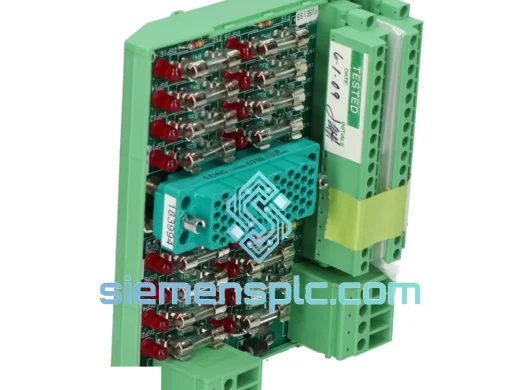
TRICONEX 9563-810 Safety Termination Panel
Tricon
Origin US
Safety System Termination Panel
TRICONEX
RFQ Ready
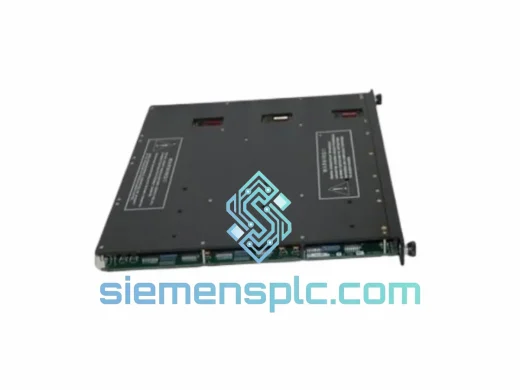
TRICONEX 7400210-010 Digital Input Module – Tricon TMR
Tricon
Origin US
Digital Input Module
TRICONEX
RFQ Ready
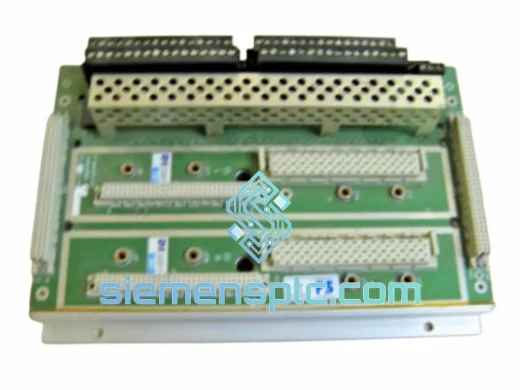
TRICONEX 7400208B-020 Safety I/O Baseplate – Tricon TMR Series
TRICON
Origin US
Safety I/O Baseplate