
TRICONEX
In Stock OK
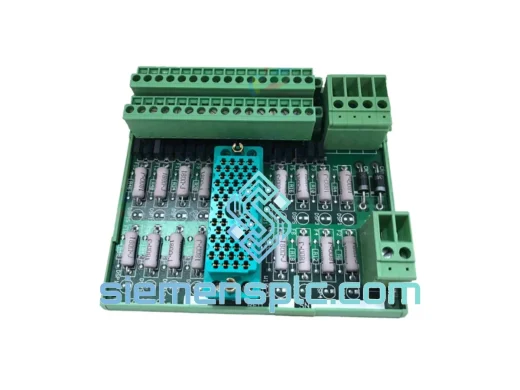
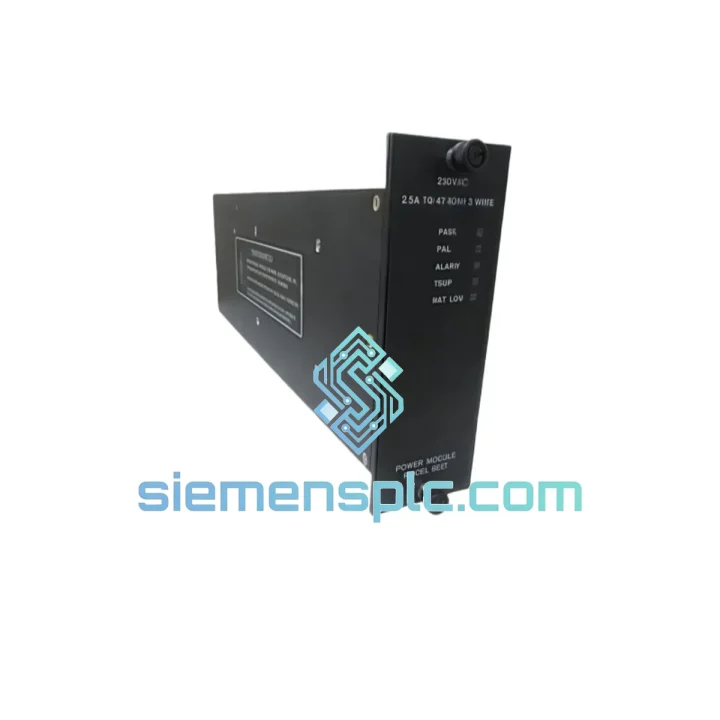
TRICONEX AI 3351S2 Analog Input Module – Tricon TMR
Request verified availability, condition, replacement risk review, packing options and courier lead time for AI 3351S2.
BrandTRICONEX
Part NumberAI 3351S2
ConditionAvailability Check
Lead TimeRFQ Confirmation
DocumentsDatasheet / photos by RFQ
ShippingExport packing available
Auto-filled RFQ
AI 3351S2
Click Request Quote and the part number is inserted into the inquiry form automatically.
- Reply by email: [email protected]
- WhatsApp / Tel: +86 18359268345
- Mon-Sat 9:00-18:00 GMT+8
Procurement Data
Key Product Information
Core fields for model confirmation and RFQ routing. Detailed product narrative remains below.
- Brand
- TRICONEX
- Primary Part Number
- AI 3351S2
- Product Type
- Analog Input Module
- Series / Family
- Tricon
- Manufacturer
- TRICONEX (Schneider Electric)
- Country of Origin
- US
- Catalog Category
- I/O Modules
- Operating Temp.
- 0°C to +60°C
- Warranty
- 12 months from date of shipment
Model confirmed for inquiry
AI 3351S2
Send quantity, destination and urgency. The RFQ form keeps this part number attached.
Request Quote
Product Overview
TRICONEX AI 3351S2: Triple-Redundant Analog Signal Acquisition for SIL 3 Safety Loops
In a Safety Instrumented System, the analog input module is the first physical boundary between field transmitter signals and the safety logic solver. Any degradation at this boundary — whether from A/D converter drift, channel open-circuit, or backplane communication fault — directly threatens the integrity of the safety instrumented function (SIF). The TRICONEX AI 3351S2 addresses this risk through a hardware-enforced Triple Modular Redundancy (TMR) architecture, where three independent signal acquisition paths operate simultaneously and a 2-out-of-3 (2oo3) voting mechanism arbitrates the final process value delivered to the Tricon controller. This design eliminates single-point failure modes at the analog front end and sustains SIL 3 performance across the full module lifecycle.
The AI 3351S2 is a 16-channel, 4–20 mA analog input module native to the Triconex Tricon platform. Each of the three TMR legs acquires the same field signal independently through its own signal conditioning circuit, its own 12-bit A/D converter, and its own optical isolation barrier. The three digitized values are then passed across the Tricon backplane to the TMR voter logic, which compares all three readings and flags any leg whose output deviates beyond a configurable tolerance band. The voted result — statistically the most reliable representation of the physical process variable — is what the safety application program acts upon. This architecture sustains correct output even when one leg fails completely (fault-tolerant) and maintains a degraded but safe operating state when a second leg fails (fail-safe).
Deployed across oil and gas, petrochemical, nuclear, and power generation facilities, the AI 3351S2 is a field-proven component in Emergency Shutdown (ESD), High-Integrity Pressure Protection (HIPPS), Burner Management (BMS), and Turbine Protection systems. Its IEC 61508 SIL 3 certification and IEC 61511 compliance make it a direct fit for safety lifecycle documentation without requiring additional hardware justification.
Real-time Stock & RFQ: [email protected] | WhatsApp: +86 18359268345
Technical Parameters
| Parameter | Specification |
|---|---|
| Part Number / SKU | AI 3351S2 |
| Manufacturer | TRICONEX (Schneider Electric) |
| Platform Compatibility | Tricon TMR Main Chassis (3700A, 3706A, 3721) |
| Module Type | Analog Input |
| Channel Count | 16 channels (8 per TMR leg × 3 legs) |
| Input Signal Type | 4–20 mA current loop |
| A/D Resolution | 12-bit per channel per leg |
| Voting Architecture | 2oo3 (2-out-of-3) TMR hardware voter |
| Isolation | Optical isolation: channel-to-channel and channel-to-backplane |
| Safety Integrity Level | SIL 3 (IEC 61508 / IEC 61511) |
| Fault Tolerance | 3-2-1-0 degradation model; single-fault tolerant |
| Operating Temperature | 0°C to +60°C |
| Relative Humidity | 5% to 95% non-condensing |
| Backplane Interface | Tricon proprietary high-speed backplane bus |
| Module Form Factor | Single-slot Tricon I/O module |
| Certifications | IEC 61508, IEC 61511, FM, CE |
| Hot-Swap Support | Yes — online replacement without system shutdown |
| Warranty | 12 months from date of shipment |
Hardware Logical Analysis
The AI 3351S2 implements a distributed analog front-end architecture across three physically separated leg circuits within a single module slot. Each leg contains an independent signal conditioning stage — comprising input protection clamping, precision current-to-voltage conversion, and anti-aliasing filtering — followed by a dedicated 12-bit successive-approximation A/D converter. The three converters are clocked synchronously to minimize inter-leg sampling skew, which is critical when the voted result feeds time-sensitive safety logic with scan cycles in the 10–100 ms range.
Optical isolation is implemented at the boundary between the field-side analog circuitry and the backplane-side digital logic. Each channel uses a dedicated optocoupler rated for a minimum of 1,500 V RMS isolation voltage. This galvanic barrier prevents ground loop currents — common in large industrial installations where field devices and control panels share different ground references — from injecting noise into the A/D conversion path. It also provides protection against transient overvoltages caused by nearby switching equipment, motor drives, or lightning-induced surges on field cable runs.
The TMR voter logic resides in the Tricon main processor module, not in the AI 3351S2 itself. Each leg of the AI 3351S2 transmits its digitized channel values independently across the Tricon backplane using the platform’s proprietary high-speed serial bus. The backplane bus operates with deterministic latency, ensuring that all three leg values arrive at the voter within the same controller scan cycle. The voter applies a configurable deviation threshold: if any one leg’s value differs from the median of the three by more than the threshold, that leg is flagged as degraded and an alarm is generated in the TriStation 1131 application. The voted output continues to use the two agreeing legs, maintaining SIL 3 performance in a 2oo2 configuration until the faulted leg is replaced.
EMC performance is achieved through a combination of hardware shielding and PCB layout discipline. The module housing provides a Faraday cage effect for radiated emissions, while the PCB ground plane is segmented to isolate analog return paths from digital switching noise. Decoupling capacitors are placed at each power supply pin of the A/D converters to suppress high-frequency noise from the backplane power rail. These measures allow the AI 3351S2 to operate within IEC 61000-4 immunity levels, including 4 kV contact discharge (ESD), 2 kV fast transient burst (EFT), and 2 kV surge immunity — all without signal degradation beyond the 12-bit resolution floor.
System Integration Benefits
- Deterministic voted output latency: The 2oo3 voting result is available to the safety application within one controller scan cycle, supporting process safety functions with response time requirements as tight as 100 ms without additional buffering or handshaking overhead.
- Continuous per-channel diagnostics: Each of the 48 individual A/D conversion paths (16 channels × 3 legs) is monitored for open-circuit, short-circuit, and out-of-range conditions. Diagnostic coverage exceeds 90%, contributing directly to the module’s SIL 3 PFD calculation.
- Online module replacement without process interruption: The 3-2-1-0 fault tolerance model allows a technician to extract and replace the AI 3351S2 while the Tricon system continues executing the safety application on the remaining two legs, eliminating the need for a controlled shutdown during corrective maintenance.
- Transparent fault reporting to TriStation 1131: Leg status, channel health, and voter deviation alarms are surfaced as structured diagnostic data within the TriStation programming environment, enabling maintenance personnel to identify the exact faulted channel without physical inspection of the module.
- Galvanic isolation eliminates ground loop interference: Full optical isolation on every channel prevents common-mode noise from field cable runs from corrupting the A/D conversion result, maintaining measurement accuracy in installations where field devices and control panels share different ground potentials.
- High channel density reduces chassis footprint: 16 analog input channels per single module slot allows a fully populated Tricon chassis to accommodate large-scale SIS I/O counts without expanding to additional chassis, reducing hardware cost, wiring complexity, and cabinet space.
- Backward compatibility with existing Tricon infrastructure: The AI 3351S2 is electrically and mechanically compatible with standard Tricon main chassis and Field Termination Assemblies (FTAs), allowing direct replacement of earlier-generation analog input modules without rewiring or chassis modification.
- IEC 61511 safety lifecycle documentation support: The module’s SIL 3 certification, published PFD data, and diagnostic coverage figures are directly usable in LOPA and SIL verification calculations, reducing the engineering effort required to close the functional safety documentation package.
- Configurable deviation threshold for voter tuning: The inter-leg deviation threshold used by the TMR voter can be adjusted in the TriStation application to match the expected measurement uncertainty of the connected field transmitters, reducing nuisance alarms in applications with inherently noisy process variables.
- Sustained operation across industrial temperature range: Rated from 0°C to +60°C ambient, the AI 3351S2 operates without derating in standard industrial control room and marshalling cabinet environments, including those without active cooling.
Quality Assurance & Global Logistics
Every TRICONEX AI 3351S2 unit supplied by siemensplc.com is sourced as genuine original equipment. Prior to shipment from our Xiamen, China facility, each module undergoes a structured inspection protocol: serial number and date code verification against manufacturer records, visual inspection of PCB, backplane edge connector, and module housing for physical damage or counterfeit indicators, and power-on self-test (POST) confirmation where test infrastructure permits. Units are packed in anti-static ESD bags with foam cushioning inside double-wall corrugated cartons, with part number and serial number labeling on the outer packaging for unambiguous identification at goods receipt.
International shipments are dispatched via DHL Express, FedEx International Priority, or UPS Worldwide, with typical transit times of 3–7 business days to North America, Europe, Southeast Asia, and the Middle East. Full export documentation — commercial invoice, packing list, and certificate of origin — is prepared for each shipment to support customs clearance. For large-volume orders, sea freight consolidation is available with lead times confirmed at quotation stage. All shipments include real-time tracking, and our logistics team monitors each consignment through to delivery confirmation.
A 12-month warranty covers manufacturing defects and functional failures under normal operating conditions. Warranty claims are processed with a target response time of 48 business hours from receipt of the defective unit. Certificate of conformity and inspection documentation are available upon request at time of order.
Contact Information
Email: [email protected]
WhatsApp: +86 18359268345
Web: siemensplc.com
Location: Xiamen, China
© 2026 siemensplc.com. All rights reserved.
Ready to quote
[email protected]
Send This Part Number to Sales
RFQ workflow
Quality workflow ->
Confirmation Process
01Model confirmation
We check the full part number, brand, series and visible nameplate information before quotation.
02Availability reply
Sales confirms stock path, condition option, quantity and realistic lead time for export dispatch.
03Packing & courier
DHL, FedEx, UPS or buyer courier arrangements can be reviewed with packing requirements.
Continue sourcing
Browse full catalog ->
Related Automation Parts
Similar brand or category products for fast comparison and multi-item RFQ lists.
TRICONEX
RFQ Ready
TRICONEX 9563-810 Safety Termination Panel
Tricon
Origin US
Safety System Termination Panel
TRICONEX
RFQ Ready
TRICONEX 7400210-010 Digital Input Module – Tricon TMR
Tricon
Origin US
Digital Input Module
TRICONEX
RFQ Ready
TRICONEX 7400208B-020 Safety I/O Baseplate – Tricon TMR Series
TRICON
Origin US
Safety I/O Baseplate