
TRICONEX
In Stock OK
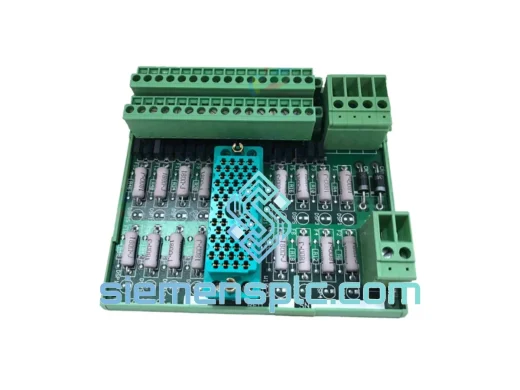
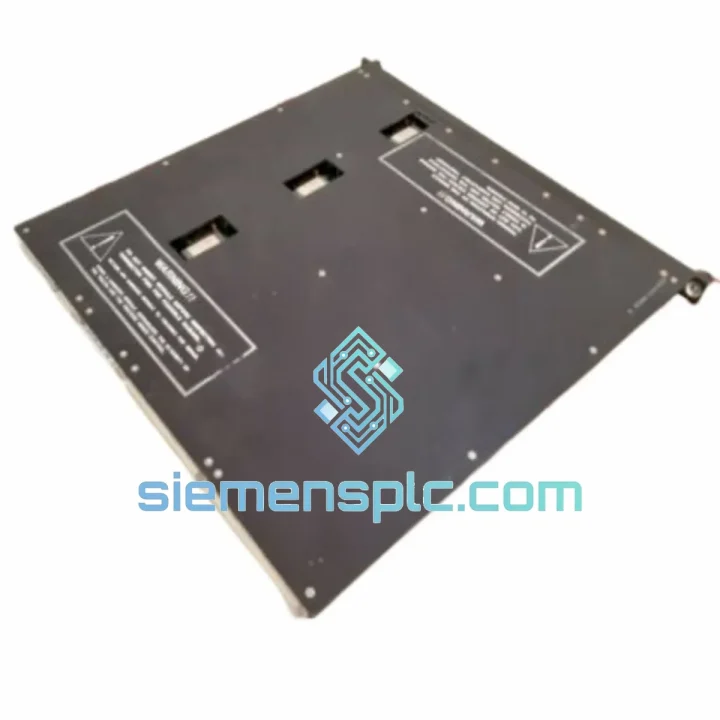
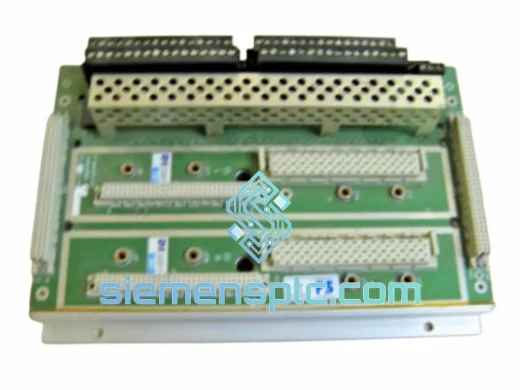
TRICONEX HCU3700/3703E Safety PLC Input Module – Tricon TMR
Request verified availability, condition, replacement risk review, packing options and courier lead time for HCU3700/3703E.
BrandTRICONEX
Part NumberHCU3700/3703E
ConditionAvailability Check
Lead TimeRFQ Confirmation
DocumentsDatasheet / photos by RFQ
ShippingExport packing available
Auto-filled RFQ
HCU3700/3703E
Click Request Quote and the part number is inserted into the inquiry form automatically.
- Reply by email: [email protected]
- WhatsApp / Tel: +86 18359268345
- Mon-Sat 9:00-18:00 GMT+8
Procurement Data
Key Product Information
Core fields for model confirmation and RFQ routing. Detailed product narrative remains below.
- Brand
- TRICONEX
- Primary Part Number
- HCU3700/3703E
- Product Type
- Safety PLC Input Module
- Series / Family
- Tricon
- Manufacturer
- TRICONEX (Schneider Electric)
- Country of Origin
- US
- Catalog Category
- I/O Modules
- Operating Temp.
- 0 °C to +60 °C (storage: −40 °C to +85 °C)
- Humidity
- 5% to 95% RH, non-condensing
- Warranty
- 12 months — covers functional defects under normal operating conditions
Model confirmed for inquiry
HCU3700/3703E
Send quantity, destination and urgency. The RFQ form keeps this part number attached.
Request Quote
Product Overview
TRICONEX HCU3700/3703E: High-Density Galvanically Isolated Input Module in Tricon TMR Safety Architecture
In a Triple Modular Redundant (TMR) safety instrumented system, the input module is the first and most critical node in the fault-detection chain. Every field signal—whether a 4–20 mA transmitter output, a dry contact, or a thermocouple—must be acquired with zero ambiguity and routed simultaneously to three independent processing legs. The TRICONEX HCU3700/3703E fulfills this function with a hardware design that prioritizes channel-level galvanic isolation, deterministic scan-cycle behavior, and continuous self-diagnostic coverage. Deployed across LNG terminals, offshore ESD systems, nuclear auxiliary control, and petrochemical reactor protection loops, this module represents a mature, field-proven input interface for IEC 61508 SIL 3 applications.
The HCU3700 and its 3703E sub-variant are engineered to mount directly into the Tricon I/O chassis backplane, interfacing with the main processor via the proprietary Tricon high-speed serial bus. Unlike generic PLC input cards, the HCU3700/3703E is not a passive signal conditioner—it participates actively in the TMR voting logic, presenting three independently sampled channel values to the chassis arbitration layer on every scan cycle. This architecture means a single channel failure does not degrade system availability; the remaining two legs continue to vote correctly while the fault is flagged for maintenance action.
📩 Real-time Stock & RFQ: [email protected] | WhatsApp: +86 18359268345
Technical Parameters
| Parameter | Specification |
|---|---|
| Part Number | HCU3700 / 3703E |
| Manufacturer | TRICONEX (Schneider Electric) |
| Module Category | Isolated Analog/Digital Input Module |
| System Platform | Tricon TMR (Triple Modular Redundant) |
| Safety Integrity Level | SIL 3 per IEC 61508 / IEC 61511 |
| Isolation Architecture | Channel-to-channel and channel-to-backplane galvanic isolation |
| Backplane Interface | Tricon proprietary high-speed serial bus |
| Scan Cycle Participation | Active — three independent samples per channel per scan |
| Diagnostic Coverage | On-board continuous self-test; fault reporting to main chassis |
| Hot-Swap Support | Yes (in standard Tricon chassis configurations) |
| Operating Temperature | 0 °C to +60 °C (storage: −40 °C to +85 °C) |
| Humidity | 5% to 95% RH, non-condensing |
| EMC Compliance | IEC 61000-4 series; designed for Class A industrial environments |
| PCB Protection | Conformal coating (standard) |
| Module Weight | Approx. 2,900 g |
| Chassis Compatibility | Tricon 3006, 3007, 3008 series I/O chassis |
| Warranty | 12 months — covers functional defects under normal operating conditions |
Hardware Logical Analysis
The HCU3700/3703E implements galvanic isolation at the per-channel level using optocoupler arrays positioned between the field terminal block and the module’s internal signal conditioning circuitry. This topology serves two distinct engineering purposes: first, it breaks ground-loop paths that would otherwise introduce common-mode noise into the measurement chain; second, it limits the energy that a field-side transient—such as a lightning-induced surge or a motor drive switching spike—can couple into the backplane bus. The isolation barrier is rated to withstand continuous field-side voltages well above the nominal signal range, providing a defined protection margin against abnormal field conditions without requiring external surge suppressors on every channel.
On the signal conditioning side, each channel passes through a precision input filter network before analog-to-digital conversion. The filter cutoff is selected to attenuate high-frequency interference while preserving the bandwidth required for the process variable being monitored—typically well within the 1 Hz to 10 Hz range for most safety loop applications. The filtered signal is then sampled by three independent A/D conversion paths, one per TMR leg, ensuring that the three values presented to the chassis voting logic are derived from genuinely independent hardware paths rather than a single shared converter with triplicated outputs.
The module’s EMC design follows a layered approach: the PCB ground plane is segmented to prevent high-frequency return currents from the backplane interface from coupling into the analog front end; signal traces are routed with controlled impedance and guarded by ground traces where crosstalk budgets are tight; and the conformal coating provides a moisture and contamination barrier that maintains insulation resistance over the module’s service life in humid or chemically aggressive environments. The net result is a module that maintains its specified accuracy and diagnostic coverage in the electrically noisy conditions typical of process plant control rooms and marshalling cabinets.
System Integration Benefits
- Deterministic TMR Voting: Three independently sampled channel values are delivered to the chassis arbitration layer on every scan cycle, enabling 2-out-of-3 voting with a defined and bounded latency—critical for SIL 3 safety function response time budgets.
- Zero-Impact Channel Failure: A single channel fault is masked by the remaining two legs without any process interruption or operator intervention, preserving system availability while the fault is logged for scheduled maintenance.
- Continuous Diagnostic Transparency: On-board self-test routines execute in the background of every scan cycle, reporting channel-level health status to the Tricon main processor. Faults are surfaced in the TriStation diagnostic display with sufficient granularity to identify the specific channel and failure mode.
- Hot-Swap Maintenance: The module can be extracted and replaced under power in standard Tricon chassis configurations, eliminating the need for a planned process shutdown to address a module-level fault—a significant operational advantage in continuous-process industries.
- Backplane Bus Integrity: The module’s backplane interface includes error-detection logic that flags communication anomalies between the I/O module and the main processor, preventing silent data corruption from propagating into the safety function calculation.
- Reduced External Conditioning Hardware: Channel-level galvanic isolation and on-board signal filtering eliminate the need for external isolating barriers and filter modules on most standard 4–20 mA and discrete input circuits, reducing panel wiring complexity and potential failure points.
- Long-Term Platform Stability: The Tricon platform has maintained backward hardware compatibility across multiple generations, allowing HCU3700/3703E modules to be deployed as direct replacements in existing chassis without firmware or configuration changes in most cases.
- Simplified Spares Management: A single module type covers a broad range of input circuit types within the Tricon I/O family, reducing the number of distinct spare part numbers that a plant maintenance team must stock and manage.
Quality Assurance & Global Logistics
Every TRICONEX HCU3700/3703E unit dispatched from our Xiamen facility undergoes a structured pre-shipment inspection protocol. Visual examination covers the PCB surface, connector pins, housing integrity, and label authenticity—any unit showing signs of counterfeit manufacture, unauthorized repair, or physical damage is rejected at this stage. Where test fixtures are available, functional verification is performed by powering the module and exercising the on-board diagnostic routines to confirm that all channels report within specification and that no latent faults are present.
Hardware revision and firmware version are documented for every unit and disclosed in the quotation, allowing the customer’s engineering team to confirm compatibility with their installed TriStation software version and chassis firmware before the purchase order is placed. This eliminates the most common source of post-delivery integration problems in safety system spare parts procurement.
Packaging follows ESD-safe practices throughout: anti-static bags, foam-lined cartons, and moisture-indicator cards where appropriate. Export documentation—commercial invoice, packing list, certificate of origin, and any required export control declarations—is prepared to facilitate smooth customs clearance at the destination port. Shipment is via DHL Express, FedEx International Priority, or UPS Express, with typical transit times of 3–7 business days to major industrial hubs in Europe, the Middle East, Southeast Asia, and the Americas. For time-critical plant emergencies, same-day dispatch on in-stock units is available upon confirmed order before 14:00 CST.
Contact Information
Email: [email protected]
WhatsApp: +86 18359268345
Web: siemensplc.com
Location: Xiamen, China
© 2026 siemensplc.com. All rights reserved.
Ready to quote
[email protected]
Send This Part Number to Sales
RFQ workflow
Quality workflow ->
Confirmation Process
01Model confirmation
We check the full part number, brand, series and visible nameplate information before quotation.
02Availability reply
Sales confirms stock path, condition option, quantity and realistic lead time for export dispatch.
03Packing & courier
DHL, FedEx, UPS or buyer courier arrangements can be reviewed with packing requirements.
Continue sourcing
Browse full catalog ->
Related Automation Parts
Similar brand or category products for fast comparison and multi-item RFQ lists.
TRICONEX
RFQ Ready
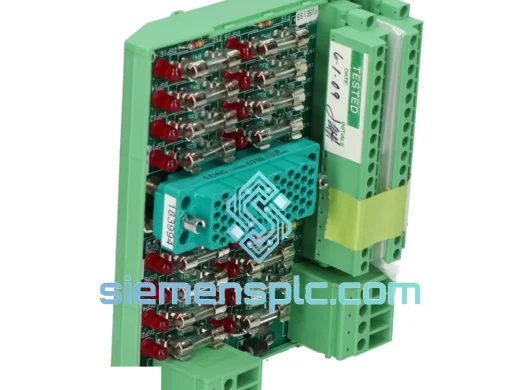
TRICONEX 9563-810 Safety Termination Panel
Tricon
Origin US
Safety System Termination Panel
TRICONEX
RFQ Ready
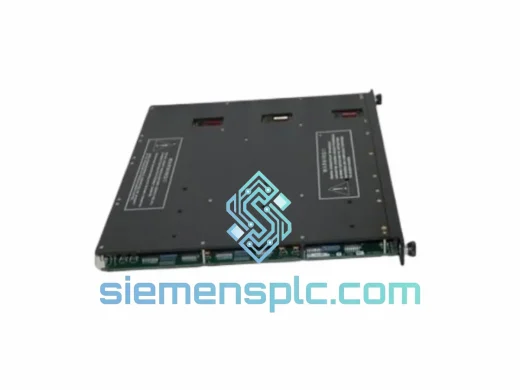
TRICONEX 7400210-010 Digital Input Module – Tricon TMR
Tricon
Origin US
Digital Input Module
TRICONEX
RFQ Ready
TRICONEX 7400208B-020 Safety I/O Baseplate – Tricon TMR Series
TRICON
Origin US
Safety I/O Baseplate