
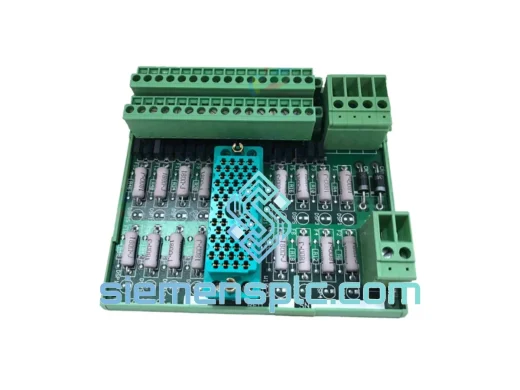
TRICONEX
In Stock OK
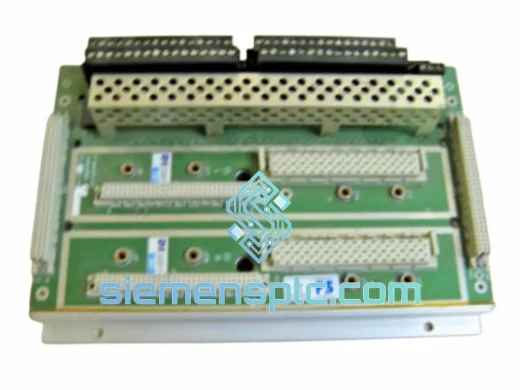
Triconex RO3451S2 Safety PLC I/O Module
Request verified availability, condition, replacement risk review, packing options and courier lead time for RO3451S2.
BrandTRICONEX
Part NumberRO3451S2
ConditionAvailability Check
Lead TimeRFQ Confirmation
DocumentsDatasheet / photos by RFQ
ShippingExport packing available
Auto-filled RFQ
RO3451S2
Click Request Quote and the part number is inserted into the inquiry form automatically.
- Reply by email: [email protected]
- WhatsApp / Tel: +86 18359268345
- Mon-Sat 9:00-18:00 GMT+8
Procurement Data
Key Product Information
Core fields for model confirmation and RFQ routing. Detailed product narrative remains below.
- Brand
- TRICONEX
- Primary Part Number
- RO3451S2
- Product Type
- Safety PLC I/O Module
- Series / Family
- Tricon
- Manufacturer
- Triconex (Schneider Electric)
- Country of Origin
- US
- Catalog Category
- I/O Modules
- Operating Temp.
- 0 °C to 60 °C
Model confirmed for inquiry
RO3451S2
Send quantity, destination and urgency. The RFQ form keeps this part number attached.
Request Quote
Product Overview
RO3451S2 Down? Every Minute Costs You — Get It Back Online Fast
Your Tricon safety system just flagged a module fault on the RO3451S2. The process is in safe state, the clock is running, and your operations team is waiting. This is not the moment for a 6-week OEM lead time. We stock the Triconex RO3451S2 — a 32-channel SIL 3 solid-state digital output module for Tricon TMR chassis — and we ship same-day from Xiamen via DHL Express. One call, one unit, back in production.
The RO3451S2 sits at the heart of your Emergency Shutdown System, Fire & Gas logic, or Burner Management loop. When it fails, there is no workaround. The TMR architecture will flag the degraded leg and hold the system in a safe state — but you cannot run indefinitely on two legs. Replacement is not optional; it is a race against your next scheduled demand.
URGENT REQUIREMENT? Contact: [email protected] | WhatsApp: +86 18359268345
Quick Technical Datasheet
| Parameter | Specification |
|---|---|
| Part Number | RO3451S2 |
| Manufacturer | Triconex (Schneider Electric) |
| Series | Tricon TMR (Triple Modular Redundancy) |
| Module Type | Digital Output — Solid-State Relay (SSR), Sourcing |
| Output Channels | 32 channels (16 per slice × 2 slices) |
| Output Voltage | 24 VDC nominal |
| Output Current | 0.5 A per channel (max) |
| Safety Integrity Level | SIL 3 per IEC 61508 |
| Backplane Interface | Tricon 3600 / 3700 series main chassis |
| Compatible Controllers | MP3006, MP3007, MP3008 |
| Software | TriStation 1131 v4.x / v5.x |
| Operating Temperature | 0 °C to 60 °C |
| Certifications | TÜV, FM, CE, ATEX Zone 2 |
| Hot-Swap | Yes — online replacement without process shutdown |
| Stock Status | ✅ Ready to Ship — Xiamen Warehouse |
Troubleshooting & Replacement Tips
After ten years of pulling modules in the field, here is what actually matters when you are standing in front of a Tricon chassis with a fault LED lit:
Step 1 — Confirm the fault is the module, not the load. Before you pull the RO3451S2, check TriStation diagnostics for channel-level fault isolation. A shorted field device on one channel can mimic a module failure. Disconnect the field wiring on the suspect slice and observe whether the fault clears. If it does, your module is fine — your field device is the culprit.
Step 2 — Verify chassis slot assignment. The RO3451S2 is slot-addressed by the Tricon backplane. There is no DIP switch or rotary address to set — the chassis assigns the I/O address automatically based on physical slot position. Confirm the replacement goes into the exact same slot as the failed unit. Inserting it into a different slot will cause a configuration mismatch alarm in TriStation.
Step 3 — Check firmware revision compatibility. The “S2” hardware revision requires a minimum TriStation 1131 project revision that supports the enhanced diagnostics of this module generation. If your project was built on an older firmware baseline, the module will enumerate but may report unexpected diagnostic codes. Pull your project’s module configuration table and cross-check the hardware revision field before insertion.
Step 4 — Hot-swap procedure. Tricon supports online module replacement when the system is in TMR mode with all three legs healthy. If you are already running on two legs (one module already faulted), do NOT hot-swap — bring the system to a controlled safe state first. For a standard hot-swap: notify the control room, confirm TMR mode in TriStation, extract the faulted module by releasing the ejector levers, insert the replacement, and wait for the system to complete its self-test sequence (typically 15–30 seconds). TriStation will confirm the new module is synchronized.
Common fault codes on the RO3451S2:
- DO_FAULT (0x41): Output driver failure on one or more channels. Usually a failed SSR. Module replacement required.
- DIAG_FAIL (0x44): Internal diagnostic self-test failure. Can occur after a power transient. Attempt a controlled power cycle of the module first; if fault persists, replace.
- CONFIG_MISMATCH (0x52): Module hardware revision does not match the project configuration. Verify firmware compatibility as described in Step 3.
- COMM_FAIL (0x61): Backplane communication loss. Reseat the module first. If fault returns, inspect the backplane connector pins for corrosion or mechanical damage before condemning the module.
Reliability in Harsh Conditions
The RO3451S2 was not designed for a climate-controlled server room. It was built for offshore platforms in the Gulf of Mexico, refineries in the Middle East, and LNG terminals in Southeast Asia — environments where ambient temperatures swing, humidity condenses on enclosure walls, and vibration from rotating machinery is constant background noise.
The module’s conformal-coated PCB provides protection against moisture ingress and corrosive atmospheres, meeting the requirements for ATEX Zone 2 installation when housed in an approved enclosure. The solid-state relay output stage eliminates the mechanical wear points that plague relay-based output modules in high-cycle applications — no contact bounce, no arc erosion, no coil degradation.
Vibration tolerance is validated to IEC 60068-2-6 test profiles, covering the frequency ranges typical of pump and compressor skids. Thermal cycling performance is validated across the full 0–60 °C operating range, with derating curves available for installations approaching the upper limit. The TMR architecture itself provides an additional layer of resilience: a single-point hardware failure within the module is masked by the voting logic of the other two legs, giving your maintenance team time to respond without forcing a process trip.
Every unit we ship has been inspected for physical integrity, label authenticity, and firmware version traceability. We do not move grey-market stock. If a unit does not pass our incoming inspection, it does not leave our warehouse.
Global Express Logistics
Our warehouse is located in Xiamen, Fujian — one of China’s primary export hubs with direct access to DHL Express, FedEx International Priority, and UPS Worldwide Express gateways. This is not a drop-ship arrangement. Stock is physically on our shelves, inspected, and ready to pack.
Typical transit times from Xiamen:
- Southeast Asia (Singapore, Thailand, Malaysia): 2–3 business days via DHL Express
- Middle East (UAE, Saudi Arabia, Qatar): 3–4 business days via FedEx International Priority
- Europe (Germany, Netherlands, UK): 4–5 business days via DHL Express
- North America (USA, Canada): 4–5 business days via FedEx International Priority
- Australia / New Zealand: 3–4 business days via DHL Express
All shipments include commercial invoice, packing list, and certificate of conformance. For orders requiring export licensing documentation or specific country-of-origin certification, advise us at the time of order and we will prepare the paperwork in parallel with packing. We have shipped to over 40 countries and understand the customs requirements for industrial automation components in most major markets.
For genuine emergencies — process down, safety system degraded — contact us via WhatsApp for real-time coordination. We can arrange same-day dispatch for orders confirmed before 16:00 CST.
Contact Information
📧 Email: [email protected]
📱 WhatsApp: +86 18359268345
🌐 Web: siemensplc.com
© 2026 siemensplc.com. All rights reserved.
Ready to quote
[email protected]
Send This Part Number to Sales
RFQ workflow
Quality workflow ->
Confirmation Process
01Model confirmation
We check the full part number, brand, series and visible nameplate information before quotation.
02Availability reply
Sales confirms stock path, condition option, quantity and realistic lead time for export dispatch.
03Packing & courier
DHL, FedEx, UPS or buyer courier arrangements can be reviewed with packing requirements.
Continue sourcing
Browse full catalog ->
Related Automation Parts
Similar brand or category products for fast comparison and multi-item RFQ lists.
TRICONEX
RFQ Ready
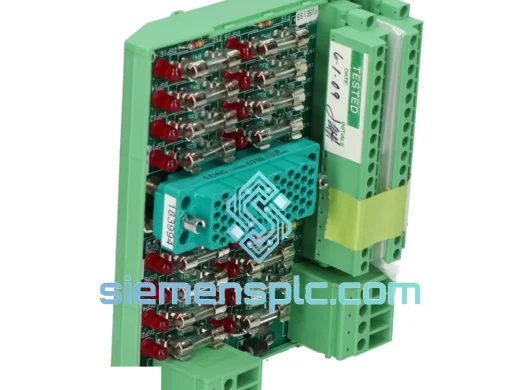
TRICONEX 9563-810 Safety Termination Panel
Tricon
Origin US
Safety System Termination Panel
TRICONEX
RFQ Ready
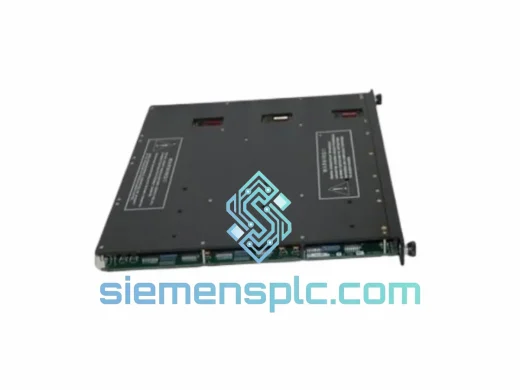
TRICONEX 7400210-010 Digital Input Module – Tricon TMR
Tricon
Origin US
Digital Input Module
TRICONEX
RFQ Ready
TRICONEX 7400208B-020 Safety I/O Baseplate – Tricon TMR Series
TRICON
Origin US
Safety I/O Baseplate