Vibro-Meter
RFQ Ready
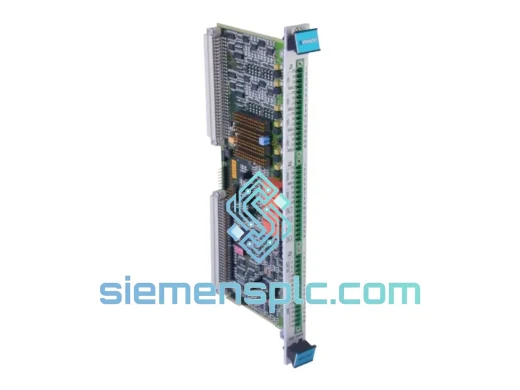
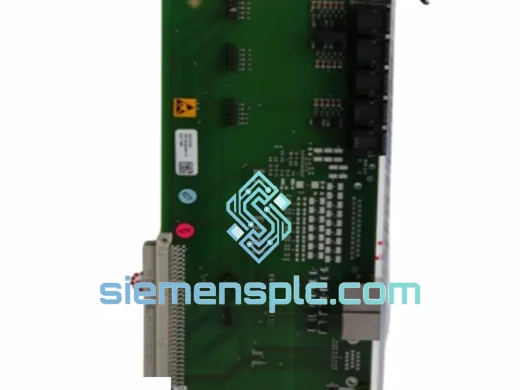
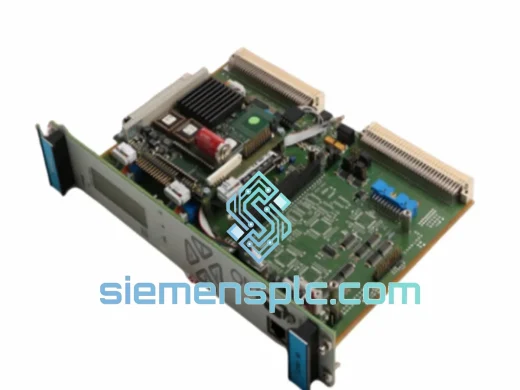
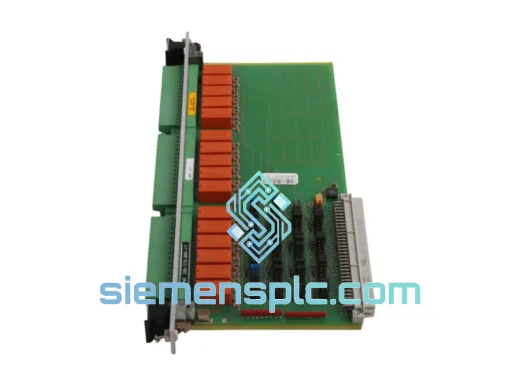
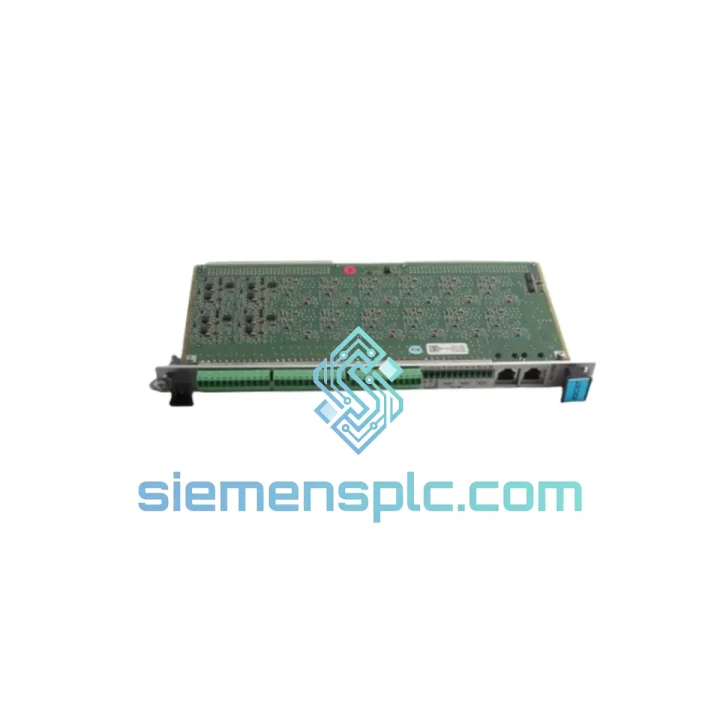
VIBRO-METER VM600 RLC16 200-570-000-211 Relay Output Card
Origin CH
Relay Output Module
Request verified availability, condition, replacement risk review, packing options and courier lead time for PNR-200-560-000-019.
Click Request Quote and the part number is inserted into the inquiry form automatically.
Core fields for model confirmation and RFQ routing. Detailed product narrative remains below.
The VM600 IOC4T (Part Number: PNR-200-560-000-019) is a rack-mounted, 4-channel transient input/output card designed for the VIBRO METER VM600 modular condition monitoring and machinery protection platform. Manufactured by VIBRO METER SA (a Meggitt company, headquartered in Fribourg, Switzerland), this card occupies a standard I/O slot within the VM600 Eurocard chassis and serves as the primary analog front-end for acquiring high-bandwidth transient waveform data from rotating machinery transducers. Its role in the control loop is unambiguous: it is the first point of signal entry, and the fidelity of every downstream protection decision — relay trip, DCS alarm, historian record — depends directly on the electrical integrity of this card.
In turbomachinery protection architectures governed by API 670 (Machinery Protection Systems), the transient I/O card must satisfy two simultaneous demands: it must capture low-amplitude, high-frequency vibration signatures without introducing noise or phase distortion, and it must do so continuously, without scan-cycle gaps, across all four channels in parallel. The IOC4T is engineered to meet both requirements. Its four input channels operate in simultaneous-sample mode, preserving inter-channel phase relationships to within the tolerance required for orbit plot reconstruction and cross-channel correlation diagnostics — a capability that single-channel sequential-scan architectures cannot replicate.
Real-time Stock & RFQ: [email protected] | WhatsApp: +86 18359268345
| Parameter | Specification |
|---|---|
| Manufacturer | VIBRO METER SA (Meggitt Group) |
| Full Part Number | PNR-200-560-000-019 |
| Model Designation | VM600 IOC4T |
| Module Function | 4-Channel Transient Input / Output Card |
| Platform | VM600 Rack-Based Condition Monitoring System |
| Input Channels | 4 (simultaneous, independent) |
| Supported Transducer Types | IEPE / ICP® accelerometers, eddy-current proximity probe drivers (Bently Nevada-compatible), passive velocity sensors |
| Signal Bandwidth | DC to ≥10 kHz (channel-dependent, per VM600 IOC4T datasheet) |
| ADC Resolution | 16-bit per channel (minimum, per VM600 platform specification) |
| Backplane Interface | VM600 proprietary internal bus (Eurocard VME-derivative) |
| Form Factor | VM600 Eurocard, 6U rack-mount |
| Operating Temperature | 0 °C to +60 °C (continuous) |
| Storage Temperature | −25 °C to +70 °C |
| Relative Humidity | 5% to 95% RH, non-condensing |
| Power Supply | Supplied via VM600 rack backplane (RPS6U or equivalent) |
| EMC Compliance | CE Mark; EN 61000-series industrial EMC |
| Approvals | SIL-capable platform (system-level, per VM600 safety manual) |
| Weight | Approx. 1,000 g |
| Country of Origin | Switzerland |
| Warranty | 12 months against manufacturing defects (siemensplc.com standard) |
The IOC4T’s hardware architecture reflects the design philosophy of a dedicated transient acquisition front-end rather than a general-purpose I/O card. Several design decisions are worth examining at the circuit level:
Analog Input Stage and IEPE Excitation: Each of the four input channels incorporates an independent constant-current source (typically 2–20 mA, configurable) for IEPE sensor excitation. This excitation is generated locally per channel, meaning a fault on one channel’s excitation rail — such as a short-circuit at the sensor cable — does not propagate to adjacent channels. The input stage uses a differential amplifier topology with high common-mode rejection ratio (CMRR), which is essential in industrial environments where ground loops between the sensor mounting point and the rack chassis can introduce 50/60 Hz interference at amplitudes that would saturate a single-ended input.
Anti-Aliasing Filter Architecture: Prior to analog-to-digital conversion, each channel passes through a hardware anti-aliasing filter. This is a fixed-pole low-pass filter implemented in analog circuitry — not a digital FIR approximation — ensuring that out-of-band energy above the Nyquist frequency is attenuated before sampling. This is a non-negotiable requirement for transient waveform integrity: digital anti-aliasing applied post-conversion cannot recover aliased frequency components that have already folded into the baseband.
Simultaneous Sampling Architecture: The IOC4T employs a sample-and-hold (S/H) architecture that latches all four channels simultaneously before sequential ADC conversion. This eliminates inter-channel skew — the time offset between channel samples that occurs in multiplexed ADC designs. For orbit plot generation (X-Y displacement of a shaft cross-section), inter-channel skew introduces a phase error that distorts the orbit ellipse and can mask sub-synchronous instability signatures. The simultaneous S/H architecture removes this error source entirely.
EMC and Isolation Design: The card’s front-panel connector interface is galvanically isolated from the backplane logic domain. Transducer cable shields are terminated at the card’s chassis ground point, which is bonded to the rack frame rather than the signal ground plane. This topology prevents high-frequency shield currents — induced by variable-frequency drives, motor switching transients, or RF interference — from coupling into the analog signal path. The backplane interface uses differential signaling with series termination resistors to suppress reflections on the bus lines, maintaining signal integrity at the data rates required for 16-bit transient waveform transfer.
Watchdog and Self-Diagnostics: The IOC4T implements hardware-level channel health monitoring. Each input channel continuously checks for open-circuit (sensor cable break) and short-circuit (sensor or cable fault) conditions by monitoring the IEPE bias voltage. A deviation outside the defined window triggers a channel fault flag on the backplane bus, which the VM600 processing card (MPC4) reads and maps to a configurable alarm or trip output. This diagnostic loop operates independently of the waveform acquisition path, so fault detection latency is not affected by the data throughput load on the backplane.
Every VIBRO METER VM600 IOC4T PNR-200-560-000-019 unit supplied by siemensplc.com is sourced through verified industrial procurement channels with full part number and revision traceability. Pre-shipment inspection includes visual examination per IPC-A-610 workmanship criteria, IEPE excitation rail continuity check, and backplane connector pin integrity verification. Units are packed in ESD-safe anti-static bags with foam-lined cartons; original OEM packaging is preserved where available. Each shipment includes a certificate of conformance, commercial invoice, and packing list suitable for customs clearance in all major import jurisdictions.
Logistics operations are based in Xiamen, China — a major export hub with direct access to DHL Express, FedEx International Priority, and UPS Worldwide Expedited services. In-stock units are dispatched within 1–2 business days of order confirmation. Export documentation (HS code classification, country of origin declaration, CITES/dual-use compliance where applicable) is prepared by our in-house trade compliance team. Delivery to Western Europe, North America, the Middle East, and Southeast Asia typically completes within 3–7 business days via express courier. For projects requiring freight forwarding, sea consolidation, or bonded warehouse staging, contact our logistics desk for a tailored solution.
All units carry a 12-month warranty against manufacturing defects from the date of shipment. Warranty claims are processed with a target response time of 1 business day; replacement units are dispatched from Xiamen stock upon claim approval.
Email: [email protected]
WhatsApp: +86 18359268345
Web: siemensplc.com
Location: Xiamen, China
© 2026 siemensplc.com. All rights reserved.
We check the full part number, brand, series and visible nameplate information before quotation.
Sales confirms stock path, condition option, quantity and realistic lead time for export dispatch.
DHL, FedEx, UPS or buyer courier arrangements can be reviewed with packing requirements.
Similar brand or category products for fast comparison and multi-item RFQ lists.