Allen-Bradley
RFQ Ready
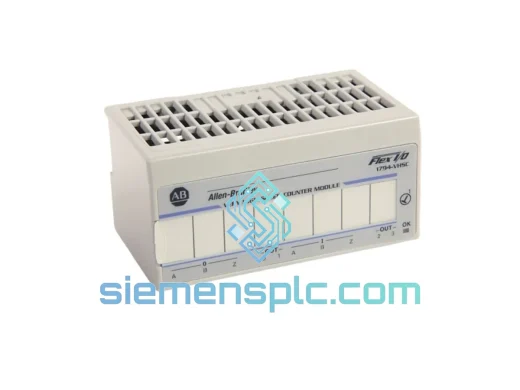
Allen-Bradley 1794-VHSC High Speed Counter Module – FLEX I/O
Flex I/O
Origin US
High Speed Counter Module
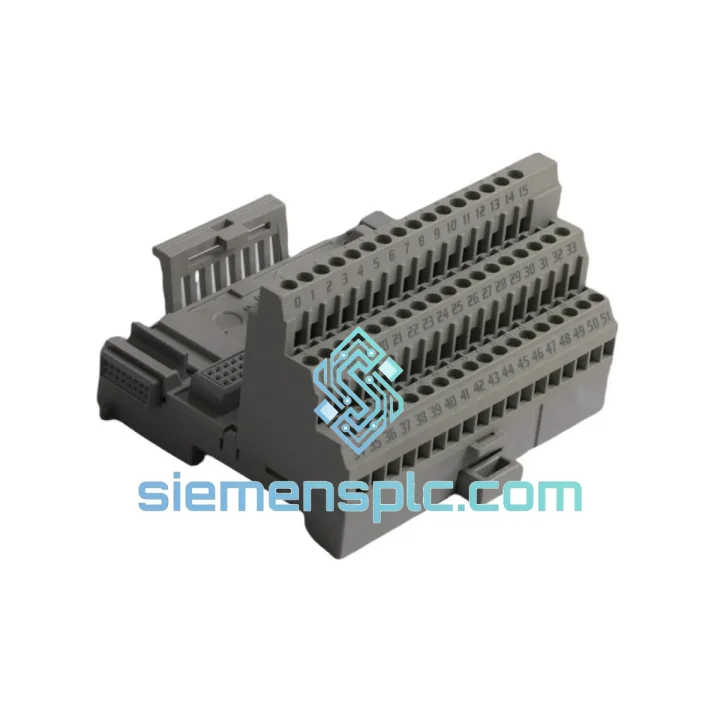
Request verified availability, condition, replacement risk review, packing options and courier lead time for 1794-TB3K.
Click Request Quote and the part number is inserted into the inquiry form automatically.
Core fields for model confirmation and RFQ routing. Detailed product narrative remains below.
The 1794-TB3K is a 3-wire cage-clamp terminal base unit within Rockwell Automation’s 1794 Flex I/O platform. Its function in a distributed control loop is mechanically and electrically straightforward: it provides the physical interface between field wiring and the I/O module seated on top of it, while simultaneously forming the backplane segment that carries both power and data laterally across an I/O bank. Every signal path — sensor common, signal conductor, and field power — terminates at a dedicated cage-clamp screw position, eliminating the need for external jumper bars or marshalling rails in most standard applications.
In a typical Flex I/O node, the terminal base is the structural foundation. The communication adapter (DeviceNet, EtherNet/IP, ControlNet, or PROFIBUS) anchors at the left end; each 1794-TB3K slides onto the preceding base via a keyed side connector, extending the backplane bus. The I/O module then clips into the top of the terminal base, making simultaneous electrical contact with both the field wiring terminals below and the backplane connector at the rear. This mechanical architecture means the terminal base must maintain dimensional and electrical integrity across the full operating life of the node — a requirement the TB3K addresses through its cage-clamp termination design and glass-filled polyamide housing.
Real-time Stock & RFQ: [email protected] | WhatsApp: +86 18359268345
| Parameter | Value |
|---|---|
| Catalog Number | 1794-TB3K |
| Series | Flex I/O (1794 Series) |
| Manufacturer | Allen-Bradley / Rockwell Automation |
| Terminal Configuration | 3-wire per I/O point (signal, common, field power) |
| Termination Type | Cage-clamp screw (K suffix) |
| Conductor Cross-Section | 0.2 – 2.5 mm² (AWG 24 – AWG 12) |
| Mounting Method | 35 mm DIN rail (EN 50022) or panel mount |
| Module Width | 30 mm per base unit |
| Operating Temperature | 0 °C to +60 °C |
| Storage Temperature | –40 °C to +85 °C |
| Relative Humidity | 5 – 95% non-condensing |
| Vibration Resistance | 2 g, 10 – 500 Hz (IEC 68-2-6) |
| Shock Rating | 30 g (IEC 68-2-27) |
| Enclosure Rating | IP20 (open type) |
| Agency Certifications | UL 508, CE (EMC + LVD), CSA C22.2, RoHS 2, C-Tick |
| Compatible Adapters | 1794-ADN, 1794-ADNK, 1794-AENT, 1794-ACN15, 1794-APB |
| Max I/O Modules per Adapter | 8 (subject to adapter current budget) |
| Approximate Weight | 200 g |
| Warranty | 12 months against manufacturing defects |
Cage-Clamp Termination Mechanics. The “K” suffix in 1794-TB3K designates cage-clamp screw technology rather than standard slotted-blade screws. In a cage-clamp design, a spring-loaded clamp plate bears against the conductor from above while the screw drives the clamp downward. The contact force is distributed across the full conductor cross-section rather than concentrated at a single point. This geometry produces two measurable advantages: contact resistance remains stable under thermal cycling (the clamp compensates for conductor expansion and contraction), and vibration-induced micro-movement of the conductor does not progressively loosen the termination. In high-vibration environments — compressor skids, press lines, mobile equipment — this distinction between cage-clamp and standard screw termination is the primary driver of mean time between wiring failures.
Backplane Bus Architecture. The 1794 Flex I/O backplane is not a passive wiring harness. Each terminal base contains a side-connector assembly that carries both the 24 VDC field power bus and the serial communication bus between adjacent bases. The communication bus operates at the adapter’s native protocol rate (e.g., 500 kbps for DeviceNet, 100 Mbps for EtherNet/IP at the adapter level). The terminal base itself is transparent to the protocol — it passes the bus signals without buffering or repeating — which means signal integrity across an 8-module bank depends on the mechanical quality of each side-connector engagement. The TB3K’s keyed side connector ensures correct polarity and full pin engagement before the locking tab seats, preventing partial-insertion faults that would corrupt bus communication.
EMC Design Considerations. The 1794-TB3K housing is constructed from glass-filled polyamide (PA66-GF30), which provides dimensional stability across the operating temperature range and resists creep under sustained terminal screw torque. The housing geometry routes field wiring vertically downward, physically separating field conductors from the backplane connector at the rear — a layout that reduces capacitive coupling between high-frequency backplane signals and field wiring. For installations in environments with conducted or radiated EMI (variable-frequency drives, welding equipment, high-current contactors), this physical separation reduces the need for additional shielding measures at the terminal base level.
Hot-Swap Capability. When paired with a compatible 1794-series adapter, individual I/O modules can be removed from the terminal base under power. The terminal base remains in place, field wiring stays connected, and the backplane bus continues to operate for the remaining modules. This architecture allows module replacement without a node-level shutdown — a significant operational advantage in continuous-process applications where a full I/O drop shutdown would require a process hold.
Each 1794-TB3K unit supplied through siemensplc.com is sourced as genuine Allen-Bradley / Rockwell Automation product. Units are inspected upon receipt for housing integrity, terminal condition, side-connector pin alignment, and label authenticity (date code, revision letter, country of origin). Anti-static packaging with humidity indicator cards is applied before storage. Traceability documentation — including lot date code and revision — is available upon request for regulated industries.
Dispatch is from Xiamen, China. Standard international shipment via DHL Express or FedEx International Priority reaches most destinations in Southeast Asia within 2–3 business days, Europe within 3–5 business days, and North America within 4–6 business days. Expedited same-day dispatch is available for orders confirmed before 15:00 CST. For project quantities or scheduled releases, consignment stock arrangements can be discussed. All shipments include commercial invoice, packing list, and certificate of origin where required for customs clearance.
Email: [email protected]
WhatsApp: +86 18359268345
Web: siemensplc.com
Location: Xiamen, China
© 2026 siemensplc.com. All rights reserved.
We check the full part number, brand, series and visible nameplate information before quotation.
Sales confirms stock path, condition option, quantity and realistic lead time for export dispatch.
DHL, FedEx, UPS or buyer courier arrangements can be reviewed with packing requirements.
Similar brand or category products for fast comparison and multi-item RFQ lists.