Allen-Bradley
RFQ Ready
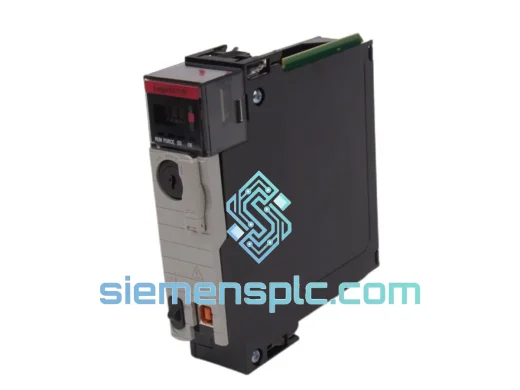
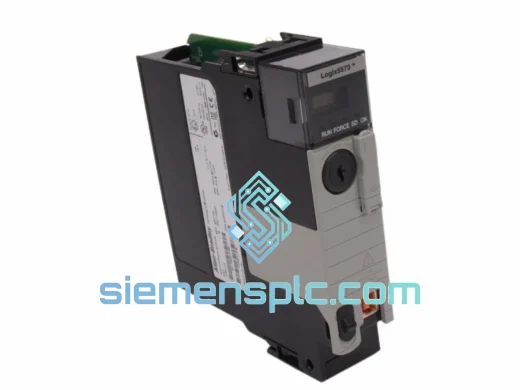
Allen-Bradley 1756-L73 PLC Processor Module – ControlLogix Logix5573
ControlLogix
Origin US
PLC Processor Module
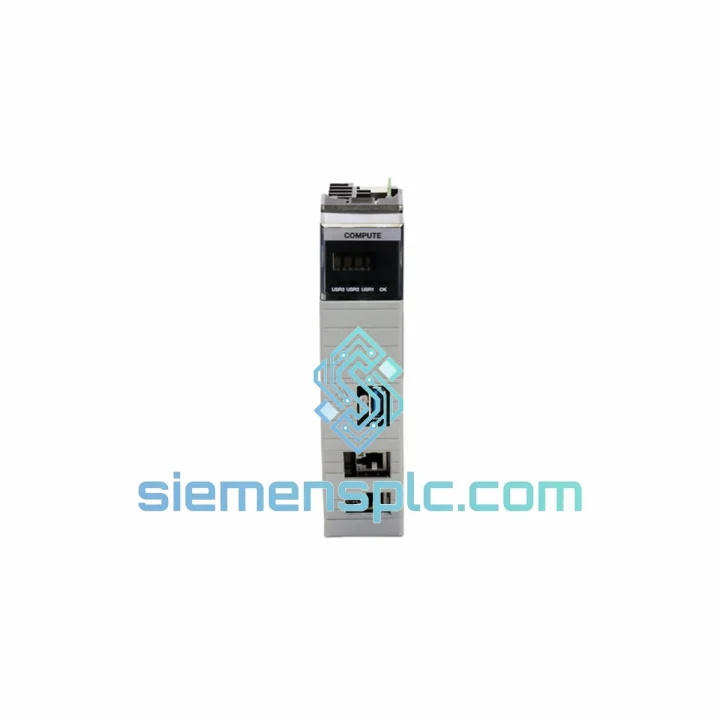
Request verified availability, condition, replacement risk review, packing options and courier lead time for 1756-CMS1B1.
Click Request Quote and the part number is inserted into the inquiry form automatically.
Core fields for model confirmation and RFQ routing. Detailed product narrative remains below.
The Allen-Bradley 1756-CMS1B1 is a chassis-resident compute module engineered for the Rockwell Automation ControlLogix 1756 platform. Its primary function is to absorb processor-intensive workloads — including data logging, historian buffering, and coordinated motion pre-computation — that would otherwise compete with the deterministic scan cycle of the primary controller. By isolating these tasks on a dedicated silicon substrate sharing the 1756 backplane bus, the module preserves the controller’s ability to execute ladder, function block, and structured text programs within guaranteed cycle-time windows, a requirement that is non-negotiable in safety-rated and high-speed motion applications.
Within the ControlLogix architecture, the backplane operates as a high-speed serial bus with a raw throughput sufficient to sustain concurrent I/O scanning, controller-to-controller messaging, and module-level diagnostics without arbitration stalls. The 1756-CMS1B1 participates in this bus as a peer node, receiving task assignments from the primary controller via the backplane’s producer-consumer messaging model. This eliminates the latency penalties associated with Ethernet-based offload strategies, where TCP/IP stack overhead and network jitter introduce non-deterministic delays incompatible with sub-millisecond control loops.
The module’s physical form factor conforms to the standard 1756 single-slot footprint, allowing installation in any chassis position within a 4-, 7-, 10-, 13-, or 17-slot 1756 enclosure. Power draw is sourced directly from the chassis backplane, removing the need for external DC supply rails. The front-panel status LED array provides real-time diagnostic feedback on module health, backplane communication status, and task execution state — observable without connecting a programming terminal.
From a thermal management perspective, the 1756-CMS1B1 operates within the standard ControlLogix ambient envelope of 0°C to 60°C, with internal thermal regulation managed through conductive heat transfer to the chassis frame. No forced-air cooling is required at the module level, though chassis-level ventilation requirements must be observed when the enclosure is populated at high density. Storage conditions extend to -40°C, making the module suitable for cold-climate pre-staging and long-term spare inventory management.
For system integrators designing redundant architectures, the 1756-CMS1B1 is compatible with ControlLogix redundancy configurations when paired with the appropriate redundancy module (1756-RM2 or 1756-RM2XT). In a redundant chassis pair, compute tasks assigned to the module are mirrored across the primary and secondary chassis, ensuring that a chassis switchover event does not interrupt ongoing data processing operations. This characteristic is particularly relevant in continuous process industries — refining, chemical, and power generation — where unplanned compute interruptions carry regulatory and safety implications.
Real-time Stock & RFQ: [email protected] | WhatsApp: +86 18359268345
| Parameter | Specification |
|---|---|
| Part Number | 1756-CMS1B1 |
| Series | Allen-Bradley ControlLogix 1756 |
| Module Category | Dedicated Compute Module |
| Form Factor | Single-slot, 1756 ControlLogix chassis-mount |
| Backplane Interface | ControlLogix high-speed serial backplane bus |
| Messaging Protocol | Producer-Consumer (backplane-native) |
| Operating Temperature | 0°C to 60°C (32°F to 140°F) |
| Storage Temperature | -40°C to 85°C |
| Relative Humidity | 5% to 95%, non-condensing |
| Power Source | Chassis backplane (no external supply required) |
| Compatible Chassis | 1756-A4, 1756-A7, 1756-A10, 1756-A13, 1756-A17 |
| Compatible Controllers | 1756-L7x, 1756-L8xE series |
| Redundancy Support | Yes, with 1756-RM2 / 1756-RM2XT |
| Programming Environment | Studio 5000 Logix Designer |
| Certifications | CE, UL, cUL (verify against current Rockwell datasheet) |
| Warranty | 12 months from date of shipment |
The 1756-CMS1B1 is built around the ControlLogix backplane’s producer-consumer arbitration model, which differs fundamentally from polled-bus architectures used in legacy PLC platforms. In a polled system, the master controller sequentially queries each module, introducing latency that scales linearly with node count. The producer-consumer model eliminates this by allowing each module — including the 1756-CMS1B1 — to autonomously publish data to the backplane at configured intervals, with the primary controller consuming only the data it requires. This architecture keeps backplane utilization predictable regardless of chassis population density.
From an EMC standpoint, the module’s internal signal routing is designed to minimize radiated emissions within the chassis enclosure. The 1756 backplane uses differential signaling on its data lines, which provides inherent common-mode noise rejection. This is significant in environments with high-frequency switching drives, arc welding equipment, or large transformer banks in close proximity — conditions common in automotive body shops and heavy manufacturing cells where ControlLogix systems are routinely deployed.
The module’s onboard firmware manages task scheduling through a priority-based execution queue. Compute tasks assigned by the primary controller are ranked by latency tolerance: time-critical pre-computation tasks execute ahead of background data aggregation tasks. This internal arbitration ensures that even under peak load conditions, the module does not introduce backplane congestion that could delay I/O update cycles on adjacent modules.
Diagnostics are surfaced through the module’s status object, accessible via the backplane without requiring a dedicated communication path. The primary controller can poll fault codes, task execution counters, and thermal status registers at any point in the scan cycle, enabling application-layer health monitoring without external diagnostic hardware.
Every 1756-CMS1B1 unit supplied by siemensplc.com is sourced as genuine Allen-Bradley / Rockwell Automation hardware. Prior to dispatch, each unit undergoes a structured inspection protocol: label authenticity verification against Rockwell’s current part marking standards, physical examination for connector integrity and housing condition, and where applicable, functional bench verification against known-good reference configurations. Anti-static packaging with moisture barrier film is applied as standard for all international shipments.
Logistics operations are managed from Xiamen, China — a major export hub with direct access to international freight carriers serving North America, Europe, Southeast Asia, the Middle East, and Australia. Standard international shipments are dispatched within 3–5 business days of order confirmation. Expedited freight options are available for urgent plant shutdown scenarios, with same-day dispatch possible for in-stock units when orders are confirmed before the daily freight cutoff. Full export documentation — commercial invoice, packing list, certificate of origin, and customs declaration — is provided with every shipment to facilitate clearance in all major import markets. All units are covered by a 12-month warranty from the date of shipment.
Email: [email protected]
WhatsApp: +86 18359268345
Web: siemensplc.com
Location: Xiamen, China
© 2026 siemensplc.com. All rights reserved.
We check the full part number, brand, series and visible nameplate information before quotation.
Sales confirms stock path, condition option, quantity and realistic lead time for export dispatch.
DHL, FedEx, UPS or buyer courier arrangements can be reviewed with packing requirements.
Similar brand or category products for fast comparison and multi-item RFQ lists.