Allen-Bradley
RFQ Ready
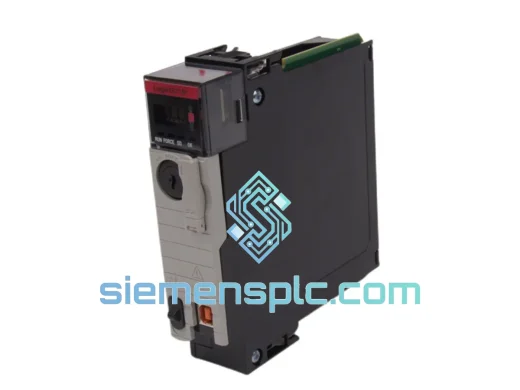
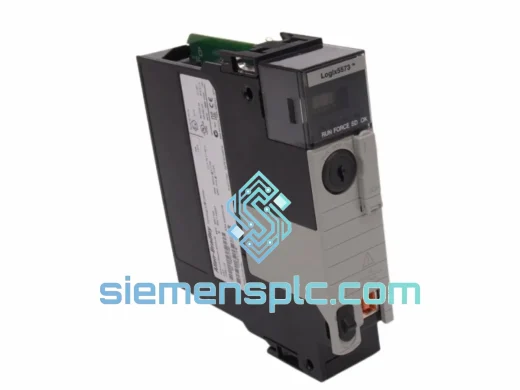
Allen-Bradley 1756-L73 PLC Processor Module – ControlLogix Logix5573
ControlLogix
Origin US
PLC Processor Module
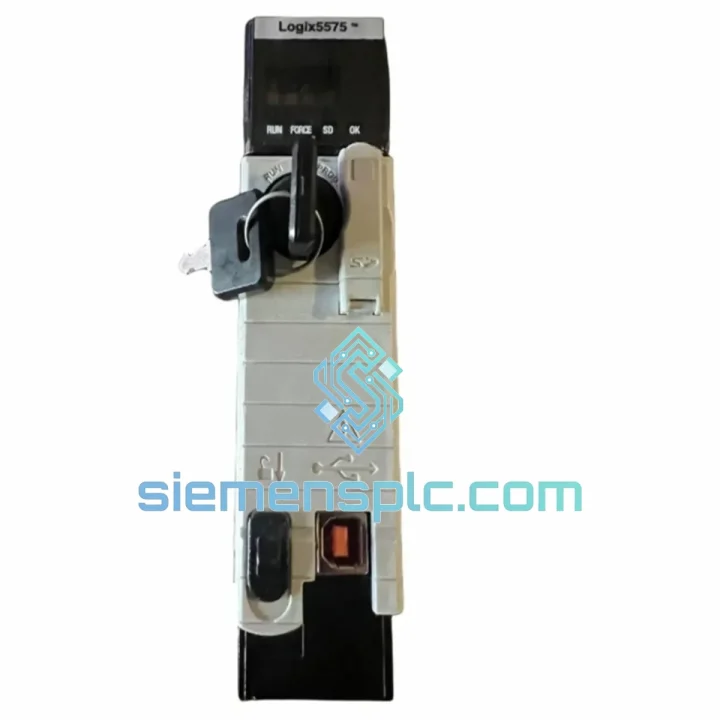
Request verified availability, condition, replacement risk review, packing options and courier lead time for 1756-L75.
Click Request Quote and the part number is inserted into the inquiry form automatically.
Core fields for model confirmation and RFQ routing. Detailed product narrative remains below.
The 1756-L75 is the 8 MB user-memory variant within Rockwell Automation’s ControlLogix 5570 processor family. Positioned at the upper tier of the 5570 generation, it occupies a single slot in any 1756 chassis and communicates with all installed I/O and communication modules through the ControlLogix backplane — a 32-bit parallel bus operating at a sustained throughput of approximately 100 MB/s. The processor’s role in a control loop is not limited to ladder-logic execution; it arbitrates task scheduling across up to 32 concurrent tasks (each independently configurable as continuous, periodic, or event-driven), manages the real-time clock for time-stamped I/O, and coordinates motion servo loops through the Integrated Motion on EtherNet/IP (IME) framework when paired with 1756-EN2T or 1756-EN3TR communication modules.
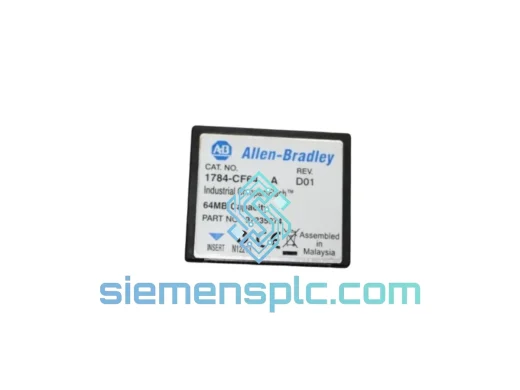
In process-intensive installations — oil and gas compression trains, pharmaceutical batch reactors, automotive body-in-white lines — the 1756-L75 functions as the deterministic arbiter of all field-device states. Its 8 MB memory ceiling accommodates large Add-On Instruction (AOI) libraries, extensive tag databases with producer/consumer relationships, and multi-axis motion programs without requiring external memory expansion. The processor’s internal non-volatile flash stores the firmware image independently of the SD card slot, which is reserved for user program backup and restore operations, reducing recovery time after an unplanned power cycle to under 90 seconds in typical configurations.
Real-time Stock & RFQ: [email protected] | WhatsApp: +86 18359268345
| Parameter | Specification |
|---|---|
| Catalog Number | 1756-L75 |
| Product Family | ControlLogix 5570 |
| User Memory | 8 MB |
| I/O Capacity | Up to 128,000 digital I/O points |
| Maximum Tasks | 32 (continuous, periodic, event) |
| Programs per Task | 100 |
| Motion Axes (coordinated) | Up to 256 via IME |
| Backplane Current Draw | 1.2 A @ 5 VDC; 3.0 mA @ 24 VDC |
| Programming Port | USB Type-B (local programming only) |
| Network Connectivity | EtherNet/IP, ControlNet, DeviceNet (via comm modules) |
| SD Card Slot | Yes — program backup/restore, firmware update |
| Operating Temperature | 0 °C to +60 °C |
| Storage Temperature | -40 °C to +85 °C |
| Relative Humidity | 5% to 95% non-condensing |
| Shock Rating | 30 g, 11 ms half-sine (IEC 60068-2-27) |
| Vibration Rating | 2 g @ 10–500 Hz (IEC 60068-2-6) |
| Certifications | UL Listed, CE, cUL, ATEX Zone 2, C-Tick |
| Programming Software | Studio 5000 Logix Designer v21.00 and above |
| Dimensions (H × W × D) | 147 mm × 45 mm × 130 mm (approx.) |
| Weight | Approx. 1.2 kg |
| Warranty | 12 months against manufacturing defects |
The 1756-L75 processor integrates several hardware-level design decisions that directly affect determinism, fault tolerance, and electromagnetic compatibility in industrial environments.
Backplane Bus Arbitration: The ControlLogix backplane uses a token-passing arbitration scheme rather than a shared-bus collision model. The 1756-L75 holds the bus token during its scheduled scan window, transferring I/O data to and from modules in a deterministic sequence. This eliminates the variable latency inherent in contention-based bus architectures and allows the processor to guarantee worst-case I/O update times — a critical requirement in servo-coordinated motion applications where position error accumulation over multiple scan cycles can cause mechanical damage.
Dual-Port Memory Architecture: The processor employs a dual-port SRAM structure that separates the execution memory space from the I/O image table. The CPU core reads from and writes to the I/O image table asynchronously with respect to the backplane DMA engine, preventing scan-cycle jitter caused by memory bus contention. This architecture allows the 1756-L75 to sustain a 1 ms periodic task execution rate even when the backplane is simultaneously transferring large analog data blocks from 1756-IF16 modules.
EMC Design: The module housing is a die-cast aluminum alloy chassis with continuous conductive gaskets at all seam interfaces, providing a Faraday enclosure rated to attenuate radiated emissions by greater than 40 dB across the 30 MHz–1 GHz band. Internal signal traces are routed on inner PCB layers with ground-plane sandwiching on both sides, reducing susceptibility to capacitively coupled noise from adjacent high-current drive modules. The backplane connector uses gold-plated contacts with a 50-insertion-cycle rating, maintaining contact resistance below 10 mΩ throughout the service life of the module.
Non-Volatile Firmware Storage: Firmware is stored in an internal NOR flash array separate from the user program SD card. This two-tier storage architecture means a corrupted or missing SD card does not prevent the processor from booting to a known-good firmware state. The processor will enter a faulted state awaiting program load rather than executing undefined code — a fail-safe behavior mandated by IEC 61131-3 conformance requirements.
Watchdog Timer Implementation: The 1756-L75 implements a hardware watchdog timer that is serviced by the real-time operating system kernel, not by user ladder logic. If the kernel fails to service the watchdog within the configured major fault timeout window (1–500 ms, user-configurable), the processor asserts a hardware fault output on the backplane, forcing all output modules to their configured fault states. This mechanism operates independently of the application program, ensuring that a runaway or infinite-loop condition in user code cannot prevent the safety shutdown sequence from executing.
Every 1756-L75 unit supplied by siemensplc.com is sourced through verified channels with full chain-of-custody documentation traceable to the original manufacturer. Prior to dispatch from our Xiamen, China facility, each module undergoes a structured inspection protocol: visual examination of the housing, connector pins, and label integrity; firmware version verification against the module’s internal flash; and a functional power-on test confirming backplane communication handshake and self-diagnostic pass status.
Units are packaged in IEC 61340-5-1 compliant anti-static bags, placed in foam-lined cartons rated for 1.2 m drop impact, and sealed with tamper-evident tape. For international shipments, we work with DHL Express, FedEx International Priority, and UPS Worldwide Expedited as primary carriers, with typical transit times of 3–5 business days to Europe and North America. Sea freight consolidation is available for bulk orders exceeding 10 units. All export documentation — commercial invoice, packing list, and certificate of origin — is prepared in compliance with the destination country’s customs requirements. The 12-month warranty covers manufacturing defects and confirmed functional failures; units are replaced or credited within 5 business days of fault verification.
📧 Email: [email protected]
📱 WhatsApp: +86 18359268345
🌐 Web: siemensplc.com
📍 Location: Xiamen, China
© 2026 siemensplc.com. All rights reserved.
We check the full part number, brand, series and visible nameplate information before quotation.
Sales confirms stock path, condition option, quantity and realistic lead time for export dispatch.
DHL, FedEx, UPS or buyer courier arrangements can be reviewed with packing requirements.
Similar brand or category products for fast comparison and multi-item RFQ lists.