Allen-Bradley
RFQ Ready
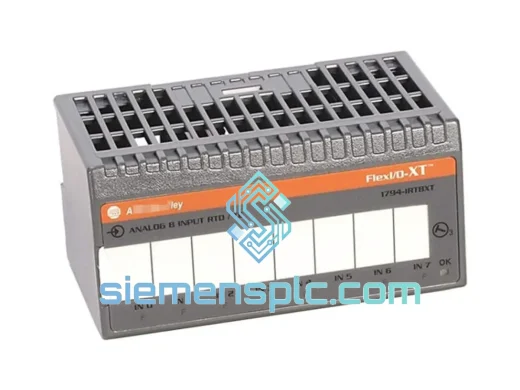
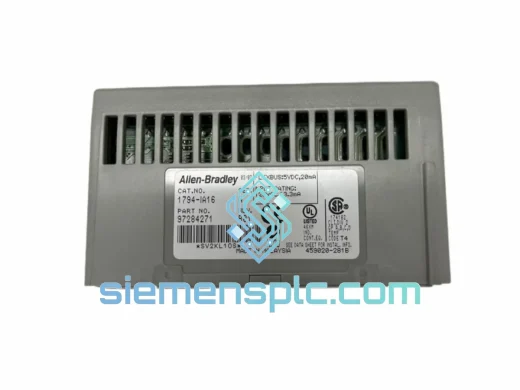
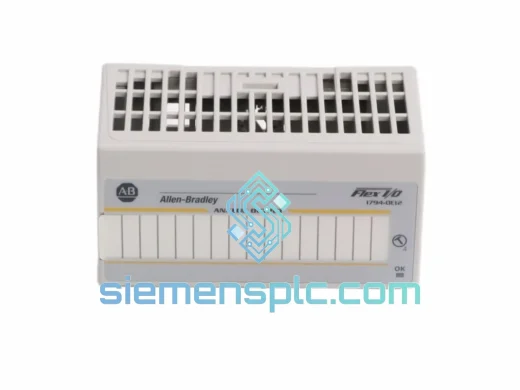
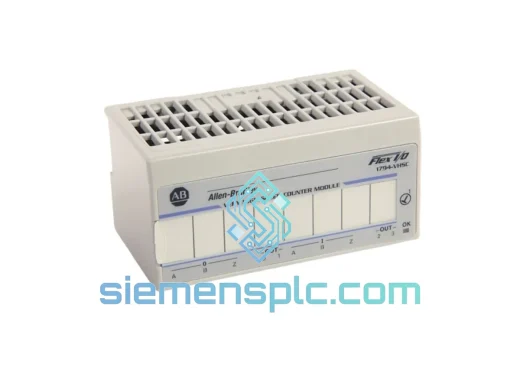
Allen-Bradley 1794-VHSC High Speed Counter Module – FLEX I/O
Flex I/O
Origin US
High Speed Counter Module
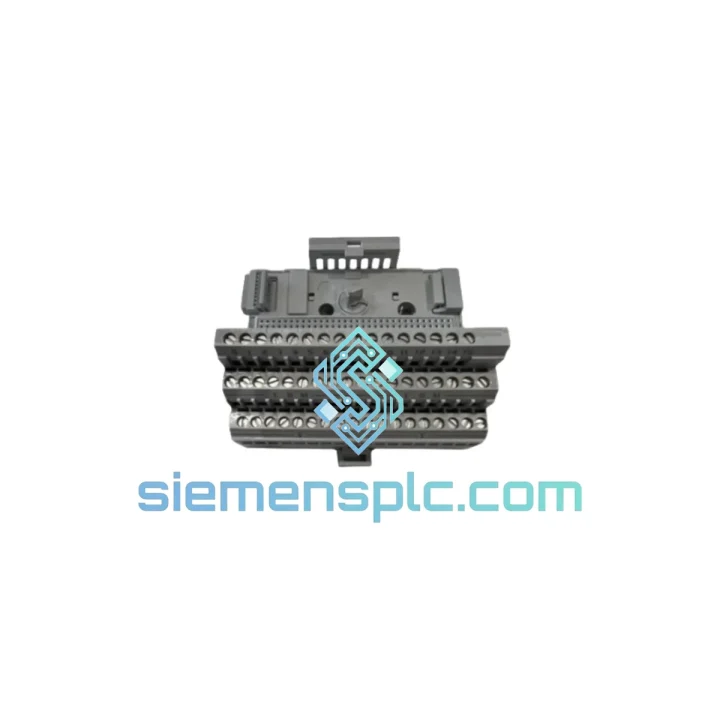
Request verified availability, condition, replacement risk review, packing options and courier lead time for 1794-TB3/A.
Click Request Quote and the part number is inserted into the inquiry form automatically.
Core fields for model confirmation and RFQ routing. Detailed product narrative remains below.
The Allen-Bradley 1794-TB3/A is a 3-wire terminal base unit engineered for the Rockwell Automation FLEX I/O modular I/O platform. Within a distributed control architecture, the terminal base unit occupies the lowest layer of the signal chain — it is the physical and electrical junction between field-side wiring and the I/O module’s internal signal conditioning circuitry. Every discrete or analog signal entering or leaving a FLEX I/O node passes through the terminal block array of a 1794-series base unit before reaching the backplane. The 1794-TB3/A specifically implements a 3-conductor termination scheme (signal, power, and common per I/O point), which is the standard wiring topology for 3-wire sourcing sensors, proximity switches, and actuator feedback loops prevalent in discrete manufacturing and process automation.
In a FLEX I/O node, the 1794-TB3/A base unit mechanically accepts any 1794-series I/O module — digital input, digital output, analog input, analog output, or specialty — by means of a keyed connector that prevents incorrect module insertion. The base unit’s backplane connector interfaces with the FLEX I/O proprietary serial backplane bus, which carries both I/O data and module power from the adapter module (e.g., 1794-AENT for EtherNet/IP, 1794-ADN for DeviceNet) to each base in the node. The adapter arbitrates bus access and presents the aggregated I/O data to the upstream PLC or DCS over the selected fieldbus protocol. The 1794-TB3/A itself is passive with respect to bus logic — it provides the physical medium for backplane signal continuity and the mechanical housing for field terminations, while all active signal processing is performed by the inserted I/O module.
The 3-wire termination architecture of the TB3/A allocates three screw terminals per I/O point: one for the signal conductor, one for the 24 V DC supply rail, and one for the common (0 V) return. This arrangement eliminates the need for external terminal marshalling blocks for 3-wire sensor wiring, reducing panel wiring density and the probability of cross-wiring errors during commissioning. The terminal block accepts conductors from 0.5 mm² to 2.5 mm² (AWG 20–14), compatible with standard industrial cable gauges used in control panel construction.
The 1794-TB3/A mounts on standard 35 mm DIN rail (EN 50022) and interlocks mechanically with adjacent base units via side-by-side latching tabs, forming a continuous backplane bus segment. Up to 8 base units can be chained per adapter node, subject to the adapter’s total backplane current budget. The base unit’s housing is rated for open-type installation (IP20 equivalent), suitable for installation inside sealed control enclosures in industrial environments with ambient temperatures from 0 °C to +55 °C.
Real-time Stock & RFQ: [email protected] | WhatsApp: +86 18359268345
| Parameter | Specification |
|---|---|
| Part Number | 1794-TB3/A |
| Manufacturer | Allen-Bradley / Rockwell Automation |
| Platform | FLEX I/O (1794 Series) |
| Module Type | Terminal Base Unit, 3-Wire |
| Termination Style | 3-wire: Signal + 24 V DC Supply + Common (0 V) |
| Terminal Wire Range | 0.5 – 2.5 mm² (AWG 20–14) |
| Terminal Torque | 0.56 N·m (5 lb·in) |
| Backplane Bus | FLEX I/O proprietary serial backplane |
| Compatible I/O Modules | All 1794-series digital, analog, and specialty I/O modules |
| Max Bases per Node | 8 (subject to adapter backplane current budget) |
| Mounting | 35 mm DIN rail (EN 50022) |
| Operating Temperature | 0 °C to +55 °C (32 °F to 131 °F) |
| Storage Temperature | −40 °C to +85 °C |
| Relative Humidity | 5 % to 95 %, non-condensing |
| Enclosure Rating | Open type (IP20 equivalent) |
| Agency Certifications | UL Listed, CE Marked, CSA Certified |
| Country of Origin | USA |
| Weight | Approx. 100 g |
| Warranty | 12 months from date of shipment |
The 1794-TB3/A’s hardware design reflects the FLEX I/O platform’s core engineering principle: decouple field wiring from I/O module electronics to enable independent replacement of either layer without disturbing the other. The base unit achieves this through a two-connector architecture. The field-side connector array — a row of captive-screw terminal blocks — is permanently wired during panel build and remains in place throughout the system’s service life. The module-side connector is a keyed, spring-loaded backplane interface that accepts the I/O module’s edge connector. When a module is inserted, the backplane connector establishes both the data path (serial backplane bus) and the module power path (24 V DC and logic supply) simultaneously. This mechanical design enables hot-swap of I/O modules: the field wiring remains undisturbed, and the backplane bus continues to operate for all other bases in the node while the target module is removed and replaced.
From an EMC perspective, the 1794-TB3/A’s terminal block layout physically separates the 24 V DC supply conductors from signal conductors within the terminal block array, reducing capacitive coupling between power and signal lines at the termination point. The base unit’s DIN rail mounting provides a low-impedance ground reference path for the module’s chassis ground, which is critical for common-mode noise rejection in environments with high-frequency switching noise from variable-frequency drives (VFDs) or servo amplifiers. The FLEX I/O backplane bus itself uses differential signaling between the adapter and each base unit, providing inherent common-mode noise immunity across the node’s backplane segment.
The keying mechanism on the 1794-TB3/A’s module connector is a passive mechanical feature that prevents insertion of incompatible modules — for example, preventing a high-voltage analog output module from being inserted into a base wired for 24 V DC digital inputs. This is a hardware-level safeguard that operates independently of software configuration, providing a deterministic protection layer during maintenance operations when software interlocks may not be active.
Every 1794-TB3/A unit supplied by siemensplc.com is sourced as genuine Allen-Bradley / Rockwell Automation product. Units are verified against Rockwell Automation’s published catalog specifications, including revision-level markings, date codes, and holographic authenticity labels where applicable. Prior to dispatch, each unit undergoes a structured inspection protocol: visual examination of housing integrity, terminal block condition, backplane connector pin alignment, and label legibility. Units that do not meet OEM cosmetic and mechanical standards are quarantined and not offered for sale.
Logistics operations are based in Xiamen, China — a major port city with direct access to international air freight and sea freight services. Standard order processing time is 1–3 business days from order confirmation to dispatch. Air freight to major destinations in Southeast Asia, the Middle East, Europe, and North America typically achieves transit times of 3–7 business days. Expedited freight options are available for time-critical requirements. All shipments include a tracking number and are packed in anti-static, shock-absorbing packaging appropriate for electronic industrial components. A 12-month warranty covers manufacturing defects and functional failures under normal operating conditions from the date of shipment.
Email: [email protected]
WhatsApp: +86 18359268345
Web: siemensplc.com
Location: Xiamen, China
© 2026 siemensplc.com. All rights reserved.
We check the full part number, brand, series and visible nameplate information before quotation.
Sales confirms stock path, condition option, quantity and realistic lead time for export dispatch.
DHL, FedEx, UPS or buyer courier arrangements can be reviewed with packing requirements.
Similar brand or category products for fast comparison and multi-item RFQ lists.