
ABB
In Stock OK
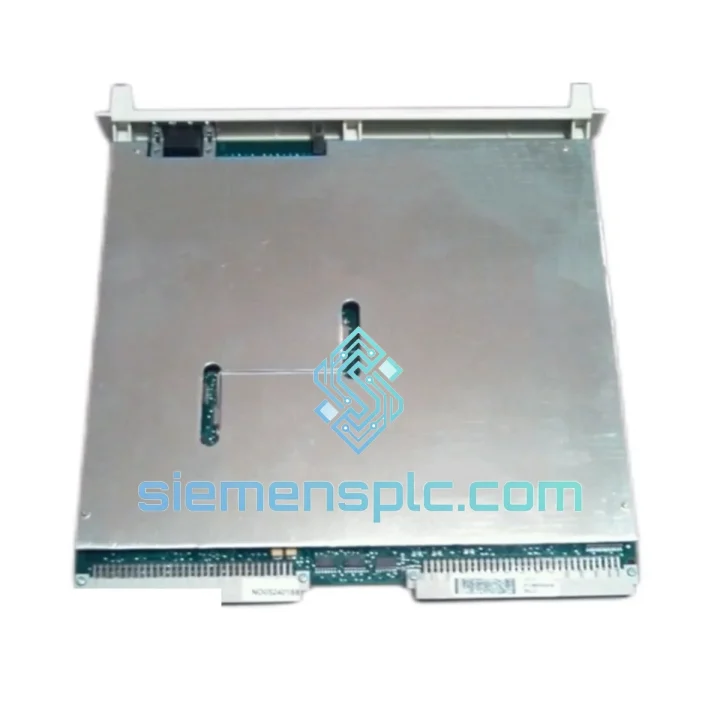
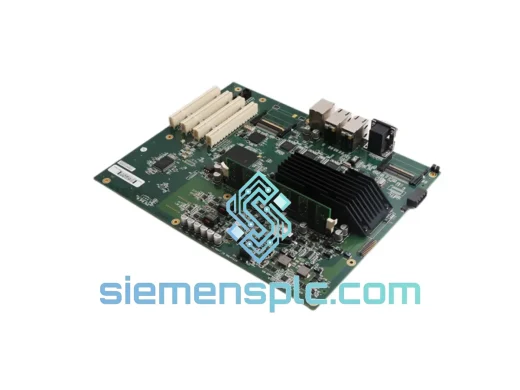
ABB DSQC325 Robot Controller CPU Module – S4/S4C Series
Request verified availability, condition, replacement risk review, packing options and courier lead time for S4/S4C.
BrandABB
Part NumberS4/S4C
ConditionAvailability Check
Lead TimeRFQ Confirmation
DocumentsDatasheet / photos by RFQ
ShippingExport packing available
Auto-filled RFQ
S4/S4C
Click Request Quote and the part number is inserted into the inquiry form automatically.
- Reply by email: [email protected]
- WhatsApp / Tel: +86 18359268345
- Mon-Sat 9:00-18:00 GMT+8
Procurement Data
Key Product Information
Core fields for model confirmation and RFQ routing. Detailed product narrative remains below.
- Brand
- ABB
- Primary Part Number
- S4/S4C
- Product Type
- Robot Controller CPU Module
- Product Family
- Other series
- Manufacturer
- ABB Robotics
- Country of Origin
- SE
- Catalog Category
- Robotics & Motion
- Operating Temp.
- 0 °C to +55 °C (controller cabinet ambient)
- Humidity
- 5–95% RH, non-condensing
- Warranty
- 12 months from dispatch date
Model confirmed for inquiry
S4/S4C
Send quantity, destination and urgency. The RFQ form keeps this part number attached.
Request Quote
Product Overview
ABB DSQC325 Main Computer Module: Central Processing Architecture in S4/S4C Robot Control Systems
The DSQC325 functions as the primary computational node within ABB’s S4 and S4C robot controller cabinets. It executes the real-time operating kernel, manages trajectory interpolation across all robot axes, arbitrates backplane communication between subordinate boards, and maintains the deterministic cycle timing that industrial motion control demands. Without a fully operational DSQC325, the entire controller cabinet is non-functional — no axis movement, no I/O processing, no teach pendant response. This is not a peripheral card; it is the architectural center of the control loop.
In a typical S4C cabinet, the DSQC325 receives motion program data from the RobotWare runtime, decomposes multi-axis path segments into interpolated position vectors at the configured path resolution, and dispatches those vectors to the axis computer (DSQC335 or DSQC336) over the internal backplane bus at a fixed servo cycle rate. Simultaneously, it polls the I/O subsystem boards (DSQC328, DSQC332) for process signal states and updates the program’s I/O image table within the same scan cycle. This parallel execution model — motion and I/O managed within a single deterministic loop — is the defining characteristic of the S4/S4C control architecture.
Real-time Stock & RFQ: [email protected] | WhatsApp: +86 18359268345
Technical Parameters
| Part Number | DSQC325 |
| Manufacturer | ABB Robotics |
| Module Classification | Main Computer / CPU Board |
| Compatible Controller Cabinets | ABB S4, S4C |
| Compatible Robot Models | IRB 140, IRB 1400, IRB 2400, IRB 4400, IRB 6400 (S4/S4C generation) |
| Supply Voltage | 24 VDC via controller backplane rail |
| Backplane Interface | Proprietary ABB S4 parallel backplane bus |
| Communication Ports | Serial (RS-232/RS-485); fieldbus expansion via DSQC378/DSQC380 adapter slots |
| Supported Fieldbus Protocols | DeviceNet, Profibus-DP, Interbus-S (via optional adapter cards) |
| Operating Temperature | 0 °C to +55 °C (controller cabinet ambient) |
| Storage Temperature | -25 °C to +70 °C |
| Humidity | 5–95% RH, non-condensing |
| Form Factor | Full-size backplane card, S4/S4C cabinet slot 1 |
| Weight (approx.) | 2,400 g |
| Country of Origin | Sweden |
| Warranty | 12 months from dispatch date |
Hardware Logical Analysis
The DSQC325 board integrates several hardware subsystems that collectively deliver the deterministic performance required in a production robot cell.
Backplane Bus Arbitration: The S4/S4C backplane operates as a time-division multiplexed parallel bus. The DSQC325 holds bus master authority and grants access slots to subordinate boards — axis computer, I/O boards, fieldbus adapters — on a fixed-priority schedule. This prevents bus contention and guarantees that axis position data reaches the servo drives within the configured interpolation period, typically 4 ms or 8 ms depending on the RobotWare configuration. Any deviation from this schedule triggers a system fault and controlled stop, which is the correct fail-safe behavior for a motion controller.
EMC Design and Signal Integrity: The board uses a multi-layer PCB construction with dedicated ground planes separating the digital logic layer from the backplane interface layer. Decoupling capacitors are placed at each IC power pin to suppress high-frequency switching transients. The backplane connector pins carry differential signal pairs for critical data lines, reducing susceptibility to common-mode noise generated by the servo drive switching stages operating in the same cabinet enclosure. This is particularly relevant in welding applications where high-current switching in the same facility generates significant conducted and radiated EMI.
Non-Volatile Memory Architecture: Program storage and system parameters are held in battery-backed SRAM and/or Flash memory, depending on the board revision. The battery-backed SRAM retains the loaded RobotWare configuration, calibration data, and user program across power cycles without requiring a full reload from the teach pendant or external media. Battery condition is monitored by the board’s supervisory circuit, and a low-battery warning is surfaced through the controller’s diagnostic channel before data integrity is at risk.
Watchdog and Fault Supervision: An independent hardware watchdog timer monitors the main processor’s execution loop. If the processor fails to service the watchdog within the defined interval — due to a software hang, memory fault, or hardware error — the watchdog asserts a hardware reset and simultaneously signals the safety relay chain to initiate a controlled stop. This two-channel fault response (processor reset + safety output) ensures that a CPU-level failure does not result in uncontrolled robot motion.
Thermal Management: The processor and memory ICs are mounted with thermal interface material to the board’s aluminum heat spreader, which conducts heat to the cabinet’s forced-air cooling path. The board does not use active cooling components of its own, relying instead on the cabinet’s fan assembly to maintain junction temperatures within rated limits. This passive-on-board design eliminates fan-related failure modes at the board level.
System Integration Benefits
- Drop-in OEM Replacement: The DSQC325 is a direct form-fit-function replacement for the original ABB-supplied board. No firmware re-flashing, no mechanical modification, and no recalibration of the robot kinematic model is required — the existing RobotWare license and calibration data stored in the controller remain valid after board swap.
- Deterministic Real-Time Response: The board’s fixed-priority bus arbitration and hardware watchdog architecture guarantee that the servo cycle completes within the configured interpolation period on every scan, providing the path accuracy and repeatability that welding, dispensing, and assembly applications require.
- Diagnostic Transparency: The DSQC325 surfaces fault codes through the controller’s diagnostic channel, which are readable on the teach pendant and loggable via the serial port. Fault codes identify the specific subsystem — axis computer communication loss, I/O board timeout, fieldbus adapter fault — enabling maintenance engineers to isolate failures without oscilloscope-level debugging.
- Fieldbus Expansion Compatibility: The board’s adapter slot architecture supports DeviceNet, Profibus-DP, and Interbus-S communication cards without hardware modification to the main board. This allows the controller to integrate into existing plant-level SCADA and PLC networks using the fieldbus protocol already deployed in the facility.
- Multi-Robot Cell Coordination: When multiple S4/S4C controllers operate in a coordinated cell, the DSQC325’s serial communication port handles inter-controller synchronization signals, enabling synchronized multi-robot motion paths without an external PLC managing the handshake logic.
- Reduced Unplanned Downtime: Holding a verified spare DSQC325 in the MRO inventory reduces mean time to repair (MTTR) for a controller CPU failure from days (OEM lead time) to hours (board swap + functional verification). For a production line running three shifts, this difference is measured in thousands of units of lost output.
- Backward Compatibility Across IRB Generations: A single DSQC325 spare covers multiple IRB robot models within the S4/S4C generation — IRB 140 through IRB 6400 — reducing the number of unique spare part numbers a maintenance department must stock for a mixed-model robot fleet.
- Calibration Data Preservation: Because robot kinematic calibration data is stored in the controller’s memory system (not on the DSQC325 board itself in all configurations), a board replacement does not necessarily require a full robot recalibration. Maintenance engineers should verify the specific RobotWare version and memory architecture of their cabinet before the swap to confirm this applies to their installation.
Quality Assurance & Global Logistics
Every DSQC325 unit dispatched from our Xiamen facility has passed a structured pre-shipment verification protocol. Power-on functional test confirms that the board initializes correctly, the backplane bus interface responds to communication requests, and all status LEDs indicate normal operating state. Units that fail any stage of this protocol are quarantined and not offered for sale.
Packaging follows ESD-safe handling standards throughout: anti-static bag, foam-lined carton, and moisture-barrier outer packaging for air freight. Each shipment includes a packing list with the unit’s serial number and test date, providing traceability documentation for the receiving maintenance department’s records.
From Xiamen, we dispatch via DHL Express, FedEx International Priority, and UCP air freight, with typical transit times of 3–7 business days to Europe and North America, and 2–5 business days to Southeast Asia. Expedited next-flight-out options are available for critical production-down situations. All shipments are fully insured and tracked from dispatch to delivery confirmation.
Our 12-month warranty covers manufacturing defects and functional failures under normal operating conditions. DOA (Dead on Arrival) units are replaced or refunded within 5 business days of confirmed return receipt. We do not charge restocking fees on warranty returns.
Contact Information
Email: [email protected]
WhatsApp: +86 18359268345
Web: siemensplc.com
Location: Xiamen, China
© 2026 siemensplc.com. All rights reserved.
Ready to quote
[email protected]
Send This Part Number to Sales
RFQ workflow
Quality workflow ->
Confirmation Process
01Model confirmation
We check the full part number, brand, series and visible nameplate information before quotation.
02Availability reply
Sales confirms stock path, condition option, quantity and realistic lead time for export dispatch.
03Packing & courier
DHL, FedEx, UPS or buyer courier arrangements can be reviewed with packing requirements.
Continue sourcing
Browse full catalog ->
Related Automation Parts
Similar brand or category products for fast comparison and multi-item RFQ lists.
ABB
RFQ Ready
ABB IRB66003HAC14139-1 AC Servo Motor – IRB 6600 Series
IRB 6600 Series
Origin SE
AC Servo Motor
ABB
RFQ Ready
ABB DSQC662 3HAC026254-001 Power Distribution Board – IRC5 Series
IRC5
Origin SE
Power Distribution Board
ABB
RFQ Ready
ABB DSQC639 3HAC025097-001 Main Computer Module
IRC5
Origin SE
PLC / Robot Controller Module