Allen-Bradley
RFQ Ready
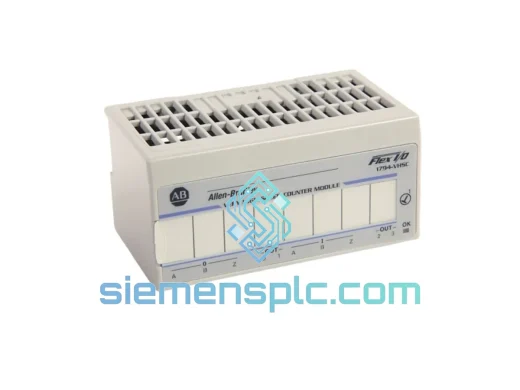
Allen-Bradley 1794-VHSC High Speed Counter Module – FLEX I/O
Flex I/O
Origin US
High Speed Counter Module
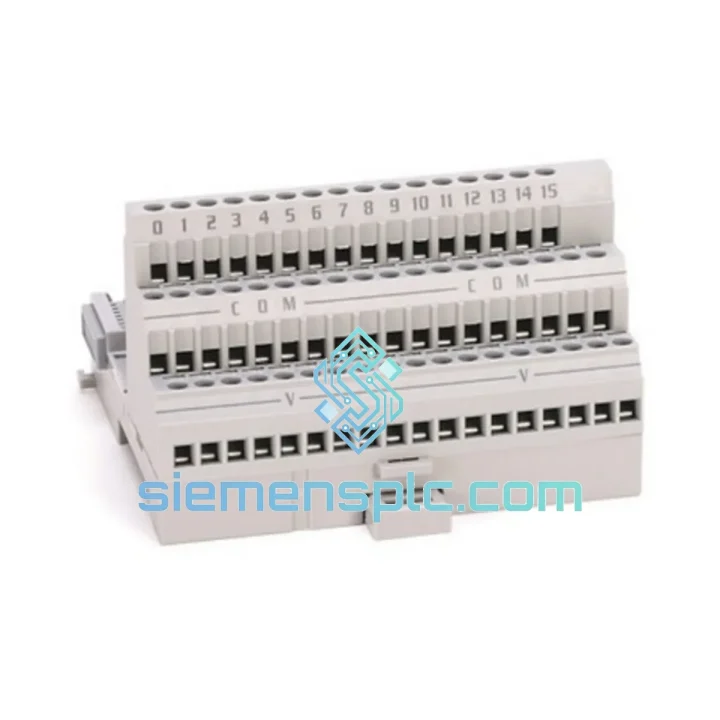
Request verified availability, condition, replacement risk review, packing options and courier lead time for 1794-TB3S.
Click Request Quote and the part number is inserted into the inquiry form automatically.
Core fields for model confirmation and RFQ routing. Detailed product narrative remains below.
In a distributed I/O architecture, the terminal base unit is not a passive connector block — it is the physical and electrical boundary between the field wiring domain and the backplane communication domain. The Allen-Bradley 1794-TB3S defines this boundary for the 1794 FLEX I/O platform. It provides a single-module mounting slot with integrated 3-wire screw terminals, a keyed backplane bus connector, and a mechanical locking interface that constrains module insertion to the correct orientation. Without a correctly specified terminal base, the I/O module has no electrical path to the adapter’s backplane bus, and field signals cannot be sampled or driven regardless of controller configuration.
The 1794-TB3S is engineered for the 1794 FLEX I/O series — Rockwell Automation’s modular distributed I/O platform designed for installation at the machine or process level, remote from the main control panel. Each terminal base in the FLEX I/O system daisy-chains the backplane bus laterally, allowing up to eight I/O modules per adapter node. The TB3S variant uses individual 3-wire screw terminals per I/O point, providing dedicated signal, power, and common conductors at each termination point. This wiring topology eliminates shared-common ambiguity that can introduce ground loop errors in mixed analog/digital installations.
Real-time Stock & RFQ: [email protected] | WhatsApp: +86 18359268345
| Parameter | Specification |
|---|---|
| Part Number | 1794-TB3S |
| Product Family | Allen-Bradley FLEX I/O (1794 Series) |
| Terminal Configuration | 3-wire screw terminal per I/O point (Signal / Power / Common) |
| Module Slots | 1 (accepts one 1794-series I/O module) |
| Backplane Bus | FLEX I/O parallel backplane, laterally chained |
| Max Modules per Adapter | 8 terminal bases per 1794 adapter node |
| Mounting Method | 35 mm DIN rail or panel mount via FLEX I/O adapter |
| Conductor Accommodation | Screw terminals; supports ferrule-terminated conductors per IEC 60947-7-1 |
| Module Keying | Mechanical keying pins prevent incorrect module insertion |
| Compatible Adapters | 1794-AENT (EtherNet/IP), 1794-ADN (DeviceNet), 1794-APB (PROFIBUS DP), 1794-ACN15 (ControlNet) |
| Compatible I/O Modules | 1794-IB16, 1794-OB16, 1794-IE8, 1794-OE4, and full 1794 I/O module range |
| Operating Temperature | 0 °C to +60 °C (IEC 60068-2-1 / IEC 60068-2-2) |
| Storage Temperature | -40 °C to +85 °C |
| Relative Humidity | 5% to 95% non-condensing |
| Vibration Resistance | 2 g @ 10–500 Hz per IEC 60068-2-6 |
| Shock Resistance | 30 g operational per IEC 60068-2-27 |
| Enclosure Rating | IP20 (open-type; requires installation in rated enclosure) |
| Certifications | UL Listed, CE Marked, cUL, CSA |
| Country of Origin | United States |
| Warranty | 12 months from date of shipment |
The 1794-TB3S backplane connector is a multi-pin edge interface that carries both the parallel data bus and the module power rails. When a 1794 I/O module seats into the TB3S, the module’s backplane connector engages simultaneously with the data bus pins and the 24 VDC module power supply pins. This dual-function engagement means the module is powered and logically addressed in a single mechanical action — there is no separate power connection step. The backplane bus itself is a parallel architecture: each terminal base passes the bus through to the next unit in the chain via a direct pin-to-pin bridge, maintaining signal integrity across the node without active repeaters.
The 3-wire terminal configuration of the TB3S has a specific electrical rationale. In discrete I/O applications, providing a dedicated common terminal per I/O point — rather than a shared common rail — allows the installer to break the common at any individual point for isolation testing without disturbing adjacent circuits. In analog applications, the dedicated common terminal supports Kelvin-sense wiring configurations that reduce common-impedance errors in 4–20 mA current loop measurements. This is a measurable advantage over 2-wire terminal bases in installations where analog and discrete signals share the same node.
The mechanical keying system on the TB3S uses removable plastic keying pins that can be configured to match the keying pattern of the installed I/O module. This prevents a technician from inserting a replacement module of the wrong type into a live terminal base — a critical safeguard in mixed-signal nodes where inserting a 24 VDC discrete output module into a slot configured for a 120 VAC input module would create an immediate fault condition. The keying mechanism operates independently of the backplane bus, meaning it provides physical protection even before any software-based module type checking occurs.
EMC performance of the TB3S is governed by the grounding path through the DIN rail mounting clip. The terminal base chassis is bonded to the DIN rail, which serves as the equipotential bonding conductor for the entire FLEX I/O node. High-frequency noise coupled onto field cables is shunted to the DIN rail ground before it can propagate onto the backplane bus. This chassis-ground-first architecture is consistent with IEC 61000-4-4 (electrical fast transient) and IEC 61000-4-5 (surge) immunity requirements applicable to industrial control equipment.
Every 1794-TB3S unit supplied through our Xiamen, China operations is sourced from verified supply channels with full traceability to Rockwell Automation’s authorized distribution network. Incoming units undergo label authentication — including date code format verification, holographic label inspection, and catalog number cross-reference against Rockwell Automation’s published part number structure. Physical inspection covers backplane connector pin condition, terminal block integrity, keying pin completeness, and housing dimensional conformance.
Units destined for regulated industries — including pharmaceutical manufacturing, oil and gas, and defense — are accompanied by a certificate of conformity and an inspection record traceable to the specific shipment. Anti-static packaging with desiccant is standard for all terminal base units to protect the backplane connector interface during transit.
Logistics operations from Xiamen serve customers across Asia-Pacific, Europe, the Middle East, and the Americas. Standard export documentation — commercial invoice, packing list, certificate of origin, and HS code declaration — is prepared for every international shipment. Express courier services (DHL, FedEx, UPS) with full tracking are the default dispatch method. Air freight consolidation is available for volume orders requiring cost-optimized transit. In-stock units are dispatched within 2 business days of order confirmation. The 12-month warranty covers manufacturing defects and covers return logistics coordination from the point of delivery.
Email: [email protected]
WhatsApp: +86 18359268345
Web: siemensplc.com
Location: Xiamen, China
© 2026 siemensplc.com. All rights reserved.
We check the full part number, brand, series and visible nameplate information before quotation.
Sales confirms stock path, condition option, quantity and realistic lead time for export dispatch.
DHL, FedEx, UPS or buyer courier arrangements can be reviewed with packing requirements.
Similar brand or category products for fast comparison and multi-item RFQ lists.