Mitsubishi Electric
RFQ Ready
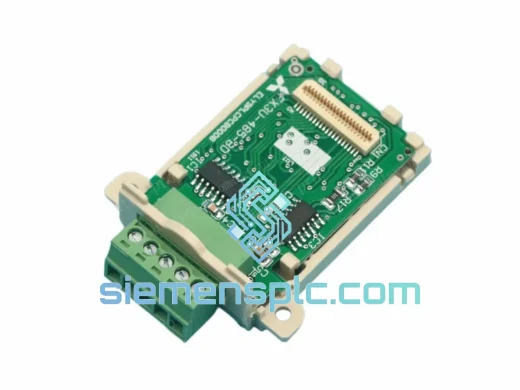
Mitsubishi FX3U-485-BD Communication Board – FX3U Series
MELSEC FX
Origin JP
Communication Board
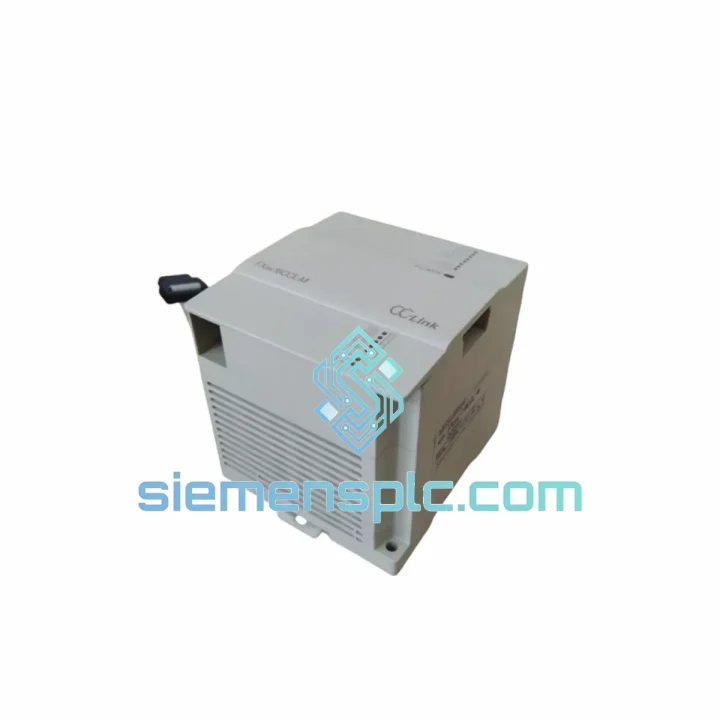
Request verified availability, condition, replacement risk review, packing options and courier lead time for FX2NC-CNV-IF.
Click Request Quote and the part number is inserted into the inquiry form automatically.
Core fields for model confirmation and RFQ routing. Detailed product narrative remains below.
The FX2NC-CNV-IF is a dedicated bus conversion interface module manufactured by Mitsubishi Electric for the MELSEC FX2NC compact PLC series. Its singular function is to translate the FX2NC proprietary compact extension connector into the standard FX2N extension bus format, enabling FX2NC CPU units to interface with the broader FX2N peripheral module ecosystem. Without this interface, FX2NC CPUs are limited to their onboard I/O; with it, engineers gain access to the full FX2N expansion library — analog input/output modules, temperature control units, high-speed counter blocks, and serial communication adapters — within the same compact cabinet footprint.
In machine control architectures where DIN rail space is measured in millimeters, the FX2NC-CNV-IF resolves a fundamental hardware compatibility gap. OEM panel builders who standardize on FX2NC CPUs for their compact form factor no longer need to maintain separate FX2NC-specific expansion inventories. The module installs directly onto the right-side compact connector of any FX2NC CPU variant, draws its operating power (30 mA at 5 VDC) entirely from the CPU extension bus, and presents a standard FX2N bus interface to all downstream expansion modules. No jumper configuration, no GX Works parameter entry, no scan-cycle penalty — the CPU’s hardware initialization routine detects the downstream expansion chain automatically at power-up.
From a signal integrity standpoint, the conversion is transparent. The FX2NC-CNV-IF does not introduce buffering latency into the extension bus cycle. Downstream FX2N modules respond to the CPU’s I/O refresh scan at the same timing as they would in a native FX2N system. This determinism is critical in closed-loop control applications — for example, when an FX2N-2AD analog input module is reading a 4–20 mA process variable that feeds a PID instruction executing in the FX2NC CPU. Any non-deterministic delay in the I/O refresh path would corrupt the control loop’s derivative term calculation.
The module supports cascading of up to 8 FX2N extension units downstream, subject to the total I/O point ceiling and 5 VDC power budget of the connected FX2NC CPU. Engineers must account for the cumulative 5 VDC current draw of all downstream modules against the CPU’s internal power supply specification — a calculation that should be performed at the system design stage using Mitsubishi’s FX2NC hardware manual power budget worksheet.
📩 Real-time Stock & RFQ: [email protected] | WhatsApp: +86 18359268345
| Parameter | Specification |
|---|---|
| Model Number | FX2NC-CNV-IF |
| Manufacturer | Mitsubishi Electric Corporation |
| Product Series | MELSEC FX2NC |
| Module Function | Extension Bus Conversion Interface (FX2NC compact bus → FX2N standard bus) |
| Compatible CPU Units | FX2NC-16MT, FX2NC-32MT, FX2NC-48MT, FX2NC-64MT, FX2NC-96MT, FX2NC-128MT (all variants) |
| Compatible Downstream Modules | All FX2N-series extension I/O blocks, special function modules, and communication adapters |
| Max. Downstream Extension Units | 8 FX2N extension modules (subject to CPU I/O point limit and 5 VDC power budget) |
| Bus Power Consumption | 30 mA at 5 VDC (bus-powered; no external supply required) |
| Operating Temperature | 0 °C to +55 °C |
| Storage Temperature | –20 °C to +70 °C |
| Relative Humidity | 35 % to 85 % RH, non-condensing |
| Vibration Resistance | 10–57 Hz: 0.075 mm amplitude; 57–150 Hz: 9.8 m/s² (IEC 60068-2-6) |
| Shock Resistance | 147 m/s², 3 mutually perpendicular axes (IEC 60068-2-27) |
| Dielectric Withstand Voltage | 500 VAC for 1 minute (between all terminals and protective earth) |
| Insulation Resistance | ≥ 5 MΩ at 500 VDC (megger test) |
| Enclosure Protection | IP20 (IEC 60529) |
| Mounting Method | DIN rail (35 mm) or direct panel screw mount |
| Approx. Weight | 200 g |
| Certifications | CE (EMC Directive), UL 508, cUL |
| Country of Origin | Japan |
| HS Code | 8537.10 |
| Warranty | 12 months against manufacturing defects; DOA replacement within 7 business days |
Bus Protocol Conversion Architecture
The FX2NC CPU uses a proprietary compact extension connector that carries multiplexed address, data, and control signals at a reduced physical pitch compared to the standard FX2N extension bus. The FX2NC-CNV-IF contains the level-shifting and signal demultiplexing circuitry necessary to map these compact bus signals onto the wider FX2N extension bus pinout. The conversion is purely combinational — no clock domain crossing, no FIFO buffering — which preserves the synchronous I/O refresh timing that the FX2NC CPU’s scan cycle depends on.
EMC Design Considerations
The module’s PCB layout follows Mitsubishi Electric’s standard FX-series EMC design rules: ground planes are continuous beneath the bus connector footprints, signal traces are length-matched across the bus width to prevent skew-induced glitches during high-speed I/O refresh cycles, and decoupling capacitors are placed within 2 mm of each bus driver IC’s supply pin. The result is a module that meets EN 61000-4-4 (electrical fast transient/burst) and EN 61000-4-6 (conducted RF immunity) requirements without requiring additional external filtering on the extension bus lines.
Power Distribution Integrity
The 5 VDC bus power rail is distributed through the FX2NC-CNV-IF to all downstream FX2N modules via low-impedance copper traces rated for the cumulative current draw of the expansion chain. The module does not regulate or convert voltage — it passes the CPU’s internal 5 VDC rail directly. Engineers must therefore verify that the total downstream current demand (sum of all FX2N module 5 VDC consumption values) does not exceed the FX2NC CPU’s internal power supply output rating, which varies by CPU model (typically 250–690 mA depending on the FX2NC variant).
Mechanical Coupling and Connector Durability
The compact extension connector on the FX2NC CPU side is rated for a defined number of mating cycles. In applications where the FX2NC-CNV-IF is installed permanently at system commissioning, connector wear is not a concern. In maintenance scenarios where the module may be removed and reinstalled, engineers should follow Mitsubishi’s recommended connector handling procedure to avoid pin deformation in the compact connector housing.
Genuine Mitsubishi Electric Origin
Every FX2NC-CNV-IF unit supplied by siemensplc.com is sourced through verified distribution channels with full traceability to Mitsubishi Electric’s manufacturing facilities in Japan. Each unit carries the original Mitsubishi Electric product label with lot number and date code. Label authenticity, connector condition, and PCB cosmetic integrity are verified at our Xiamen warehouse prior to dispatch. Units that do not pass visual and label inspection are quarantined and returned to the supply chain — they are never shipped to customers.
Functional Pre-Shipment Check
Where test fixtures are available, modules undergo a bus communication continuity check to confirm that the compact-to-standard bus conversion circuitry is electrically intact. This step catches latent connector damage that visual inspection alone cannot detect.
Packaging and ESD Protection
Units are shipped in original Mitsubishi Electric anti-static packaging. For orders where original packaging is unavailable, modules are individually wrapped in ESD-protective poly bags and cushioned with foam inserts inside a rigid outer carton. This packaging standard is maintained for all shipment modes — express courier and freight alike.
Global Express Logistics from Xiamen, China
Our Xiamen warehouse location provides direct access to Xiamen Gaoqi International Airport and Xiamen Port, enabling same-day or next-business-day handover to DHL Express, FedEx International Priority, and UPS Worldwide Express. Transit times to major industrial hubs: Europe 3–5 business days, North America 3–5 business days, Southeast Asia 1–3 business days, Middle East 3–4 business days. EXW Xiamen and CIF destination port Incoterms are both available for B2B purchase orders. Commercial invoice, packing list, and certificate of origin are provided with every shipment as standard documentation.
12-Month Warranty
All units carry a 12-month warranty against manufacturing defects from the date of delivery. Dead-on-arrival (DOA) units are replaced within 7 business days of confirmed fault report. Warranty claims are processed via email with photographic evidence of the defect; no return merchandise authorization (RMA) number is required to initiate a claim.
📧 Email: [email protected]
💬 WhatsApp: +86 18359268345
🌐 Web: siemensplc.com
📍 Location: Xiamen, China
© 2026 siemensplc.com. All rights reserved.
We check the full part number, brand, series and visible nameplate information before quotation.
Sales confirms stock path, condition option, quantity and realistic lead time for export dispatch.
DHL, FedEx, UPS or buyer courier arrangements can be reviewed with packing requirements.
Similar brand or category products for fast comparison and multi-item RFQ lists.