Schneider Electric
RFQ Ready
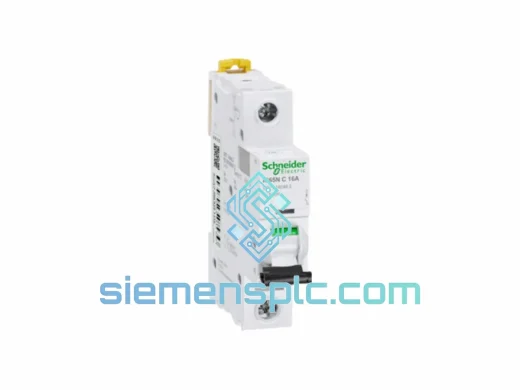
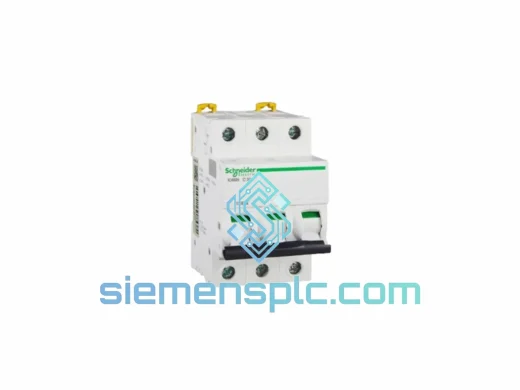
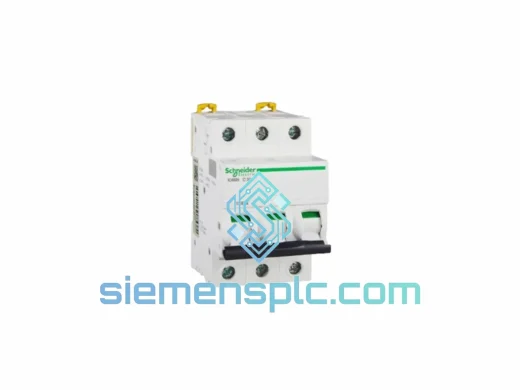
Schneider Electric iC65N-3P-C32A Miniature Circuit Breaker – Acti9
2A C-Curve MCB Acti9 Series
Origin FR
Miniature Circuit Breaker
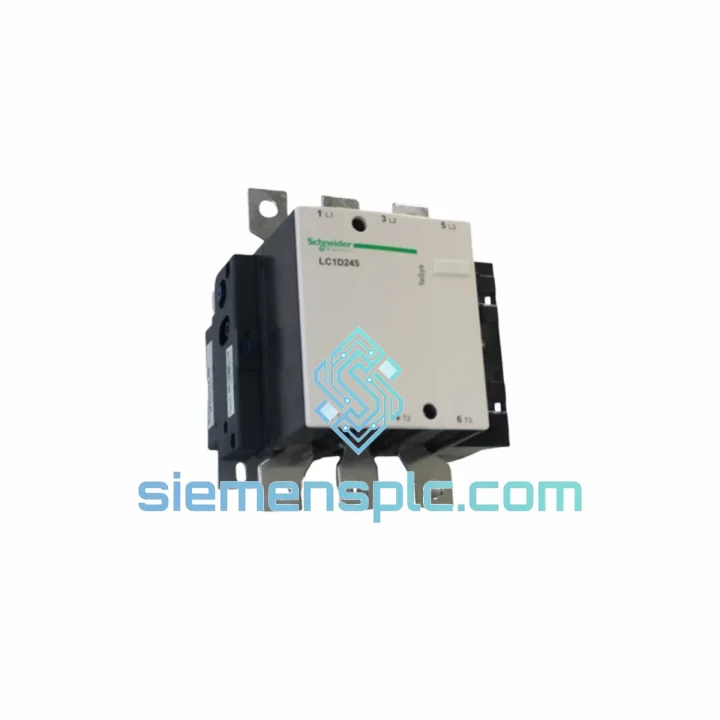
Request verified availability, condition, replacement risk review, packing options and courier lead time for LC1D245M7C.
Click Request Quote and the part number is inserted into the inquiry form automatically.
Core fields for model confirmation and RFQ routing. Detailed product narrative remains below.
The LC1D245M7C is a three-pole, air-insulated AC contactor from Schneider Electric’s TeSys D Series, rated at 245 A (AC-3 duty) with a 220 V AC / 50–60 Hz control coil (suffix M7). Within a motor control loop, this device occupies the power-switching node between the upstream protective device and the motor terminal block. Its primary function is deterministic make-and-break of three-phase load current under inductive conditions — a duty cycle that demands precise arc-quenching geometry, low contact bounce, and coil-circuit immunity to voltage transients on the control bus.
Unlike general-purpose switching relays, the LC1D245M7C is engineered specifically for AC-3 utilization category: repeated switching of squirrel-cage induction motors at full locked-rotor current. The silver-cadmium oxide (AgCdO) or silver-tin oxide (AgSnO₂) contact alloy maintains stable contact resistance across tens of millions of mechanical operations, preventing the progressive resistance drift that causes thermal runaway in undersized contactors.
Real-time Stock & RFQ: [email protected] | WhatsApp: +86 18359268345
| Parameter | Value |
|---|---|
| Part Number / SKU | LC1D245M7C |
| Brand | Schneider Electric |
| Series | TeSys D |
| Pole Configuration | 3-Pole (3P), main contacts |
| Rated Operational Current (Ie) — AC-3 | 245 A @ 400 V |
| Rated Operational Voltage (Ue) | Up to 690 V AC (50/60 Hz) |
| Control Coil Voltage | 220 V AC / 50–60 Hz (M7 suffix) |
| Coil Power Consumption (inrush / sealed) | ~200 VA inrush / ~10 VA sealed (typical) |
| Motor Power Rating @ 400 V | 132 kW |
| Motor Power Rating @ 690 V | 200 kW |
| Integrated Auxiliary Contacts | 1 NO + 1 NC |
| Mechanical Endurance | ≥ 10 million operations |
| Electrical Endurance (AC-3) | ≥ 1 million operations |
| Mounting | 35 mm DIN rail / screw-on panel |
| Enclosure Type | Open (IP00 main contacts) |
| Operating Temperature Range | -5 °C to +60 °C (derated above 40 °C) |
| Storage Temperature | -60 °C to +80 °C |
| Relative Humidity | ≤ 95% non-condensing |
| Altitude | Up to 2,000 m without derating |
| Conforming Standards | IEC/EN 60947-4-1, CE, RoHS 2011/65/EU |
| Net Weight | 1,320 g |
| Warranty | 12 months from date of shipment |
The LC1D245M7C employs a double-break contact architecture on each main pole. Each phase current is interrupted at two series air gaps simultaneously, halving the arc voltage per gap and reducing the energy deposited into the arc chamber. At 245 A AC-3 duty, this geometry is not cosmetic — it directly determines whether the contactor can clear a 690 V inductive load without contact welding during the first few hundred microseconds of arc formation.
Electromagnetic coil circuit: The M7 coil operates at 220 V AC. Internally, Schneider Electric uses a shading ring embedded in the magnetic core to eliminate the 100/120 Hz mechanical vibration (hum) that would otherwise result from the alternating flux passing through zero twice per cycle. Without the shading ring, the armature would chatter at twice the supply frequency — generating acoustic noise and accelerating the mechanical wear of the armature face. The shading ring creates a phase-shifted flux component that maintains a non-zero net attractive force throughout the full AC cycle.
EMC design: The coil circuit incorporates a transient suppression network (typically a varistor or RC snubber across the coil terminals) to clamp the inductive kick voltage when the coil is de-energized. Without suppression, the collapsing magnetic field generates a voltage spike that can reach 10–20× the rated coil voltage — sufficient to damage adjacent PLC digital output modules or relay driver transistors. This suppression is particularly relevant in installations where the LC1D245M7C coil is driven directly from a Siemens S7 or Allen-Bradley ControlLogix digital output card.
Thermal management: At 245 A continuous, the main contact assembly dissipates significant resistive heat. The TeSys D housing uses a ventilated thermoplastic enclosure with internal air channels that direct convective airflow across the contact carrier. The contact pressure spring is pre-loaded to maintain a minimum contact force of several Newtons throughout the contact wear life, preventing the contact resistance from rising as the silver alloy erodes.
Auxiliary contact block interface: The top and side faces of the LC1D245M7C expose standardized snap-in slots for TeSys D auxiliary contact blocks (LADN series). These blocks share the same armature linkage as the main contacts, ensuring that the auxiliary contact state is mechanically synchronized with the main pole state — a critical requirement for motor feedback circuits and safety interlock chains.
Every LC1D245M7C unit supplied through siemensplc.com is sourced as genuine Schneider Electric original equipment. Units are procured through documented supply chains with traceable batch records. Physical inspection covers catalog number engraving, holographic security label integrity, and factory packaging seal condition. Functional checks include coil continuity measurement and mechanical operation verification prior to dispatch.
Logistics operations are based in Xiamen, China — a major southeastern port city with direct access to international freight corridors serving Asia-Pacific, Europe, the Middle East, and the Americas. Standard export documentation (commercial invoice, packing list, certificate of origin) is prepared for every international shipment to facilitate customs clearance. Carrier options include DHL Express, FedEx International Priority, and UPS Worldwide, with typical transit times of 3–7 business days to most destinations. In-stock units ship within 1–3 business days of order confirmation. Bulk order lead times are quoted within 24 hours of RFQ receipt. All units are covered by a 12-month warranty from the date of shipment.
Email: [email protected]
WhatsApp: +86 18359268345
Web: siemensplc.com
Location: Xiamen, China
© 2026 siemensplc.com. All rights reserved.
We check the full part number, brand, series and visible nameplate information before quotation.
Sales confirms stock path, condition option, quantity and realistic lead time for export dispatch.
DHL, FedEx, UPS or buyer courier arrangements can be reviewed with packing requirements.
Similar brand or category products for fast comparison and multi-item RFQ lists.