Schneider Electric
RFQ Ready
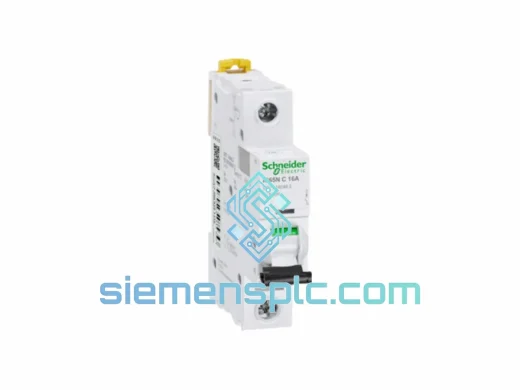
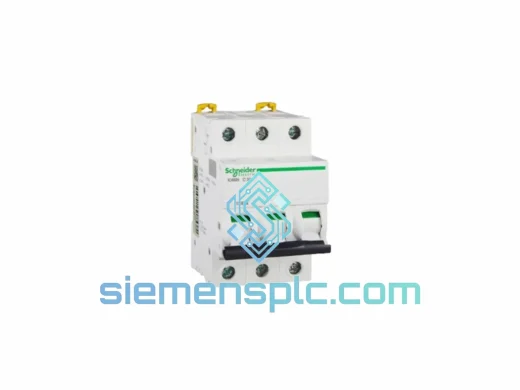
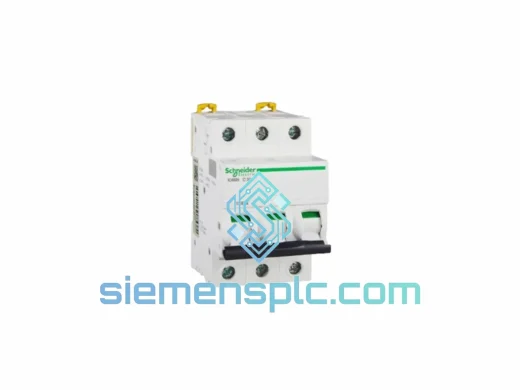
Schneider Electric iC65N-3P-C32A Miniature Circuit Breaker – Acti9
2A C-Curve MCB Acti9 Series
Origin FR
Miniature Circuit Breaker
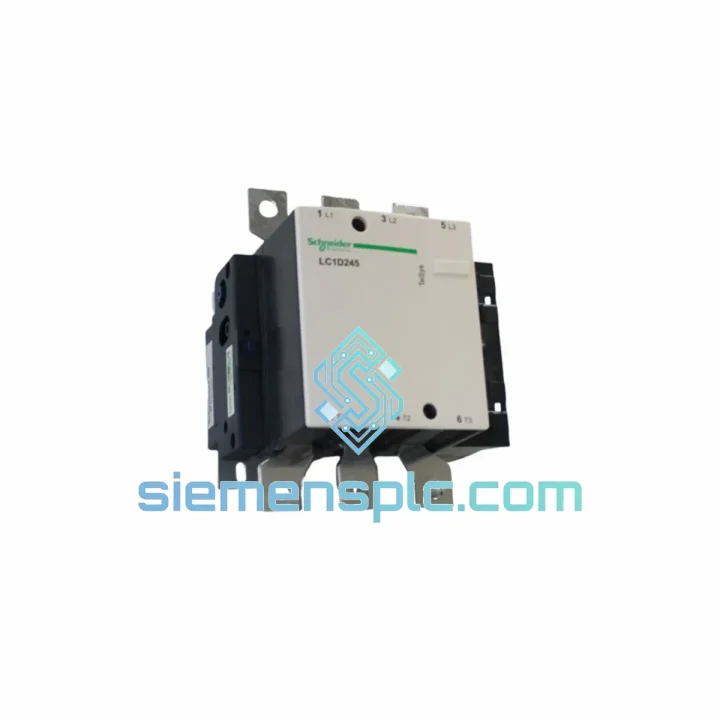
Request verified availability, condition, replacement risk review, packing options and courier lead time for LC1D300M7C.
Click Request Quote and the part number is inserted into the inquiry form automatically.
Core fields for model confirmation and RFQ routing. Detailed product narrative remains below.
The LC1D300M7C is a three-pole AC contactor within Schneider Electric’s TeSys D series, rated at 300A under AC-1 utilization and 132 kW at 400V AC under AC-3 duty. It is designed for continuous-duty motor switching in industrial environments where thermal stability, contact endurance, and coil reliability are non-negotiable. The M7 coil designation specifies a 220V AC, 50/60 Hz operating voltage, making it compatible with the majority of European and Asian control circuit standards. The unit ships with one integrated 1 NO auxiliary contact for control circuit feedback, interlocking, or PLC digital input signaling.
Within the TeSys D platform — Schneider Electric’s most widely deployed contactor family globally — the LC1D300M7C sits at the upper end of the frame-size range. Its mechanical and electrical architecture reflects decades of field data from motor control centers (MCCs), pump stations, compressor panels, and HVAC plant rooms. The contactor is IEC 60947-4-1 certified and carries CE, UL, and CSA marks, enabling deployment in both IEC-standard and NEMA-adjacent panel designs without re-engineering the control circuit.
Real-time Stock & RFQ: [email protected] | WhatsApp: +86 18359268345
| Parameter | Value |
|---|---|
| Model / SKU | LC1D300M7C |
| Brand | Schneider Electric |
| Series | TeSys D |
| Rated Current (AC-1) | 300 A |
| Motor Power (AC-3, 400V) | 132 kW |
| Motor Power (AC-3, 690V) | 200 kW |
| Poles (Main) | 3-pole |
| Auxiliary Contact (Integrated) | 1 NO |
| Coil Voltage | 220V AC, 50/60 Hz |
| Coil Reference Suffix | M7 (220V AC) |
| Utilization Categories | AC-1, AC-3, AC-4 |
| Standards | IEC 60947-4-1, CE, UL, CSA |
| Mounting | DIN rail / panel mount |
| Degree of Protection | IP20 |
| Operating Temperature | −5°C to +60°C |
| Weight | 1.32 kg |
| Coil Power Consumption (Hold) | ≈ 7 VA |
| Mechanical Endurance | 10 million operations |
| Electrical Endurance (AC-3) | 1 million operations |
| Warranty | 12 months from date of shipment |
The LC1D300M7C employs a double-break contact geometry on each main pole. Each pole contains two contact gaps in series, which distributes arc energy across two interruption points rather than concentrating it at a single gap. At 300A AC-1, this architecture reduces contact erosion rate and extends electrical endurance beyond what a single-break design of equivalent frame size could achieve. The silver-alloy contact tips are sintered with cadmium-free AgSnO₂ compound, which maintains stable contact resistance across the full thermal operating range and resists welding under fault-current conditions.
The magnetic circuit uses a laminated silicon-steel E-I core. Lamination suppresses eddy-current losses in the core during AC coil energization, reducing heat generation at the coil assembly. The shading ring — a short-circuited copper band embedded in the pole face — creates a phase-shifted flux component that prevents the electromagnetic holding force from dropping to zero at each AC half-cycle zero crossing. Without this shading ring, the armature would chatter at 100 Hz (for 50 Hz supply), generating acoustic noise and accelerating mechanical wear on the armature guide surfaces.
EMC performance is addressed at the coil terminal level. The coil circuit presents an inductive impedance that inherently attenuates high-frequency transients on the control bus. For installations in environments with significant conducted interference — such as variable-speed drive panels or thyristor-controlled systems — Schneider Electric’s LAD4RCU RC suppressor module can be fitted directly across the coil terminals. This clamps the inductive kick voltage generated at coil de-energization to below 50V peak, protecting adjacent PLC output cards from transient damage.
The auxiliary contact block (1 NO integrated) uses a bridge-type contact mechanism mechanically linked to the main armature. The contact actuation is positive-opening: the NC auxiliary contact is forcibly separated from its mating surface by a rigid actuator arm, independent of spring force. This design satisfies IEC 60947-5-1 requirements for positively guided contacts, which is a prerequisite for safety relay and SIL-rated control circuit applications.
Every LC1D300M7C unit supplied through siemensplc.com is sourced from Schneider Electric’s authorized distribution network. Each unit carries the original manufacturer’s holographic label, date code, and factory serial number traceable to Schneider Electric’s production records. Prior to dispatch, our technical team performs a visual inspection covering housing integrity, terminal block condition, coil marking accuracy, and label authenticity. Coil continuity and contact resistance are verified on a sample basis using calibrated test equipment.
Packaging follows IEC 60068-2 transport vibration and shock guidelines. Units are individually boxed in original manufacturer packaging where available, or re-packed in anti-static foam-lined cartons for export. For bulk orders, palletized shipments are stretch-wrapped and corner-protected for container loading.
Logistics operations are based in Xiamen, China — a major port city with direct sea freight connections to Europe, Southeast Asia, the Middle East, and the Americas, and daily air freight services to all major international hubs. Standard export documentation includes commercial invoice, packing list, and certificate of origin. Third-party inspection reports (SGS, BV) and Schneider Electric factory test certificates are available upon request. Typical dispatch lead time for in-stock units is 1–3 business days. Air freight to most destinations is 3–7 days; sea freight LCL is 15–30 days depending on destination port.
All shipments are covered by a 12-month warranty from the date of shipment. Warranty claims are handled by direct replacement or credit, subject to inspection of the returned unit. Schneider Electric’s global service network provides additional after-sales support for installation and commissioning queries.
Email: [email protected]
WhatsApp: +86 18359268345
Web: siemensplc.com
Location: Xiamen, China
© 2026 siemensplc.com. All rights reserved.
We check the full part number, brand, series and visible nameplate information before quotation.
Sales confirms stock path, condition option, quantity and realistic lead time for export dispatch.
DHL, FedEx, UPS or buyer courier arrangements can be reviewed with packing requirements.
Similar brand or category products for fast comparison and multi-item RFQ lists.