Siemens
In Stock OK
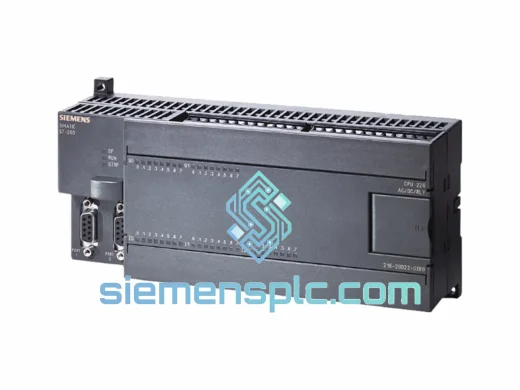
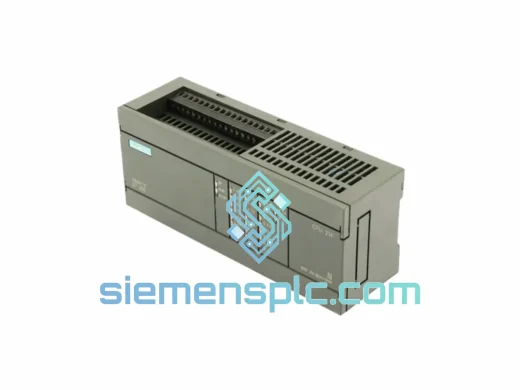
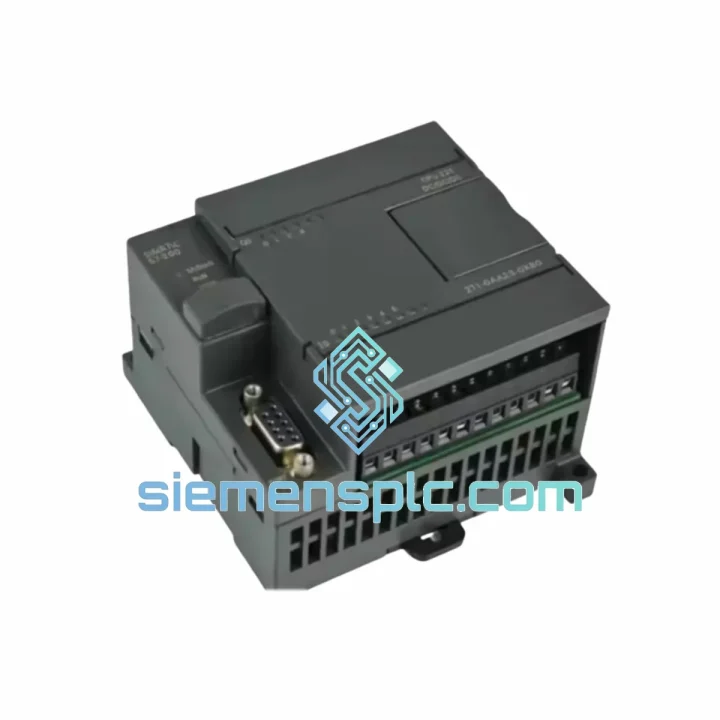
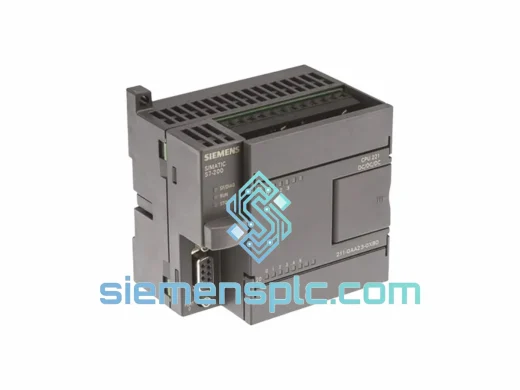
Siemens 6ES7212-1BB23-0XB8 PLC CPU Module – SIMATIC S7-200
Request verified availability, condition, replacement risk review, packing options and courier lead time for 6ES7212-1BB23-0XB8.
BrandSiemens
Part Number6ES7212-1BB23-0XB8
ConditionAvailability Check
Lead TimeRFQ Confirmation
DocumentsDatasheet / photos by RFQ
ShippingExport packing available
Auto-filled RFQ
6ES7212-1BB23-0XB8
Click Request Quote and the part number is inserted into the inquiry form automatically.
- Reply by email: [email protected]
- WhatsApp / Tel: +86 18359268345
- Mon-Sat 9:00-18:00 GMT+8
Procurement Data
Key Product Information
Core fields for model confirmation and RFQ routing. Detailed product narrative remains below.
- Brand
- Siemens
- Primary Part Number
- 6ES7212-1BB23-0XB8
- Product Type
- PLC CPU Module
- Series / Family
- SIMATIC S7-200
- Country of Origin
- DE
- Catalog Category
- PLCs & Controllers
- Operating Temp.
- 0 °C to +55 °C
- Warranty
- 12 months from date of shipment
Model confirmed for inquiry
6ES7212-1BB23-0XB8
Send quantity, destination and urgency. The RFQ form keeps this part number attached.
Request Quote
Product Overview
Siemens 6ES7212-1BB23-0XB8 CPU 212: Deterministic Control Logic at the Core of Compact Automation
In compact machine automation, the CPU module is not merely a processor — it is the arbitration center for every scan cycle, every I/O state transition, and every communication handshake that keeps a production process running within its defined tolerances. The Siemens 6ES7212-1BB23-0XB8, designated CPU 212 within the SIMATIC S7-200 micro-PLC family, occupies a well-defined position in this architecture: a 24 VDC-powered, fixed-I/O controller with an onboard RS-485 port, 8 digital inputs, 6 transistor digital outputs, 2 KB of program memory, and support for up to two expansion modules. It executes ladder logic, function block diagrams, and statement list programs compiled under STEP 7-Micro/WIN, with a binary instruction execution time in the sub-microsecond range that satisfies the timing requirements of most discrete-event and sequential control tasks.
The S7-200 platform was engineered for applications where panel space is constrained, power budgets are tight, and the control task does not require the full processing overhead of a mid-range PLC. The CPU 212 sits at the entry point of this family, yet its architecture reflects the same design discipline found across the broader SIMATIC portfolio: deterministic scan-cycle execution, structured memory segmentation between program, data, and retentive areas, and a communication layer that supports both point-to-point PPI and multi-master MPI topologies without additional hardware. For OEM machine builders, system integrators maintaining legacy installations, and plant engineers sourcing replacement units for S7-200-based control panels, the 6ES7212-1BB23-0XB8 represents a technically sound, field-proven choice.
Real-time Stock & RFQ: [email protected] | WhatsApp: +86 18359268345
Technical Parameters
| Parameter | Specification |
|---|---|
| Part Number | 6ES7212-1BB23-0XB8 |
| Series | SIMATIC S7-200 |
| CPU Designation | CPU 212 |
| Supply Voltage | 24 VDC (20.4 – 28.8 VDC operating range) |
| Current Consumption (24 VDC) | ≤ 180 mA (no load on sensor supply) |
| Onboard Digital Inputs | 8 × DI (24 VDC, sink/source) |
| Onboard Digital Outputs | 6 × DO (transistor, 24 VDC, 0.75 A per output) |
| Program Memory | 2 KB (EEPROM-backed) |
| Data Memory (V-Memory) | 1 KB |
| Retentive Data | Up to 512 bytes (configurable) |
| Binary Instruction Execution | 0.8 µs per instruction (typical) |
| Communication Port | 1 × RS-485 (9-pin D-sub), PPI / MPI / Freeport |
| Baud Rate (Freeport) | 1.2 kbps – 115.2 kbps |
| Expansion Module Support | Up to 2 EM modules |
| Real-Time Clock | Optional (memory cartridge) |
| High-Speed Counters | 4 × HSC (up to 30 kHz) |
| Pulse Output (PTO/PWM) | 2 channels (up to 20 kHz) |
| Interrupt Inputs | 4 (rising/falling edge selectable) |
| Analog Potentiometers | 1 × onboard (8-bit resolution) |
| Operating Temperature | 0 °C to +55 °C |
| Storage Temperature | −40 °C to +70 °C |
| Relative Humidity | 5 % – 95 % (non-condensing) |
| Protection Class | IP20 |
| Mounting | DIN rail (35 mm) or panel mount |
| Dimensions (W × H × D) | Approx. 120 × 80 × 62 mm |
| Weight (unit) | Approx. 310 g |
| Programming Software | STEP 7-Micro/WIN V4.0 SP9 or later |
| Certification | CE, UL, cUL, FM |
| Warranty | 12 months from date of shipment |
Hardware Logical Analysis
The CPU 212’s output stage uses NPN transistor switching elements rather than relay contacts. This design choice has direct implications for control loop performance: transistor outputs switch in under 100 µs, compared to relay contact bounce times that can exceed 5 ms. For applications driving stepper motor pulse trains or generating PWM signals for proportional valve control, this switching speed is not a convenience — it is a functional requirement. The two PTO/PWM channels can generate pulse trains up to 20 kHz with configurable duty cycles, enabling open-loop stepper positioning without an external pulse generator card.
The onboard RS-485 port implements the PPI (Point-to-Point Interface) protocol natively, which operates as a token-passing master-slave network at baud rates from 9.6 kbps to 187.5 kbps. In Freeport mode, the port transitions to a user-configurable UART, allowing the CPU to communicate with barcode readers, weighing terminals, RFID readers, and third-party drives using ASCII or binary protocols. The interrupt-driven receive buffer in Freeport mode ensures that incoming serial data does not require polling within the main scan cycle, preserving scan-cycle determinism even during active serial communication.
The four high-speed counter (HSC) inputs accept quadrature encoder signals up to 30 kHz, with hardware-level counting that operates independently of the PLC scan cycle. This architecture means that even with a 10 ms scan cycle, the CPU 212 will not miss encoder pulses from a motor running at moderate speed — the HSC accumulates counts in dedicated hardware registers that the CPU reads at the end of each scan. The four interrupt inputs (I0.0 – I0.3) support both rising and falling edge detection with configurable interrupt service routines, enabling event-driven responses with latencies well below one scan cycle.
EMC performance is addressed through the module’s internal layout: the 24 VDC power input passes through an LC filter stage before reaching the logic supply rail, attenuating conducted interference from the panel power bus. The digital input optocouplers provide 500 V galvanic isolation between field wiring and the CPU logic, protecting the processor from transient voltages induced by inductive loads switching on the same 24 VDC rail. The transistor output drivers include internal flyback diodes for resistive and inductive load protection, though external suppression is recommended for loads exceeding 0.5 A with significant inductance.
System Integration Benefits
- Deterministic Scan-Cycle Execution: The CPU 212 executes its program in a fixed sequential scan — input image refresh, program execution, output image write — with no preemptive task switching. This architecture guarantees that output response to any input event occurs within one scan cycle plus I/O propagation delay, a property that relay-replacement and interlock applications depend on.
- Expansion Without Reconfiguration: Adding an EM 231 analog input module or EM 222 digital output module to the CPU 212 requires no changes to the base CPU configuration. The expansion bus auto-detects connected modules at power-up, and the address mapping is fixed by physical slot position, eliminating the configuration file management overhead common in larger PLC families.
- Freeport Serial Integration: The Freeport mode enables direct integration with third-party devices — weighing scales, barcode scanners, RFID readers, and variable-frequency drives with RS-485 Modbus RTU interfaces — without a dedicated communication processor module, reducing BOM cost and panel wiring complexity.
- High-Speed Counter Transparency: The four HSC channels report accumulated counts, current frequency, and direction to the CPU’s V-memory area each scan cycle. This data is directly accessible to the ladder logic program for position-based output control, eliminating the need for external counter modules in single-axis positioning applications.
- PTO/PWM for Motion Control: The two pulse output channels support both PTO (Pulse Train Output) for open-loop stepper control and PWM (Pulse Width Modulation) for analog-equivalent proportional control of pneumatic valves and heating elements, consolidating motion and process control into a single CPU without analog output modules.
- Retentive Memory for Process Continuity: Up to 512 bytes of V-memory can be designated as retentive, preserving production counters, recipe parameters, and setpoint values across power cycles without a battery. The EEPROM-backed program memory ensures that the control program survives power loss without re-download from the programming device.
- HMI Connectivity via PPI: The RS-485 port natively supports Siemens TD 200 text displays and TP/OP operator panels using PPI protocol. A single cable connection from the CPU port to the HMI panel provides both power (for TD 200) and bidirectional data exchange, with no additional communication configuration required in STEP 7-Micro/WIN.
- Diagnostic Transparency via Status LEDs: The CPU 212 provides dedicated LED indicators for RUN/STOP mode, SF (system fault), and individual I/O point status. Field technicians can verify input signal presence and output activation state without a programming device connected, reducing fault diagnosis time during commissioning and maintenance.
Quality Assurance & Global Logistics
Every 6ES7212-1BB23-0XB8 unit dispatched from our Xiamen facility undergoes a structured pre-shipment verification protocol. Visual inspection covers housing integrity, connector pin condition, label authenticity markers, and date code consistency. Functional verification includes 24 VDC power-on confirmation, RUN/STOP mode transition test, and RS-485 port communication validation using a PC/PPI cable and STEP 7-Micro/WIN. Units are cross-referenced against known counterfeit indicators specific to the S7-200 CPU 212 product line, including PCB marking patterns, firmware version response, and housing mold characteristics.
Packaging uses anti-static foam inserts within a sealed moisture-barrier bag, placed in a rigid corrugated outer carton rated for international air and sea freight handling. Each shipment includes a packing list, commercial invoice with HS code declaration, and certificate of origin upon request. Export documentation is prepared in compliance with Chinese customs regulations and the import requirements of the destination country.
Logistics options from Xiamen include DHL Express (3–5 business days to most destinations), FedEx International Priority, UPS Worldwide Express, and sea freight consolidation for bulk orders. Tracking numbers are provided within 24 hours of dispatch. For urgent replacement requirements, same-day dispatch is available for orders confirmed before 14:00 CST. All units are covered by a 12-month warranty from the date of shipment, with DOA (Dead on Arrival) replacement processed within 5 business days of confirmed fault report.
Contact Information
Email: [email protected]
WhatsApp: +86 18359268345
Web: siemensplc.com
Location: Xiamen, China
© 2026 siemensplc.com. All rights reserved.
{
“@context”: “https://schema.org”,
“@graph”: [
{
“@type”: “Product”,
“name”: “Siemens 6ES7212-1BB23-0XB8 CPU 212 Micro-PLC Module”,
“description”: “Siemens 6ES7212-1BB23-0XB8 CPU 212 compact PLC for SIMATIC S7-200. 8DI/6DO transistor, 24VDC, RS-485 PPI/Freeport, 2KB program memory, 2 expansion slots. In stock at siemensplc.com, Xiamen, China.”,
“sku”: “6ES7212-1BB23-0XB8”,
“mpn”: “6ES7212-1BB23-0XB8”,
“brand”: {“@type”: “Brand”, “name”: “Siemens”},
“manufacturer”: {“@type”: “Organization”, “name”: “Siemens AG”},
“category”: “PLC CPU Module”,
“offers”: {
“@type”: “Offer”,
“url”: “https://siemensplc.com”,
“priceCurrency”: “USD”,
“availability”: “https://schema.org/InStock”,
“seller”: {“@type”: “Organization”, “name”: “siemensplc.com”}
}
},
{
“@type”: “FAQPage”,
“mainEntity”: [
{
“@type”: “Question”,
“name”: “Is the 6ES7212-1BB23-0XB8 compatible with TIA Portal?”,
“acceptedAnswer”: {“@type”: “Answer”, “text”: “No. The CPU 212 is programmed exclusively with STEP 7-Micro/WIN. TIA Portal supports S7-1200 and S7-1500 series only. The S7-200 and S7-200 SMART families require Micro/WIN or Micro/WIN SMART respectively.”}
},
{
“@type”: “Question”,
“name”: “What is the difference between the 0XB0 and 0XB8 hardware revisions?”,
“acceptedAnswer”: {“@type”: “Answer”, “text”: “The trailing revision code (0XB0, 0XB8) denotes the hardware and firmware revision level. The 0XB8 is a later production revision with minor internal improvements. Both revisions are functionally interchangeable within the S7-200 ecosystem and use the same STEP 7-Micro/WIN programming environment.”}
},
{
“@type”: “Question”,
“name”: “Can the CPU 212 communicate with Modbus RTU devices?”,
“acceptedAnswer”: {“@type”: “Answer”, “text”: “Yes, via Freeport mode. The onboard RS-485 port can be configured as a Modbus RTU master using the Modbus library available in STEP 7-Micro/WIN, enabling communication with drives, meters, and sensors that support Modbus RTU at baud rates up to 115.2 kbps.”}
},
{
“@type”: “Question”,
“name”: “How many expansion modules can be connected to the CPU 212?”,
“acceptedAnswer”: {“@type”: “Answer”, “text”: “The CPU 212 supports up to 2 expansion modules (EM series). These can be any combination of digital I/O, analog I/O, or specialty modules such as the EM 277 PROFIBUS-DP or CP 243-1 Ethernet module.”}
}
]
}
]
}
Ready to quote
[email protected]
Send This Part Number to Sales
RFQ workflow
Quality workflow ->
Confirmation Process
01Model confirmation
We check the full part number, brand, series and visible nameplate information before quotation.
02Availability reply
Sales confirms stock path, condition option, quantity and realistic lead time for export dispatch.
03Packing & courier
DHL, FedEx, UPS or buyer courier arrangements can be reviewed with packing requirements.
Continue sourcing
Browse full catalog ->
Related Automation Parts
Similar brand or category products for fast comparison and multi-item RFQ lists.
Siemens
RFQ Ready
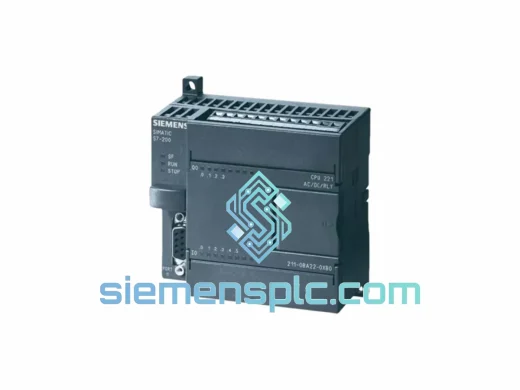
Siemens 6ES7211-0BA22-0XB0 PLC CPU Module – SIMATIC S7-200
SIMATIC S7-200
Origin DE
PLC CPU Module
Siemens
RFQ Ready
Siemens 6ES7211-0AA23-0XB0 PLC CPU Module – SIMATIC S7-200
SIMATIC S7-200
Origin DE
PLC CPU Module