Allen-Bradley
RFQ Ready
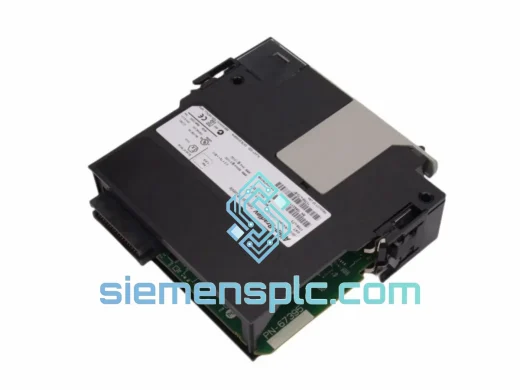
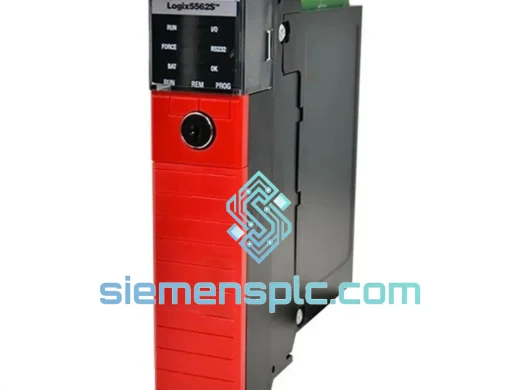
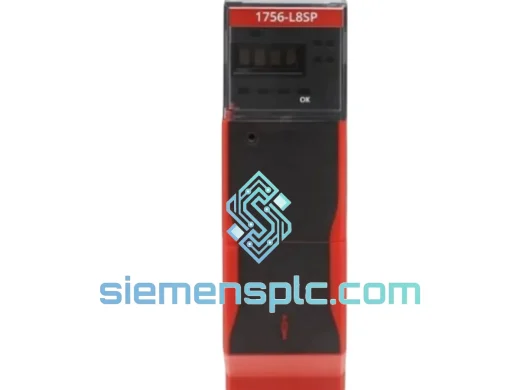
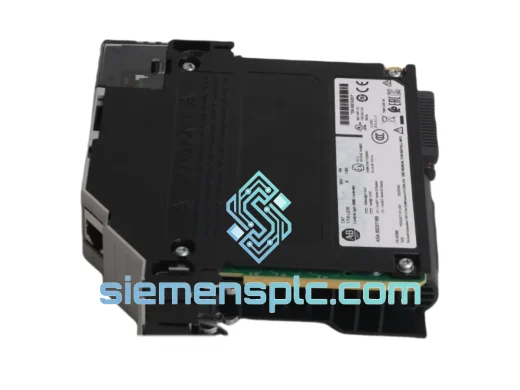
Allen-Bradley 1756-L83ES Safety PLC – ControlLogix 5580
ControlLogix
Origin US
Safety PLC Controller
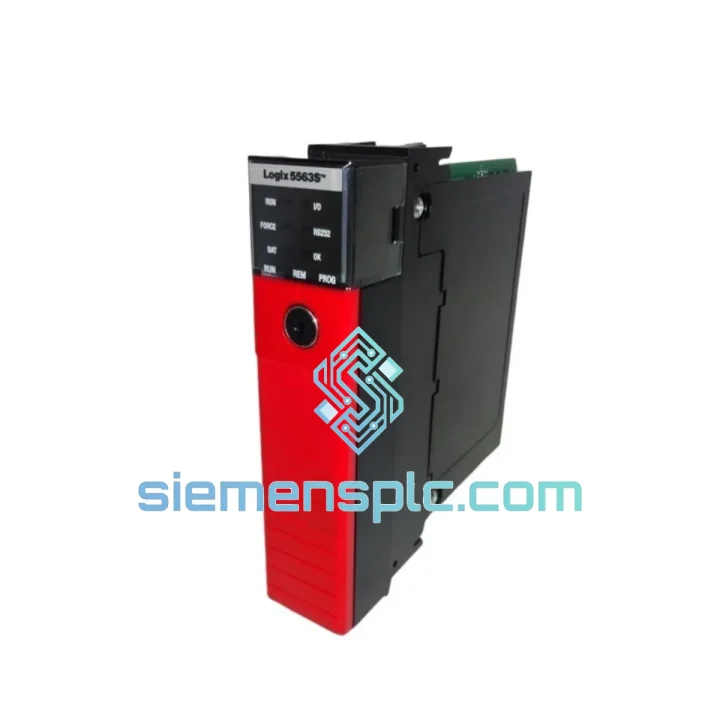
Request verified availability, condition, replacement risk review, packing options and courier lead time for 1756-L63S.
Click Request Quote and the part number is inserted into the inquiry form automatically.
Core fields for model confirmation and RFQ routing. Detailed product narrative remains below.
The 1756-L63S occupies a single slot in any standard 1756 ControlLogix chassis and delivers a hardware-enforced boundary between safety-rated and standard control execution. Unlike architectures that rely on software partitioning alone, the Logix5563 dual-core silicon on this module assigns one core exclusively to the safety task scheduler. That core cannot be pre-empted by standard ladder, function block, or structured text tasks regardless of scan-load conditions. The second core handles standard control, motion coordination, and communication stack processing. The two cores share no writable memory space; data exchange between safety and standard domains passes through a hardware-mediated producer/consumer tag mechanism that enforces read-only access from the standard side. This physical separation is the architectural basis for the module’s TÜV-certified SIL 2 (single unit) and SIL 3 (redundant pair) claims under IEC 61508.
The safety task executes on a configurable periodic interval from 1 ms to 500 ms. At 10 ms — a typical setting for robot cell guarding — the processor completes input read, logic solve, and output write within a single scan, with worst-case jitter below 1 ms. This determinism is not a statistical average; it is enforced by the real-time operating system kernel, which reserves a fixed time slice for the safety task regardless of EtherNet/IP traffic load or standard task complexity. For turbine overspeed protection applications requiring sub-20 ms trip response, the safety task can be set to 5 ms with verified execution time well within that budget.
Field wiring connects to 1756-IB16IS (safety digital input) and 1756-OB16IS (safety digital output) modules. Each channel on these modules performs automatic cross-fault detection: the module drives a test pulse on each input line and monitors the return signal. A wiring short between two channels — a common failure mode in conduit-routed cable — is detected within one safety scan and reported as a diagnostic fault before the next output update. This mechanism satisfies the dual-channel input requirements of ISO 13849-1 Category 3 and Category 4 without external safety relays. The 1756-L63S reads the diagnostic status of every connected safety I/O module via the backplane CIP Safety protocol and can initiate a safe-state output command to any module within the chassis in under 2 ms from fault detection.
Non-volatile storage is provided by an SD card slot on the module face. The safety task program, standard task program, safety signature, and event log are written to the SD card on every confirmed save operation. Following an unplanned power interruption, the module restores the full program image from SD without requiring a Studio 5000 download, reducing recovery time in critical infrastructure from minutes to under 30 seconds. The event log retains the last 512 safety-relevant events with millisecond timestamps, supporting post-incident forensic analysis and IEC 61511 proof-test documentation.
Communication with plant-level systems uses the 1756-EN2T EtherNet/IP bridge module seated in the same chassis. CIP Safety packets — carrying safety I/O data with sequence numbers and CRC-32 integrity checks — travel over standard EtherNet/IP infrastructure without requiring dedicated safety-rated cabling. The 1756-L63S validates each incoming CIP Safety packet against its expected producer ID, connection ID, and sequence number; any packet arriving out of sequence or with a CRC mismatch triggers a connection fault and drives outputs to the safe state within the configured reaction time. This mechanism meets the IEC 61784-3 functional safety communication requirements for SIL 3 networks.
📦 Real-time Stock & RFQ: [email protected] | WhatsApp: +86 18359268345
| Part Number | 1756-L63S |
| Series | A |
| Brand | Allen-Bradley / Rockwell Automation |
| Product Family | ControlLogix Safety |
| Processor Core | Logix5563 dual-core (dedicated safety core + standard control core) |
| User Memory — Standard | 8 MB |
| User Memory — Safety | 8 MB (hardware-isolated from standard domain) |
| Max I/O Points | 128,000 |
| Safety Integrity Level | SIL 2 (single unit) / SIL 3 (redundant pair) per IEC 61508 |
| Safety Task Period | 1 ms – 500 ms, configurable |
| Safety Task Worst-Case Jitter | <1 ms at 10 ms period |
| Communication Port | 1 × RS-232 (DF1 protocol) |
| Backplane Protocol | CIP Safety over ControlLogix backplane |
| Chassis Compatibility | 1756 ControlLogix (4, 7, 10, 13, 17 slot) |
| Power Consumption | 4.5 W (backplane); supplied by 1756-PA72 or 1756-PB72 |
| Operating Temperature | 0 °C to +60 °C |
| Storage Temperature | –40 °C to +85 °C |
| Relative Humidity | 5 % – 95 % non-condensing |
| Vibration Resistance | 2 g @ 10–500 Hz (IEC 60068-2-6) |
| Shock Resistance | 30 g operational (IEC 60068-2-27) |
| Module Weight | ~300 g |
| Non-volatile Storage | SD card slot (program backup + 512-event audit log) |
| Programming Software | Studio 5000 Logix Designer v21 and above |
| Certifications | TÜV SIL 2/3, CE, UL, cUL, ATEX Zone 2 (purged enclosure), IECEx |
| Warranty | 12 months from date of shipment |
| Origin | United States |
Dual-Core Safety Arbitration: The Logix5563 silicon implements a hardware arbitration bus between the two processor cores. At the start of each safety task period, the arbitration logic asserts a bus-lock signal that prevents the standard core from writing to any shared register until the safety task completes its output phase. This is not a software semaphore — it is a gate-level signal that cannot be overridden by firmware. The consequence is that a runaway standard task — caused by an infinite loop or stack overflow — cannot corrupt safety output data. The safety core detects the standard core’s watchdog timeout independently and can assert a chassis-wide safe-state signal without waiting for the standard core to recover.
EMC Design and Optical Isolation: The 1756-L63S backplane connector carries both power and data signals. The data lines pass through a transformer-coupled isolation barrier rated at 500 V continuous between the backplane bus and the module’s internal logic. This isolation prevents ground-loop currents — common in large industrial panels with multiple earthing points — from coupling noise onto the processor’s address bus. The module’s PCB uses a six-layer stackup with dedicated ground planes on layers 2 and 5, reducing radiated emissions and improving immunity to conducted interference from adjacent variable-frequency drives and welding inverters. Immunity testing is performed to IEC 61000-4-4 (EFT, 2 kV) and IEC 61000-4-5 (surge, 1 kV line-to-line).
Safety Signature Mechanism: When a safety task program is finalized in Studio 5000, the software generates a 32-bit safety signature that is a CRC of the compiled safety logic, I/O configuration, and safety tag definitions. This signature is stored in the module’s non-volatile memory and on the SD card. On every power cycle, the module recomputes the signature from the loaded program and compares it against the stored value. A mismatch — indicating unauthorized program modification — prevents the safety task from entering run mode and generates a major fault. This mechanism satisfies the IEC 61508 requirement for protection against unauthorized modification of safety software.
Redundant Arbitration in 1756-SB Chassis: When two 1756-L63S modules are installed in a 1756-SB redundancy chassis, the chassis backplane provides a dedicated synchronization bus separate from the standard I/O data bus. The primary module transmits its full safety task output image to the secondary module over this bus at the end of each safety scan. The secondary module validates the received image against its own independently computed output image. If the two images differ by more than the configured tolerance, the redundancy system flags a discrepancy fault and initiates a controlled switchover. Switchover time — from fault detection to secondary module assuming control — is under 10 ms, transparent to connected field devices.
Every 1756-L63S unit shipped from our Xiamen facility is sourced through documented supply channels with verifiable chain-of-custody records. Before dispatch, each module passes a four-stage inspection: visual examination of label authenticity and housing integrity; firmware boot verification against Rockwell’s published release matrix; functional bench test in a live 1756 chassis with Studio 5000 confirming safety task execution and I/O diagnostic reporting; and documentation assembly including inspection report with photographs, firmware version record, and packing list with serial number.
A 12-month warranty covers manufacturing defects and functional failures under normal operating conditions. Warranty claims are processed within 5 business days of receipt of the returned unit.
Shipment from Xiamen, China reaches most destinations on the following schedules: North America and Europe via DHL Express or FedEx International Priority in 3–5 business days; Southeast Asia in 2–3 business days; Middle East and South America in 5–7 business days. Bulk orders qualify for sea freight consolidation with full export documentation — commercial invoice, packing list, and HS code 8537.10 declaration — prepared for customs clearance. Emergency orders flagged as URGENT are processed same business day for next-flight-out dispatch where carrier schedules permit.
Email: [email protected]
WhatsApp: +86 18359268345
Web: siemensplc.com
Location: Xiamen, China
© 2026
We check the full part number, brand, series and visible nameplate information before quotation.
Sales confirms stock path, condition option, quantity and realistic lead time for export dispatch.
DHL, FedEx, UPS or buyer courier arrangements can be reviewed with packing requirements.
Similar brand or category products for fast comparison and multi-item RFQ lists.