Allen-Bradley
RFQ Ready
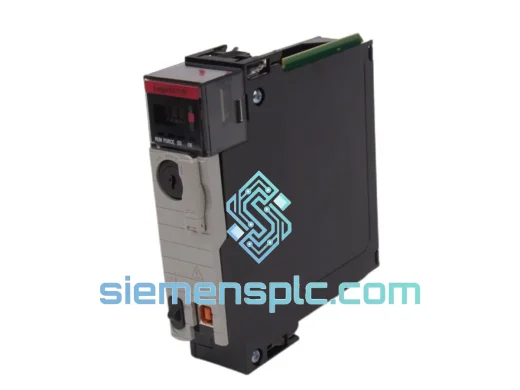
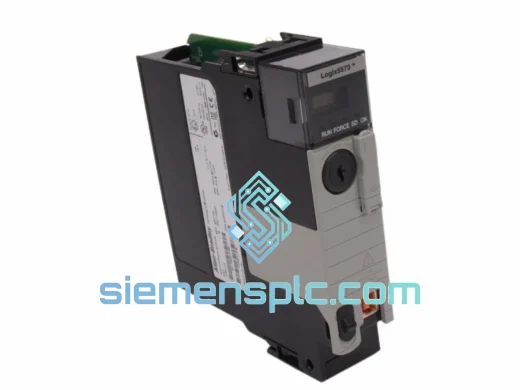
Allen-Bradley 1756-L73 PLC Processor Module – ControlLogix Logix5573
ControlLogix
Origin US
PLC Processor Module
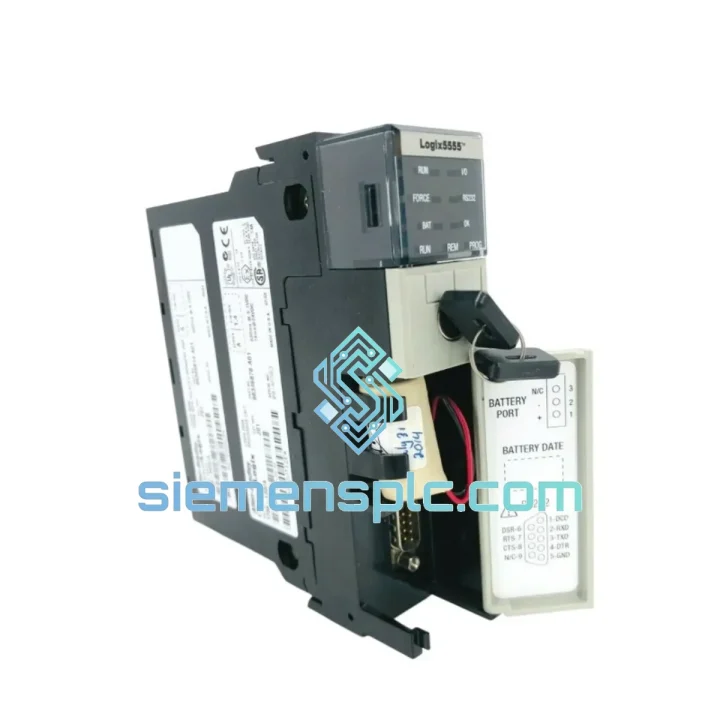
Request verified availability, condition, replacement risk review, packing options and courier lead time for 1756-L55M22.
Click Request Quote and the part number is inserted into the inquiry form automatically.
Core fields for model confirmation and RFQ routing. Detailed product narrative remains below.
The 1756-L55M22 occupies a well-defined position in the ControlLogix 1756 platform hierarchy: it is the 1.5 MB non-volatile variant of the Logix5555 processor family, positioned between the 1756-L55M12 (1 MB) and the 1756-L55M23 (2 MB) in memory capacity. Within a 1756 chassis, the processor module communicates with all installed I/O, communication, and motion modules exclusively through the backplane bus — a proprietary 32-bit parallel data path operating at 200 MHz that supports the Producer/Consumer messaging model. This architecture decouples I/O scan from the program scan cycle, allowing the processor to execute ladder, function block diagram (FBD), structured text (ST), and sequential function chart (SFC) routines concurrently while I/O data is refreshed asynchronously by the backplane scheduler. The practical result is a deterministic scan time below 1 ms per 1,000 ladder rungs under typical tag-load conditions, a figure that holds stable up to approximately 80,000 controller-scoped tags before memory paging overhead becomes measurable.
The 1.5 MB non-volatile user memory is implemented via a capacitor-backed SRAM array rather than battery-backed DRAM or flash-only storage. This distinction matters in process environments: capacitor retention circuits maintain SRAM state through power interruptions of up to 30 minutes without any battery replacement schedule, eliminating the IEC 61511 battery-failure mode that triggers SIL verification re-audits. On power restoration, the processor executes a cold-start sequence that reads the retained program image directly from SRAM, bypassing the flash-load latency seen on battery-free designs. For continuous process applications — distillation column control, reactor temperature cascades, boiler combustion management — this means PID setpoints, tuning parameters, and interlock states are preserved across unplanned outages without operator intervention.
The RS-232 serial port on the front panel supports DF1 full-duplex and DH-485 protocols at up to 19.2 kbps, providing a direct programming connection for field engineers without network infrastructure. For plant-level integration, the processor relies on 1756-series communication bridge modules — 1756-ENBT for EtherNet/IP at 100 Mbps, 1756-CNB for ControlNet scheduled messaging, and 1756-DHRIO for legacy DH+ and Remote I/O networks. The Producer/Consumer model implemented across these networks allows the 1756-L55M22 to multicast a single data tag to multiple consuming devices simultaneously, reducing network bandwidth consumption by up to 60% compared to polled master/slave architectures in high-tag-count SCADA configurations.
Real-time Stock & RFQ: [email protected] | WhatsApp: +86 18359268345
| Parameter | Specification |
|---|---|
| Catalog Number | 1756-L55M22 |
| Processor Family | Logix5555 / ControlLogix |
| User Memory | 1.5 MB Non-Volatile (Capacitor-Backed SRAM) |
| Processor Architecture | 32-bit RISC |
| Backplane Bus Width | 32-bit @ 200 MHz |
| Typical Scan Time | <1 ms / 1,000 ladder rungs |
| Max Controller-Scoped Tags | ~80,000 before paging overhead |
| Programming Languages | Ladder, FBD, ST, SFC (IEC 61131-3) |
| Serial Port | RS-232 (DF1 Full-Duplex / DH-485, up to 19.2 kbps) |
| Backplane Power Draw | 4.5 W @ 5 VDC |
| Operating Temperature | 0 °C to +60 °C |
| Storage Temperature | –40 °C to +85 °C |
| Relative Humidity | 5–95% non-condensing |
| Compatible Chassis | 1756-A4, 1756-A7, 1756-A10, 1756-A13, 1756-A17 |
| Compatible Power Supplies | 1756-PA72, 1756-PB72, 1756-PA75, 1756-PB75 |
| Firmware Upgrade | ControlFlash utility; compatible with Studio 5000 v16–v35+ |
| Certifications | UL 508, CE (EN 61131-2), FM Class I Div 2 Groups A–D, C-Tick (RCM) |
| Module Weight | 300 g |
| Warranty | 12 months from shipment date |
The EMC design of the 1756-L55M22 addresses three primary interference pathways: conducted emissions on the backplane power rail, radiated emissions from the processor clock circuit, and electrostatic discharge (ESD) at the RS-232 front-panel connector. The backplane power input passes through a multi-stage LC filter network that attenuates conducted noise above 150 kHz by a minimum of 40 dB, meeting CISPR 11 Class A limits without external line conditioning. The 200 MHz backplane clock is contained within a shielded PCB layer stack using a ground-plane sandwich configuration — signal layers are bounded above and below by continuous copper ground planes with via stitching at 2.5 mm intervals, reducing radiated emissions from the clock harmonics to below EN 55011 Class A limits at 1 m measurement distance.
The RS-232 port incorporates transient voltage suppression (TVS) diodes rated at ±15 kV ESD per IEC 61000-4-2 Contact Discharge, protecting the UART interface from field-wiring discharge events common in industrial panel environments. The front-panel keyswitch — a three-position rotary mechanism (RUN / PROG / REM) — implements hardware-enforced mode control: in RUN position, the processor ignores all program download commands from the programming terminal, a physical interlock that prevents inadvertent program overwrites during live production without relying on software access control alone.
The non-volatile SRAM retention circuit uses a supercapacitor bank rather than a single large capacitor, distributing charge storage across multiple cells to reduce equivalent series resistance (ESR) and extend retention time. The supercapacitor bank is trickle-charged from the 5 VDC backplane rail during normal operation and maintains SRAM supply voltage above the 3.0 V data-retention threshold for a minimum of 30 minutes after backplane power loss — a specification verified by Rockwell Automation’s accelerated life testing at +60 °C ambient. This retention window covers the vast majority of industrial power interruption events, including utility switching transients, UPS transfer times, and planned maintenance shutdowns.
Every 1756-L55M22 unit dispatched from our Xiamen, China facility undergoes a structured four-stage verification process before packaging. Stage one covers physical authentication: firmware label format, catalog number embossing depth, connector pin plating color, and PCB silkscreen font are cross-referenced against Rockwell Automation genuine product specifications. Counterfeit screening includes UV fluorescence inspection of the holographic authenticity label and dimensional verification of the module housing against factory drawings.
Stage two is functional bench testing in a live 1756 chassis: the module is powered, RSLinx Classic establishes a communication path, ControlFlash confirms the firmware revision, and a full memory read/write cycle exercises all 1.5 MB of user memory space. Stage three applies a 48-hour thermal soak at +55 °C operating temperature followed by three thermal cycles between 0 °C and +55 °C to screen infant-mortality failures before shipment. Stage four assembles the documentation package: serial number record, bench test report, firmware version certificate, four-side photographic record of the physical unit, and a chain-of-custody declaration tracing the unit’s sourcing history.
Logistics from Xiamen operate through DHL Express, FedEx International Priority, and UPS Worldwide Express for time-critical orders, with typical transit times of 3–5 business days to North America and Europe, 2–4 days to Southeast Asia, and 5–7 days to the Middle East and Australia. Sea freight consolidation is available for bulk orders exceeding 10 units. All shipments include a commercial invoice with HS code 8537.10.90, packing list, and certificate of origin for customs clearance. Export compliance screening is performed against BIS Entity List, OFAC SDN List, and EU Dual-Use Regulation (EC) 428/2009 before each shipment. The 12-month warranty covers defects in materials and workmanship; DOA units are replaced within 5 business days of confirmed fault diagnosis.
Email: [email protected]
WhatsApp: +86 18359268345
Web: siemensplc.com
Location: Xiamen, China
© 2026 siemensplc.com. All rights reserved.
We check the full part number, brand, series and visible nameplate information before quotation.
Sales confirms stock path, condition option, quantity and realistic lead time for export dispatch.
DHL, FedEx, UPS or buyer courier arrangements can be reviewed with packing requirements.
Similar brand or category products for fast comparison and multi-item RFQ lists.